
Trans-Afghan Corridor – a new bridge connecting Central Asia with the world
In recent years, the instability of the global geopolitical situation, changes in the geography of economic centers and breaks in supply chains have forced states to look for new transport corridors. International transport corridors are not only a key factor in economic growth, but also an important tool for ensuring regional political stability and cooperation.
From this point of view, the Trans-Afghan Railway project is crucial for strengthening the position of Central Asia in the world trading system, expanding access to seaports and accelerating the processes of regional integration.
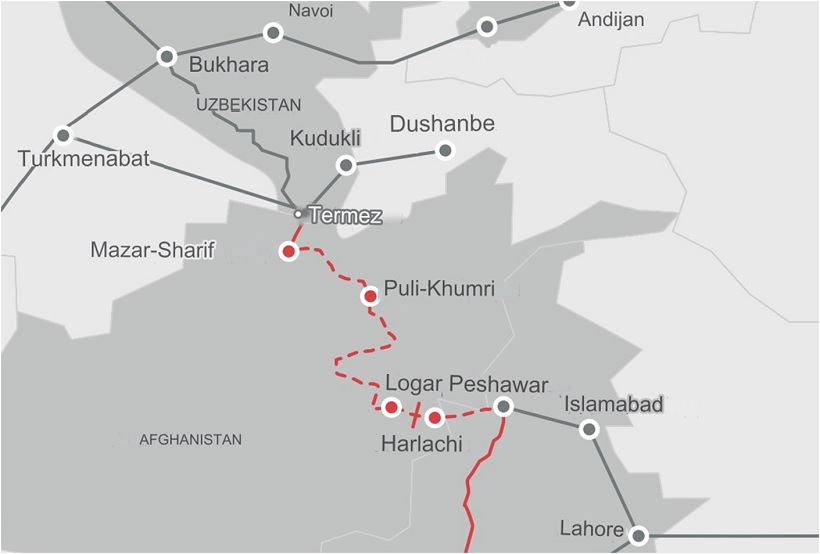
The Trans-Afghan Railway Line, being built as part of the project, has a length of 647 km and will allow the transportation of 16 million tons of cargo per year. It is expected that transportation time on this route will be reduced to 3-5 days. In combination with the existing Termez-Mazar-i-Sharif railway line, the efficiency of the project can be further increased.
The Termez-Mazar-i-Sharif line, built in 2011 with the participation of Uzbekistan Temir Yollari JSC, is the only stable railway route connecting Afghanistan with neighboring countries, and the majority of cargo is international humanitarian aid is delivered precisely through this line. The significance of this corridor for Uzbekistan is that a landlocked country needs to cross the territory of at least two states to enter the international market.
New transport corridors will reduce the cost of export and import operations, increase trade volumes and have a positive impact on price stability in the domestic market. The possibility of access to the Indian Ocean through the ports of Pakistan will allow Uzbekistan to establish direct trade relations with the countries of South Asia, Africa, North and South America.
At the same time, this corridor is also important for Pakistan itself, as it creates the opportunity to enter the Central Asian market, increase trade turnover and develop political and social ties. From a geopolitical point of view, this corridor is of great interest to Russia and Belarus.
The reason is that the distance of sea freight from Russia to Pakistan is about 13,000 km, while for multimodal transport the distance is almost half as long - 6,114 km.
This, in turn, increases economic efficiency, reduces logistics chains and significantly reduces cargo delivery times. In order to coordinate transportation along the North-South route and their direction to the territory of Uzbekistan, in 2023 in Tashkent, within the framework of the first transport forum of the SCO member states, a Memorandum on the development of the international transport corridor "Belarus - Russia - Kazakhstan - Uzbekistan - Afghanistan - Pakistan" was signed.
If another railway project with the participation of Uzbekistan is implemented - The China-Kyrgyzstan-Uzbekistan railway will create another convenient route for Chinese products to enter the ports of Pakistan and will further increase the volume of transit through the Trans-Afghan Corridor.
China's investments in Pakistan exceed $60 billion, and this project also meets their strategic interests. The Persian Gulf countries are also showing interest in participating in the construction of the railway, since they intend to use this corridor to deliver oil and petroleum products to the CIS market.
As the head of our state emphasized, “Afghanistan, which for centuries has played the role of a buffer in confrontations between global states and regional centers of power, must now prove itself in a new peacekeeping mission - to act as a connecting bridge between Central and South Asia. An example of this The project for the construction of the Trans-Afghan Corridor can serve as a mutually beneficial interregional cooperation." These words once again confirm the geopolitical and economic significance of the project.
Thus, the Trans-Afghan Railway project will contribute not only to the development of freight infrastructure, but also to strengthening sustainable economic cooperation in Central and South Asia, ensuring the integration of Afghanistan into the regional economy, increasing trade volumes, reducing transport costs and strengthening political relations between states. It is expected that the implementation of this corridor will open up new geostrategic opportunities for Uzbekistan, turn the country into a regional transit center and help take its rightful place on world trade routes.
Shokzhakhon Shikhnazarov,
Chief Specialist
Center for the Study of Transport Problems
Related news
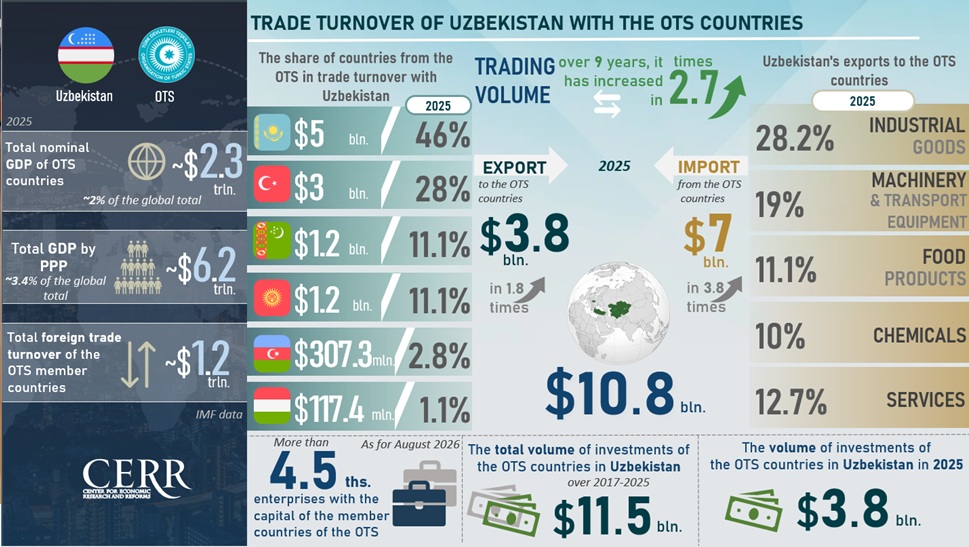
Uzbekistan has moved its economic cooperation with the Turkic states into a practical dimension
Ahead of the 13th Summit of the Organization of Turkic States, scheduled to be held in Ankara, economic cooperation within the OTS is acquiring new substance.
Water security in the turkic world: shared interests and common solutions
Water is a precious blessing that transcends national borders and has long connected peoples and civilizations.

Strengthening Transport Connectivity in Asia through the Development of the Trans-Caspian International Transport Corridor
Shifting international supply chains and expanding trade in Asia are driving demand for sustainable transport routes. For businesses, predictable delivery times, competitive rates, and reliable access to foreign markets are becoming increasingly important.