
Uzbekistan - SCO: commitment to dialogue and progress in the region
August 31 – September 1 President of Uzbekistan Shavkat Mirziyoyev will take part in the next summit of the Shanghai Cooperation Organization (SCO), which will be held in the Chinese city Tianjin
The Shanghai Cooperation Organization is one of the largest and most influential international structures today. Since its founding in 2001, the SCO has quickly established itself as an influential international structure, uniting over 40% of the world's population and approximately a quarter of global GDP.
Today, the SCO “family” includes 10 member states, 2 observers and 14 dialogue partners, which allows it to cover vast regions of Asia, Europe and Africa, thereby forming a space of trust and cooperation in the areas of security, economics, transport, energy and humanitarian relations. Thus, against the backdrop of growing geopolitical turbulence, the SCO acts as an important stabilizing factor, offering the world a unique model of equal interaction and taking into account the interests of all participants.
At the SCO summit in Astana, President of Uzbekistan Shavkat Mirziyoyev recalled the constant value of the “Shanghai Spirit” - trust, equality and respect for cultural diversity. He emphasized: the strength of the organization is in making decisions based on consensus, non-alignment and openness to the world. “Today it is extremely important to preserve the unity and cohesion of the SCO family. Only in this way will we be able to make the most of new opportunities and move forward along the path of joint development,” said the head of our state.
As one of the founding states of the organization, Uzbekistan traditionally takes an active position, putting forward initiatives aimed at strengthening mutual trust and developing practical cooperation. Particular attention is paid to issues of ensuring regional security: Tashkent consistently supports the coordination of efforts in the fight against terrorism, extremism, drug trafficking and transnational crime.
It is significant that it was on the initiative of Uzbekistan in 2004 that the SCO Regional Anti-Terrorism Structure was created in Tashkent, the format of the Meetings of the Secretaries of the Security Councils of the participating countries was introduced, and a mechanism for granting observer status was launched. in the organization.
Along with this, Uzbekistan is actively promoting ideas related to the expansion of transport and logistics interconnectedness in Eurasia, the development of “green” energy, digitalization and innovative cooperation.
At a meeting of the Council of Heads of Government of the SCO member states on October 16, 2024, at the proposal of Uzbekistan, it was adopted The concept of cooperation to develop a new economic dialogue between the SCO member states, aimed at deepening mutually beneficial ties between the participating countries. Thus, these initiatives reflect Tashkent’s desire to give the SCO a long-term character, ensuring a balance between the security agenda and the objectives of sustainable development.
Uzbekistan attaches great importance to bringing nations closer together, expanding youth and educational exchanges, and promoting joint projects in the field of science, culture and tourism. It is the humanitarian dimension of the SCO, according to Tashkent, that serves as a strong bridge of trust between countries and peoples.
A striking event in this area was the opening of the SCO Center for Public Diplomacy in Tashkent in 2018. This unique platform united cultural, educational and youth initiatives, becoming a living bridge of friendship between peoples. Today, exhibitions, festivals, conferences and round tables are held here, which contribute to the formation of an atmosphere of trust and mutual understanding. The opening of this center in Tashkent reflects the special role of Uzbekistan in promoting the dialogue of cultures and civilizations in the organization’s space.
In general, since 2017, the President of Uzbekistan has put forward 105 initiatives, covering a variety of areas - from politics and economics to transport, innovation and humanitarian interaction. Many of these proposals became the basis for new programs and formats of cooperation within the SCO, clearly demonstrating Tashkent’s desire to give the organization a modern and practice-oriented character. To date, 83 initiatives have already been implemented, and another 22 are in the process of implementation. Such a high percentage of practical implementation confirms that Uzbekistan’s ideas find a lively response from partners and become a real tool for strengthening cooperation.
A special place in the history of Uzbekistan’s participation in the SCO is occupied by its chairmanship in 2021–2022, which culminated in the summit in Samarkand on September 15–16, 2022. This forum went down in history as one of the most representative meetings of the organization: it confirmed the growing role of the SCO in world affairs and demonstrated its openness to expansion and a new format of interaction. It is symbolic that it was ancient Samarkand, a crossroads of civilizations and a symbol of intercultural dialogue, that became the place where the organization declared its new mission in strengthening global stability and cooperation.
It was in Samarkand that important documents were adopted that set the strategic direction for the development of the SCO for the future. The focus was on food and energy security, deepening trade and economic cooperation and strengthening humanitarian ties - all that directly affects the well-being of millions of people and the sustainability of the region as a whole.
The Samarkand summit became truly historic: it resulted in a record number of agreements - 44 documents, which filled the activities of the SCO with qualitatively new practical content. It was here that Iran’s Memorandum of Commitments was signed, opening the way to its full membership in the SCO. In Samarkand, the legal registration of the status of Egypt, Qatar and Saudi Arabia as SCO dialogue partners was also completed, and Belarus received the official start of the procedure for joining the organization. In addition, the applications of Bahrain, the Maldives, the UAE, Kuwait and Myanmar to obtain the status of an SCO dialogue partner were supported. On the sidelines of the summit, memorandums of understanding were also signed between the SCO and the Arab League, UNESCO and UNESCAP, which became clear evidence of the expansion of the organization’s international relations.
Thus, Uzbekistan is not only actively involved in the activities of the SCO, but also acts as one of its main ideological locomotives. Today, Uzbekistan is rightfully perceived as one of the countries that determines the dynamics and directions of development of the SCO, turning it into an effective platform for equal dialogue and joint creation.
In this context, the upcoming summit and the participation of the President of Uzbekistan in it clearly demonstrates the readiness to continue to actively work in the name of strengthening mutual trust. This confirms the country’s continued commitment to deepening regional cooperation and finding agreed solutions to the key challenges of our time. Tashkent’s participation in the summit will be an important step not only in promoting national interests within the framework of multilateral dialogue, but also in strengthening regional stability and expanding economic interaction for the benefit of the prosperity and progress of the peoples of the entire region.
IA “Dunyo”
Related news
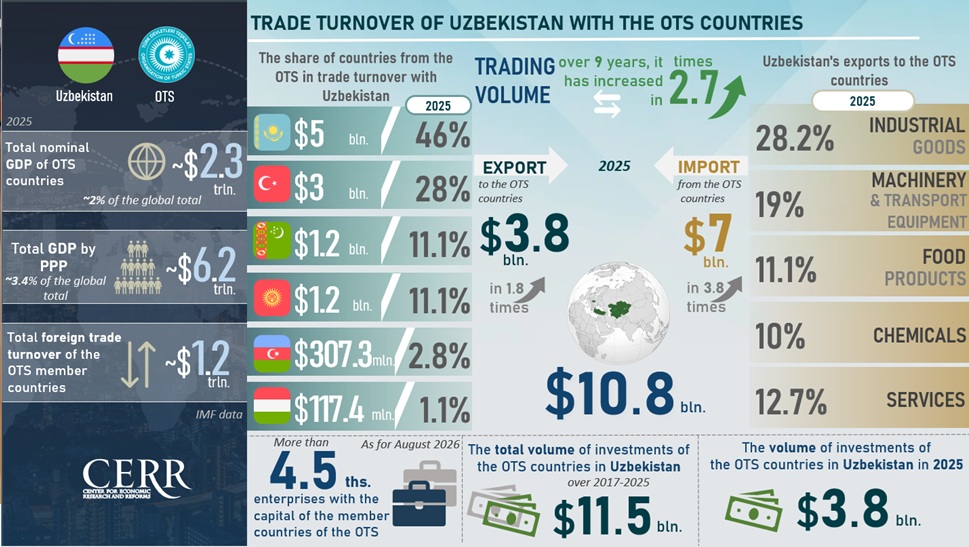
Uzbekistan has moved its economic cooperation with the Turkic states into a practical dimension
Ahead of the 13th Summit of the Organization of Turkic States, scheduled to be held in Ankara, economic cooperation within the OTS is acquiring new substance.
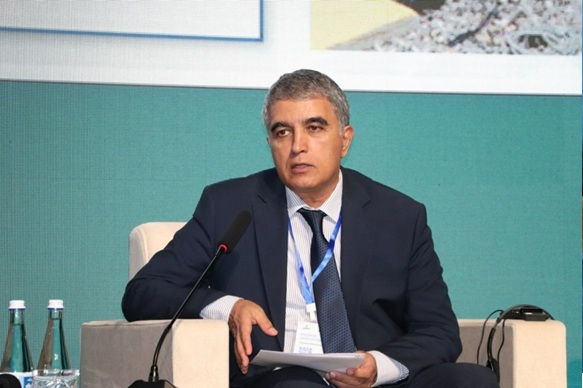
Water security in the turkic world: shared interests and common solutions
Water is a precious blessing that transcends national borders and has long connected peoples and civilizations.

Strengthening Transport Connectivity in Asia through the Development of the Trans-Caspian International Transport Corridor
Shifting international supply chains and expanding trade in Asia are driving demand for sustainable transport routes. For businesses, predictable delivery times, competitive rates, and reliable access to foreign markets are becoming increasingly important.