
Uzbekistan–Kyrgyzstan: From Border Neighbourhood to Long-Term Economic Cooperation
In recent years, relations between the Republic of Uzbekistan and the Kyrgyz Republic have become one of the key pillars of regional cooperation in Central Asia.
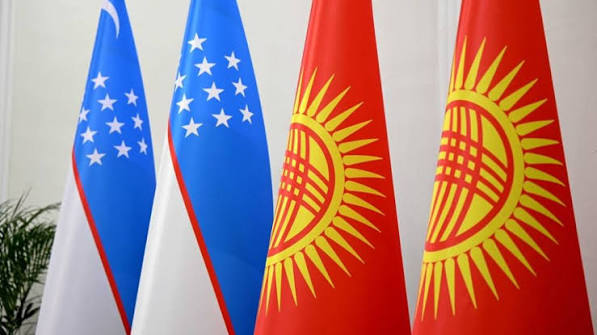
In recent years, relations between the Republic of Uzbekistan and the Kyrgyz Republic have become one of the key pillars of regional cooperation in Central Asia. These relations are founded on a shared border, historical proximity, regular political dialogue between the heads of state, and growing interdependence in trade, transport and logistics, energy, industry, agriculture, and the development of border regions. Consequently, the bilateral agenda is steadily evolving beyond the framework of traditional good-neighbourly relations toward a comprehensive and long-term economic partnership.
Regular high-level contacts continue to define the strategic direction of bilateral cooperation. The Joint Commission on Bilateral Cooperation remains the principal institutional mechanism for intergovernmental coordination. In May 2026, the Deputy Prime Ministers of Uzbekistan and Kyrgyzstan held a meeting on the sidelines of the KazanForum. In June, the relevant ministers discussed current issues related to trade, investment, and economic cooperation. On 22–23 June 2026, the 12th session of the Intergovernmental Commission was held in Cholpon-Ata.
An important component of this cooperation architecture is the development of direct interregional ties. The Council of Governors of Uzbekistan's border regions and the Plenipotentiary Representatives of the President of the Kyrgyz Republic, established in 2017, was transformed in 2025 into the Council of Heads of Regions of the two countries. As a continuation of this process, the first Uzbekistan–Kyrgyzstan Forum of Regions is planned to be held in Uzbekistan. This format has significant practical importance for promoting trade, logistics, border crossing infrastructure, local markets, and entrepreneurship in border areas.
Business-to-business cooperation is also becoming increasingly dynamic. In July 2024, Tashkent hosted a business forum attended by 350 entrepreneurs. The event resulted in the signing of 20 agreements worth a total of USD 213 million. Preparations for the next business forum in Bishkek confirm the regular nature of this dialogue and its focus not only on trade operations but also on projects aimed at strengthening industrial cooperation.
The growth in bilateral trade reflects the expanding economic interests of both countries. By the end of 2025, mutual trade had reached nearly USD 1.2 billion, representing an increase of 36.4 percent. The positive trend continued during January–May 2026, when bilateral trade amounted to USD 468.8 million, up by 43.9 percent compared to the same period of the previous year. Uzbekistan's exports increased by 60.8 percent, while imports from Kyrgyzstan grew by 12.1 percent. The commodity structure has also become increasingly diversified: Uzbekistan primarily exports textiles, food products, construction materials, and machinery, whereas imports from Kyrgyzstan include ores, electricity, metals, and plastic products.
To consolidate these positive trends, the two countries are implementing the Programme for Increasing Bilateral Trade for 2024–2030. The programme is aimed at moving beyond the expansion of individual commodity groups toward a more sustainable trade model through the diversification of product ranges, the development of new distribution channels, and the removal of trade barriers. Within this framework, the parties are addressing issues related to coal, construction materials, livestock, seedlings, and sheet glass.
The next stage of cooperation focuses on trade, logistics, and industrial instruments. The International Trade Centre "Termez" provides Kyrgyz products with an additional southern export route. Trade houses in Bishkek and Tashkent are expected to become permanent platforms for promoting bilateral trade, while assembly production facilities utilizing Uzbek-made components will add greater industrial value to bilateral economic relations.
The investment dimension is supported by the growing presence of businesses in each other's markets. Currently, 450 enterprises with Kyrgyz capital operate in Uzbekistan, while 85 enterprises with Uzbek capital are active in Kyrgyzstan. This demonstrates a gradual transition from conventional trade transactions to more sustainable forms of business cooperation.
Industrial cooperation is acquiring tangible substance. In the Chui Region, automobile production has been launched with the participation of the Uzbek side, including the assembly of the Onix, Captiva, Damas, Cobalt, Tahoe, and Tracker models.
The opportunities for cooperation, however, extend well beyond the automotive industry. In geology, both countries are interested in jointly exploring a number of mineral deposits, including iron ore and phosphorite reserves, as well as cooperating in the development of critical minerals. In the pharmaceutical sector, the parties are working on projects to manufacture affordable medicines.
The textile and light industry also retains considerable potential. Textile enterprises have already been established in Kara-Balta and Andijan, garment production is expanding in Bishkek and Osh Region, and textile manufacturing is being developed in the Chui Region.
Alongside industrial initiatives, energy cooperation remains of strategic importance. The Kambarata HPP-1 project occupies a central place on the bilateral agenda. It is essential to expedite the conclusion of the intergovernmental agreement on the project while ensuring a balanced approach to the water and energy interests of both countries.
Transport cooperation complements this agenda, as it directly affects the sustainability of economic ties. Creating predictable operating conditions for transport operators requires the establishment of a joint working group and the development of a Joint Transport and Logistics Programme for 2026–2028.
Financial support for a number of bilateral initiatives is provided by the Uzbekistan–Kyrgyzstan Development Fund. Its portfolio already includes projects in transport, finance, light industry, construction materials, and energy. Expanding the Fund's project portfolio and considering Kyrgyzstan's participation in its authorized capital could further strengthen the institution's long-term sustainability.
Border infrastructure also deserves particular attention, as it translates the broader bilateral agenda into practical cooperation at the regional level.
Overall, these developments demonstrate that Uzbekistan–Kyrgyzstan relations are entering a more mature stage of economic partnership. Growing trade, expanding industrial cooperation, energy coordination, transport connectivity, agricultural and industrial initiatives, together with enhanced financial mechanisms, are forming not merely a collection of individual agreements but an integrated system of long-term strategic partnership.
Related news
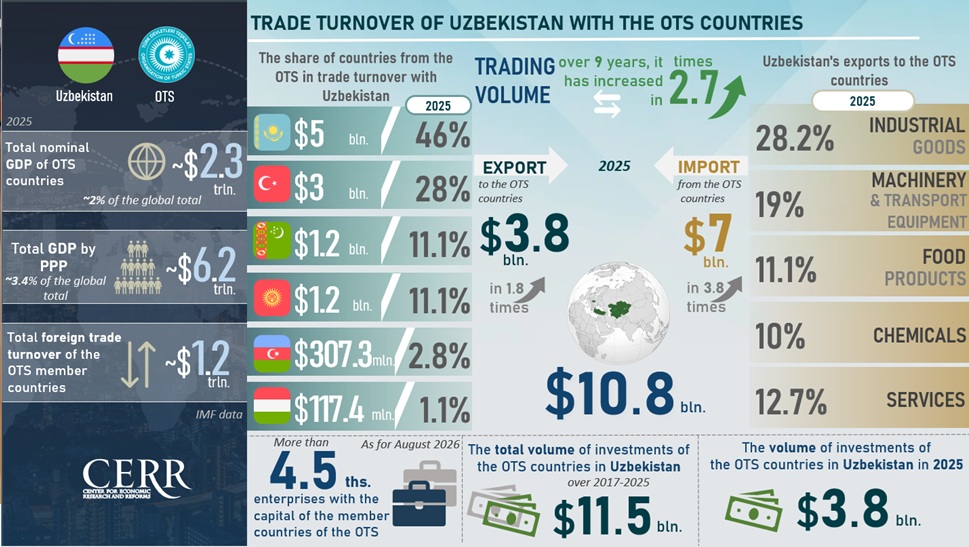
Uzbekistan has moved its economic cooperation with the Turkic states into a practical dimension
Ahead of the 13th Summit of the Organization of Turkic States, scheduled to be held in Ankara, economic cooperation within the OTS is acquiring new substance.
Water security in the turkic world: shared interests and common solutions
Water is a precious blessing that transcends national borders and has long connected peoples and civilizations.

Strengthening Transport Connectivity in Asia through the Development of the Trans-Caspian International Transport Corridor
Shifting international supply chains and expanding trade in Asia are driving demand for sustainable transport routes. For businesses, predictable delivery times, competitive rates, and reliable access to foreign markets are becoming increasingly important.