
Uzbekistan unanimously elected to the UN Statistical Commission

During the elections of members of the UN Statistical Commission for 2026-2029 held in New York, Uzbekistan for the first time in its history was unanimously elected to the specified body.
It should be noted that the Statistical Commission was founded in 1947 as a functional body of the UN Economic and Social Council (ECOSOC). It is the main intergovernmental agency that sets the strategic directions for the development of international statistics. Coordinates the development and implementation of universal statistical standards and methodological principles. Consists of 24 member states elected for 4 years, taking into account geographical distribution.
The election of Uzbekistan to this body is clear evidence of international recognition of the profound transformations carried out under the leadership of President Shavkat Mirziyoyev and the growing role of the country in global processes.
Full membership in the Statistical Commission opens ample opportunities for Uzbekistan to participate in the formation of global statistical policy, present national experience and successes of reforms, study best foreign practices, as well as deepen international cooperation.
IA Dunyo
Related news
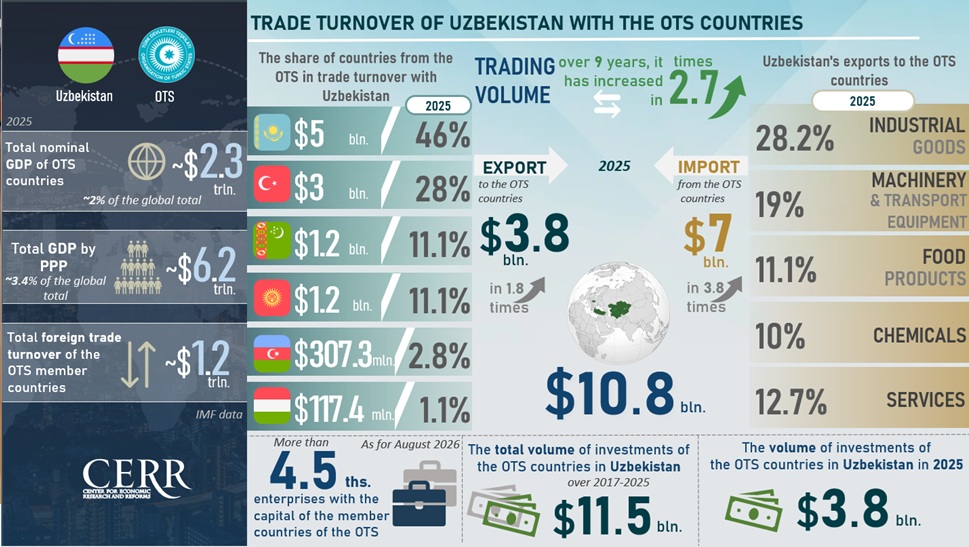
Uzbekistan has moved its economic cooperation with the Turkic states into a practical dimension
Ahead of the 13th Summit of the Organization of Turkic States, scheduled to be held in Ankara, economic cooperation within the OTS is acquiring new substance.
Water security in the turkic world: shared interests and common solutions
Water is a precious blessing that transcends national borders and has long connected peoples and civilizations.

Strengthening Transport Connectivity in Asia through the Development of the Trans-Caspian International Transport Corridor
Shifting international supply chains and expanding trade in Asia are driving demand for sustainable transport routes. For businesses, predictable delivery times, competitive rates, and reliable access to foreign markets are becoming increasingly important.