
Issues of developing the transport system and reducing traffic jams in the capital were considered
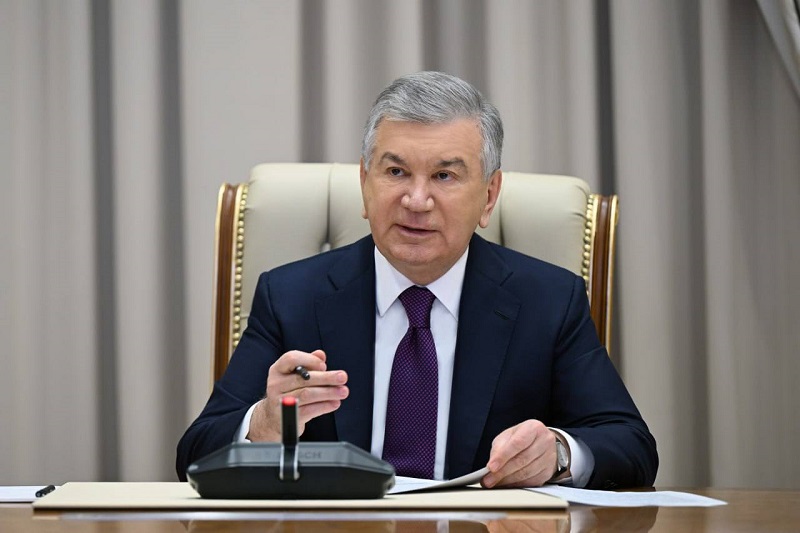
On December 3, President Shavkat Mirziyoyev reviewed a presentation on improving transport management and preventing traffic jams in Tashkent.
In recent years, significant work has been done in the capital to develop public transport. The bus fleet has doubled - the rolling stock includes almost 1,900 vehicles, and the service interval has been reduced from 30 to 15 minutes. The volume of daily traffic reached 1.4 million people.
The total length of the underground and overground metro lines increased to 70.5 kilometers, and the number of stations - from 29 to 50. The metro serves 900 thousand passengers daily.
The scope of technical work on organizing traffic on city streets has expanded: replaced 2870, 2770 new road signs were installed, as well as 55 traffic lights.
At the same time, the growth of population and the number of vehicles, as well as economic processes in the city, sharply increase the load on the road infrastructure. It was noted that the load on the main transport routes of the capital has doubled in recent years, and traffic jams of 7-8 points have become commonplace. The share of public transport use is still inferior in volume to trips by private car. All this also has an impact on the environmental situation.
Intelligent transport system (ITS) is widely used in world practice as the most effective method of traffic management. According to this approach, control, analysis and planning of traffic in cities are carried out centrally and in real time.
During the presentation, it was proposed to create a single center for traffic management in the city of Tashkent to implement such a system.
The center will be engaged in the analysis and modeling of transport and pedestrian flows, the implementation and management of an intelligent transport system, the development and implementation of a transport and master plan and framework, the organization of city parking, the development of infrastructure for charging electric vehicles and stimulating the use of individual means mobility.
The Center acts as an operator of an intelligent transport system. This platform will analyze, including using artificial intelligence, data collected from cameras, sensors and GPS devices, and will be able to maintain statistics and forecast traffic jams, optimize routes, adaptively change the phases of traffic lights and call emergency services in the event of road accidents.
As a result of the implementation of the system, it is expected to reduce the average travel time and increase the speed of emergency services arriving at the scene of an accident, as well as reduce the number traffic jams and accidents on main highways.
The President approved the proposals and instructed to launch a pilot project this year, expand it in subsequent years and integrate it into the regions by 2030.
Related news
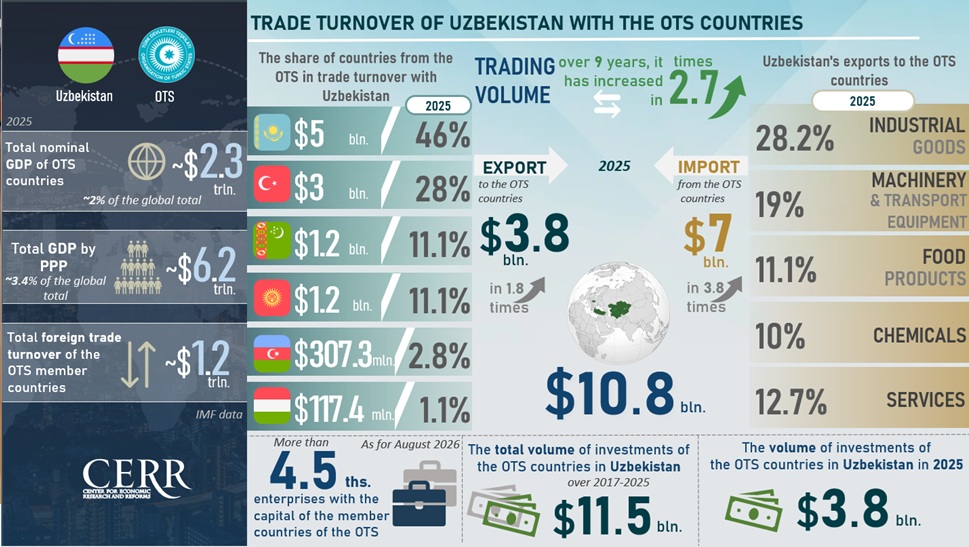
Uzbekistan has moved its economic cooperation with the Turkic states into a practical dimension
Ahead of the 13th Summit of the Organization of Turkic States, scheduled to be held in Ankara, economic cooperation within the OTS is acquiring new substance.
Water security in the turkic world: shared interests and common solutions
Water is a precious blessing that transcends national borders and has long connected peoples and civilizations.

Strengthening Transport Connectivity in Asia through the Development of the Trans-Caspian International Transport Corridor
Shifting international supply chains and expanding trade in Asia are driving demand for sustainable transport routes. For businesses, predictable delivery times, competitive rates, and reliable access to foreign markets are becoming increasingly important.