
A Pakistani company will implement an investment project in Uzbekistan’s agriculture and livestock sectors
Ambassador of Uzbekistan, Alisher Tukhtayev, held a meeting with Wasim Ur Rehman, Director of the Pakistani company “Samsons Group of Companies.”
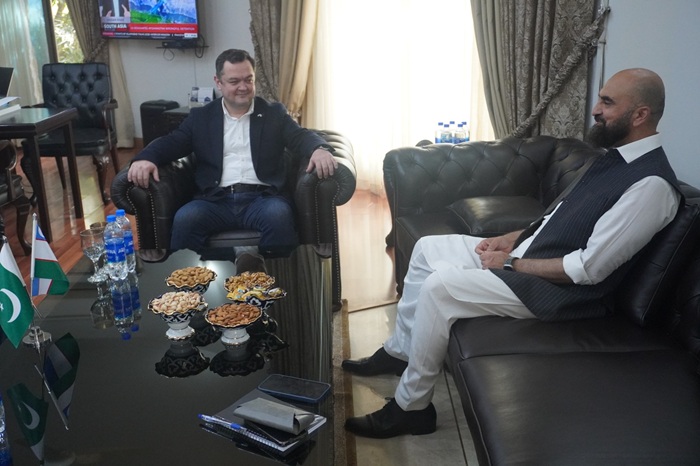
Ambassador of Uzbekistan, Alisher Tukhtayev, held a meeting with Wasim Ur Rehman, Director of the Pakistani company “Samsons Group of Companies.”
During the meeting, the parties discussed in detail the further development of trade and economic cooperation between Uzbekistan and Pakistan, particularly the implementation of joint projects in agriculture, livestock farming, and meat production. Special attention was also given to expanding investment cooperation, as well as attracting advanced technologies and modern management practices.
The company’s head, Wasim Ur Rehman, emphasized that relations between Uzbekistan and Pakistan have been steadily and consistently developing in recent years. He noted that the openness and attractiveness of Uzbekistan’s economy are creating new opportunities for foreign investors. He also expressed strong interest in implementing promising investment projects in Uzbekistan.
The head of the diplomatic mission, Alisher Tukhtayev, provided the Pakistani side with detailed information about the favorable conditions created for investors in Uzbekistan. In particular, he highlighted the activities of free economic zones, ready engineering and communication infrastructure, tax and customs incentives, as well as government support measures.
It was also emphasized that the Government of Uzbekistan has introduced additional incentive mechanisms aimed at ensuring food security in the country, especially stabilizing the supply of meat products. In particular, it was noted that from April 1 to August 1, 2026, 50% of air cargo transportation costs for importing cattle and sheep meat will be subsidized by the state. Such measures are expected to increase investment activity in the sector and ensure the domestic market is supplied with high-quality products.
During the negotiations, broad areas of cooperation in agriculture and food security were also considered. These include developing livestock farming on an industrial basis, establishing modern laboratory infrastructure and ensuring product quality control in line with international standards, deep processing of agro-industrial products and increasing export volumes, expanding the production of dairy and meat products, as well as creating refrigerated storage facilities.
At the conclusion of the meeting, the parties agreed to further develop mutually beneficial cooperation, promptly launch practical projects, and continue regular working dialogue.
Founded in 1971, “Samsons Group of Companies” is one of the major diversified companies operating in consumer goods production, textile industry, agriculture, tourism, hospitality, education, construction, and real estate. The company’s annual turnover is approximately 60 million US dollars. Its products are mainly exported to Middle Eastern countries, African states, and several other international markets.
Related news
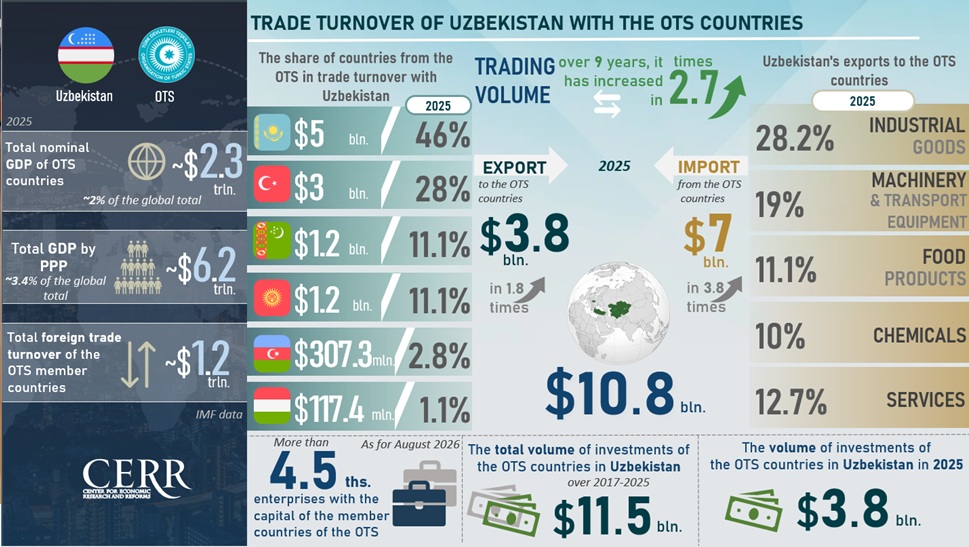
Uzbekistan has moved its economic cooperation with the Turkic states into a practical dimension
Ahead of the 13th Summit of the Organization of Turkic States, scheduled to be held in Ankara, economic cooperation within the OTS is acquiring new substance.
Water security in the turkic world: shared interests and common solutions
Water is a precious blessing that transcends national borders and has long connected peoples and civilizations.

Strengthening Transport Connectivity in Asia through the Development of the Trans-Caspian International Transport Corridor
Shifting international supply chains and expanding trade in Asia are driving demand for sustainable transport routes. For businesses, predictable delivery times, competitive rates, and reliable access to foreign markets are becoming increasingly important.