
A Pakistani Company is Exploring Opportunities to Take Textile Enterprises in Uzbekistan Under Trust Management
Ambassador of Uzbekistan Alisher Tukhtaev held an online meeting with Deputy Chairman of the Agency for the Development of Light Industry of Uzbekistan Rukhillo Zikrillaev and Head of the Pakistani company Magna Processing Saeed Ullah.
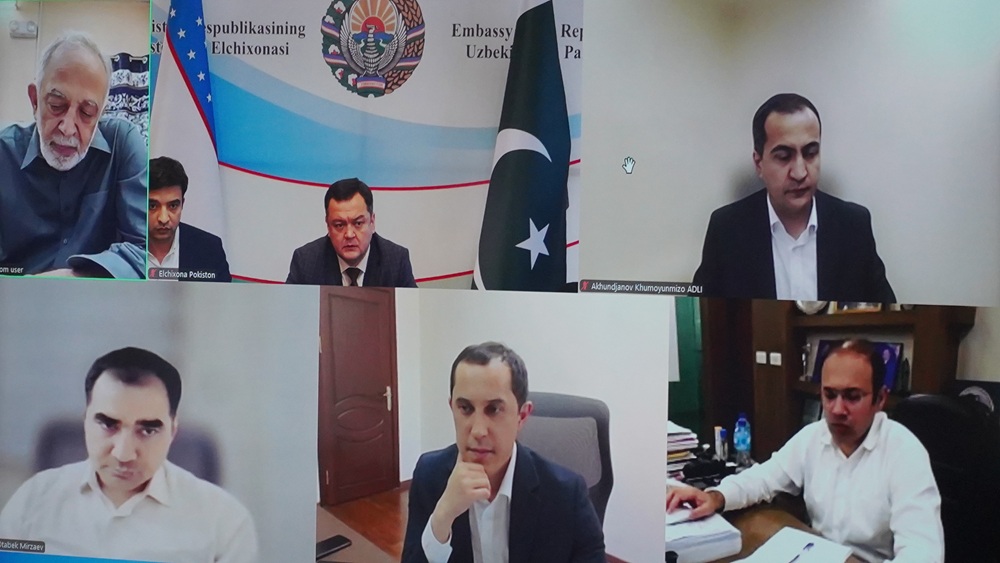
Ambassador of Uzbekistan Alisher Tukhtaev held an online meeting with Deputy Chairman of the Agency for the Development of Light Industry of Uzbekistan Rukhillo Zikrillaev and Head of the Pakistani company Magna Processing Saeed Ullah.
During the meeting, the parties exchanged views in detail on expanding the attraction of foreign investment into Uzbekistan’s textile sector, as well as on the possibilities of transferring low-profit textile enterprises in the country to foreign investors under trust management.
Ambassador Alisher Tukhtaev familiarized the Pakistani side with the large-scale reforms being implemented in Uzbekistan’s textile industry, including the cotton-textile cluster system, systemic changes in the sector, and the benefits and incentives provided by the state.
In addition, detailed information was presented on the favorable conditions created for foreign investors, including tax and customs incentives, existing industrial capacity for deep processing of cotton fiber, opportunities for producing high value-added products, and the needs of Uzbekistan’s domestic and foreign markets.
As emphasized, there remains significant and still underutilized potential for further deepening cooperation between Uzbekistan and Pakistan in the textile and light industry sectors. In particular, by the end of 2025, the volume of textile products exported from Uzbekistan to Pakistan amounted to $21.5 million.
Special attention during the negotiations was paid to the joint production of competitive finished textile products for international brands. The Uzbek side expressed its readiness to transfer existing textile enterprises to Pakistani partners under trust management and provided detailed information on their production capacities, financial conditions, and modernization needs.
It was also highlighted that Uzbekistan holds strong positions globally in the export of textile and garment products, with its export structure covering the full value chain—from yarn to finished clothing.
Head of Magna Processing, Saeed Ullah, expressed strong interest in taking Uzbek textile enterprises under trust management and stated readiness to take practical steps in this direction. According to him, Pakistani specialists have thoroughly studied Uzbekistan’s textile industry, market infrastructure, and economic environment, and have positively assessed the prospects for cooperation.
“We have the opportunity to produce yarn, fabric, and other textile products within Uzbekistan and export them to Pakistan, as well as to bring finished garments to European markets under joint brands,” said Saeed Ullah. “Currently, Pakistan manufactures finished products for a number of reputable European brands. We are ready to introduce this experience in Uzbekistan and implement joint projects.”
At the conclusion of the meeting, detailed answers were provided to a number of questions raised by the Pakistani side, including those related to the production capacity of Uzbekistan’s textile enterprises, logistics routes for finished products, export markets, and transport infrastructure.
Related news
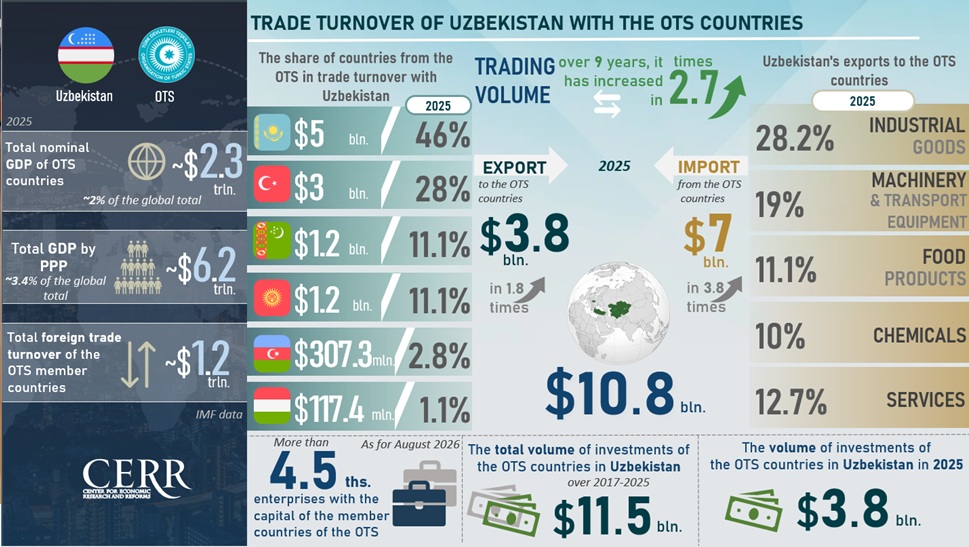
Uzbekistan has moved its economic cooperation with the Turkic states into a practical dimension
Ahead of the 13th Summit of the Organization of Turkic States, scheduled to be held in Ankara, economic cooperation within the OTS is acquiring new substance.
Water security in the turkic world: shared interests and common solutions
Water is a precious blessing that transcends national borders and has long connected peoples and civilizations.

Strengthening Transport Connectivity in Asia through the Development of the Trans-Caspian International Transport Corridor
Shifting international supply chains and expanding trade in Asia are driving demand for sustainable transport routes. For businesses, predictable delivery times, competitive rates, and reliable access to foreign markets are becoming increasingly important.