
Speech by the President of the Republic of Uzbekistan Shavkat Mirziyoyev at the opening of the III International Forum “From Poverty to Prosperity”
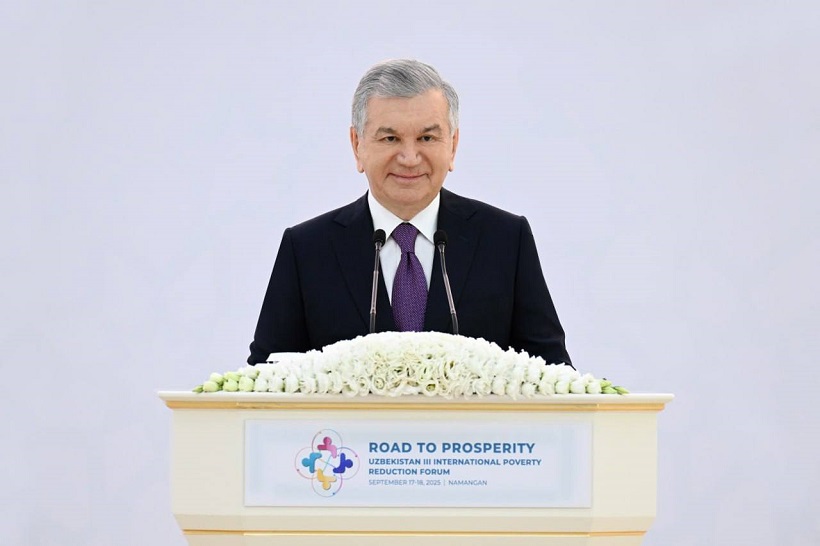
Dear guests!
Dear forum participants!
Ladies and gentlemen!
I am sincerely pleased to welcome you to the International Forum on Poverty Reduction, which is being held for the third time in our country.
I express my deep gratitude to the President of the Islamic Development Bank, Mr. Muhammad al-Jassir, and the Vice President of the Asian Development Bank, Mr. Ying-Ming Yang, General Vice President of the Japan International Cooperation Agency (JICA) Ms. Sachiko Imoto, United Nations Special Representative for Central Asia Mr. Kakha Imnadze, World Bank Global Director for Poverty Reduction Mr. Luis Felipe Lopez-Calve and all our guests.
Welcome to hospitable Uzbekistan, beautiful Namangan!
Dear friends!
As you know, ten years ago the United Nations adopted an important document on the Sustainable Development Goals. The eradication of global poverty by 2030 was identified as the first of these goals.
We all see that humanity is going through a very difficult period, the consequences of which cannot be predicted. Geopolitical, economic and social tensions are increasingly aggravating in the world.
Due to climate changes, water shortages and pandemics observed on the planet, the population of different countries has to overcome difficult trials.
Global economic growth has averaged 3 percent since 2015, slowing from the previous decade. As a result, if in the previous five years 650 million people in the world lived in poverty, today there are more than 800 million.
This situation poses new urgent challenges for all states, international organizations, and the world community as a whole, requiring urgent measures to find solutions to them.
I am confident that the proposals and initiatives of representatives of more than 30 authoritative organizations and about 200 international experts participating in the conference will serve to find comprehensive solutions to these problems.
Dear forum participants!
All reforms in New Uzbekistan are carried out on the basis of the principle ""In the name of the honor and dignity of man."
Over the past eight years, we have done a tremendous amount of work aimed at protecting people's rights and providing decent workers in some places, an increase in their income, an improvement in living conditions. All our actions are aimed at creating conditions and expanding opportunities for each person, especially youth and women, to fully express their potential.
During the most difficult period, we brought the fight against poverty to the level of public policy, turning it into a national movement. Frankly speaking, at that time we did not have specific criteria and methodology for assessing the level of poverty. Together with the World Bank and United Nations institutions, we have developed national poverty criteria based on international experience.
In the updated Constitution, we clearly defined that the size of pensions, benefits and social assistance should not be lower than minimum consumer spending.
According to expert calculations, when we just started this work, a third of the country's population lived below the poverty line.
Thanks to consistent reforms, 7.5 million people were lifted out of poverty poverty, in 2024 the poverty rate has been reduced to 8.9 percent. We set a goal to reduce this figure to 6 percent by the end of the year.
Of course, achieving such results in a short time was not easy. An important factor is that over the past period the national economy has doubled, per capita income will reach 3.5 thousand dollars by the end of the year.
We have tested new initiatives and experience, studied good practices in the world, and created a model of New Uzbekistan for poverty reduction. First of all, we introduced targeted social notebooks, which are an important tool in the transition period, thereby reaching all families in need.
Just one example. During the pandemic, we provided free medicine to 800 thousand families, food to 255 thousand families, and social benefits to another 1 million 200 thousand families.
No matter how difficult it is, we have identified opportunities, committing a total of $8 billion to these goals. As a result, we protected 5 million 200 thousand people from falling into the “trap of poverty” and thereby prevented an economic recession.
We covered all levels of society with work, introduced a system in the context of makhallas, and this completely justified itself. Based on an individual plan, interaction was carried out with each household, each family, and resources were allocated to increase their income.
Every year, 2.5–3 billion dollars are allocated for the improvement of mahallas, improving people’s lives and developing business infrastructure.
To provide income to the rural population, crops on 235 thousand hectares of cotton and grain areas have been reduced, and a new mechanism for allocating land of 30–50 acres has been introduced. This work was an important step in increasing the incomes of 800 thousand people.
With the support of active entrepreneurs, a system has been established for sowing household plots with highly profitable crops and guaranteed sales of the resulting harvest.
It is important that each region has its own experience in lifting people out of poverty and generating income for the population.
In Namangan, which is hosting our forum today, a model for the development of small businesses, handicrafts, and modern industrial zones has also been created.
In a word, a business climate has been created in every mahalla, prosperity has come to families, and people feel this in their lives. Through such large-scale measures and efforts, Uzbekistan strives to fulfill its commitment to reduce poverty by 2 times by 2030 even before the deadline.
Taking this into account, today we are ready to set new, even higher milestones.
According to international criteria, Uzbekistan has every opportunity to completely eradicate poverty by 2030 and, of course, we will cope with this!
Dear guests!
To achieve our goals, we are implementing the program "From Poverty to Prosperity",which includes seven priority areas.
In this regard, firstlywe are creating conditions not just for employment of the poor population, but for increasing the number of permanent jobs, providing people with stable sources of income.
Thanks to an active investment policy, in the current year alone, more than 9 thousand new enterprises, about 300 thousand highly profitable ones, are being created at the expense of 35 billion dollars of investments jobs.
As a result of the favorable business climate created over the past eight years, today 700 thousand entrepreneurs have their own stable business.
It is important to note that the state creates conditions for them, and entrepreneurs, taking on social responsibility, become helpers in providing the needy population with work and income. Thanks to such effective cooperation, this year alone, members of over 270 thousand poor families have found permanent jobs.
In the current age of technology, we also pay great attention to the development of the startup ecosystem in such income-generating areas as IT, artificial intelligence technologies, financial technology and others.
Since the beginning of the year, $270 million of foreign investments have been invested in startups, or 4 times more compared to last year. We are further intensifying our work in this direction and, in cooperation only with the World Bank, we are embarking on new projects worth $100 million.
We actively work with international organizations and reputable financial institutions to reduce poverty and increase incomes in our country. In this area, joint projects worth $5 billion with the Islamic Development Bank to improve living conditions in rural areas, build roads, and expand medical and educational services deserve special attention.
We support these projects and highly appreciate the services of the bank's president, Mr. Muhammad al-Jassir, who makes a huge contribution to poverty reduction in Uzbekistan.
I take this opportunity to express my sincere gratitude to all international financial institutions and partner countries that are assisting us in implementing such large-scale reforms.
Secondly,it is impossible to lift people out of poverty without increasing people’s knowledge.
In this regard, quality education will remain the main driver of human capital development and poverty reduction in the long term.
Just one example. As kindergarten enrollment increased from 27 percent to 78 percent, 1 million women now have the opportunity to further their education, learn a profession, and earn an income. By continuing this work, we will create all the conditions for full coverage of children from poor families with preschool education. For children from such families, 80 percent of the costs of learning foreign languages and mastering professions will be compensated; children from more than 100 thousand poor families will be able to take advantage of this opportunity.
In order for every poor family to have at least one specialist with a higher education, we will increase the number of preferential educational loans and government grants.
Over the past five years, we have trained modern professions and employed more than 800 thousand citizens in highly profitable jobs. In order to further expand this practice, international professional training centers will be organized on the basis of modern programs, foreign specialists will be invited, and graduates of these centers will receive certificates recognized abroad.
Thirdly,we have also raised the issue of women becoming active members of society to the level of public policy.
A century ago, our great ancestor Abdullah Avloni said:“Girls should strive most of all to acquire knowledge, because with this knowledge they will raise the future generation.”Today life itself confirms the wisdom of these words.
We have introduced the practice of interest-free loans for girls’ education at university, their free education in master’s programs. Today, 53 percent of the country's students are girls, and this year alone, 1 million 700 thousand women found work, indicating their increasing economic activity. Continuing our work in this direction, as part of the Digital Generation Girls program, we will train 50 thousand girls in IT, financial technology and artificial intelligence technologies.
Helping women find their place in society will be a constant focus of our attention.
This year, $1.5 billion has been allocated to support women's entrepreneurship. We will further increase the amount of these funds and next year we will create the conditions to provide a regular income for another 2 million women.
Starting next year, in order to ensure equal conditions for women in the labor market, we will radically expand the coverage of the social insurance system. Such a system will be a guarantor for preventing their poverty.
I invite you all to the Forum of Asian Business Women, which will be held in Namangan next year in order to exchange new experiences to further enhance the role and status of women in society.
Fourth,without ensuring human health, the full realization of their potential is impossible.
In this direction, we have assigned doctors to 140 thousand poor families and arranged for them to undergo a full medical examination once a year. From now on, by increasing the volume of guaranteed medical services, we will halve the costs spent on this by poor families. At the same time, they will be provided with free medicines and a package of guaranteed medical services.
Fifthly,targeted work with the population in need of social protection is one of the main directions in the fight against poverty.
We have radically reformed this system and consolidated the powers previously assigned to 6 government organizations in the National Social Protection Agency.
In a short time, Inson centers were created in every district and city, providing more than 100 types of social services based on the “one window” principle. In each mahalla, a social worker conducts his activities in a proactive manner.
This year alone, social services and assistance were provided to 2 million 700 thousand citizens. In particular, new types of social services have been established for members of poor families in need of care, and work opportunities have been created for 50 thousand able-bodied citizens.
In the future, we will continue this work on an even larger scale.
Together with the World Bank, in order to improve the quality and expand coverage of social services, we have launched a project worth $100 million.
People with disabilities are more likely to fall into poverty. Therefore, new approaches have been developed to support it and integrate it into society based on inclusiveness.
Thanks to the decent conditions created, 150 thousand people with disabilities have been employed this year. They are provided with vital medical products, strollers, and prostheses free of charge.
Separate programs are being implemented to provide school and vocational education for children with disabilities.
Uzbekistan has created its own experience in caring for children in difficult situations and protecting them from any form of violence.
Sixth,improving infrastructure and creating favorable living conditions for people in the regions have become an important step in reducing multidimensional poverty.
For these purposes, infrastructure is being improved in 1 thousand mahallas with difficult conditions, where over 3.5 million people live. As a result, this year alone, the household lands of 470 thousand households were provided with water supply, and energy supply was improved in another 790 thousand households.
Next year, we will allocate another $400 million to improve infrastructure in mahallas, increase jobs, and support entrepreneurship. At the same time, 32 districts and 328 mahallas with difficult conditions will be selected and a separate program for their development will be adopted.
All this will also become a new experience for us.
Along with this, in 2026, projects for the construction of drinking water supply networks, sewerage networks, roads, schools and kindergartens will be implemented in 810 mahallas worth $1.3 billion.
Mortgage subsidies in the amount of $200 million will be provided annually to those in need of housing and those with low incomes.
In this regard, I think it would be appropriate if, when financing infrastructure projects in developing countries, international financial institutions introduce a poverty reduction requirement.
Seventh,more than 70 percent of our government spending is directed specifically at achieving the Sustainable Development Goals.
On a global scale developing countries need more than $4 trillion to achieve the Sustainable Development Goals. In such conditions, there is a need for a “new financial architecture to combat poverty” to objectively assess risks, attract financial resources, and improve their efficiency.
In order to find solutions to these issues, we propose to hold a high-level conference in 2026 in the ancient city of Khiva with the participation of international financial institutions, donor organizations and partner countries.
Dear participants forum!
Creating the best conditions for people by ensuring their interests, dignity and well-being, as well as poverty reduction form the basis of all transformations in New Uzbekistan.
Uzbekistan is confidently following the path of irreversible reforms and, I am convinced that in many areas our country will become an example - both in reducing poverty and achieving all the Goals of sustainable development.
I hope that today's forum will become a platform for fruitful and constructive dialogue on all these pressing issues.
I wish you good health, new achievements in your activities, as well as successful work of the forum.
Official website of the President of the Republic of Uzbekistan
Related news
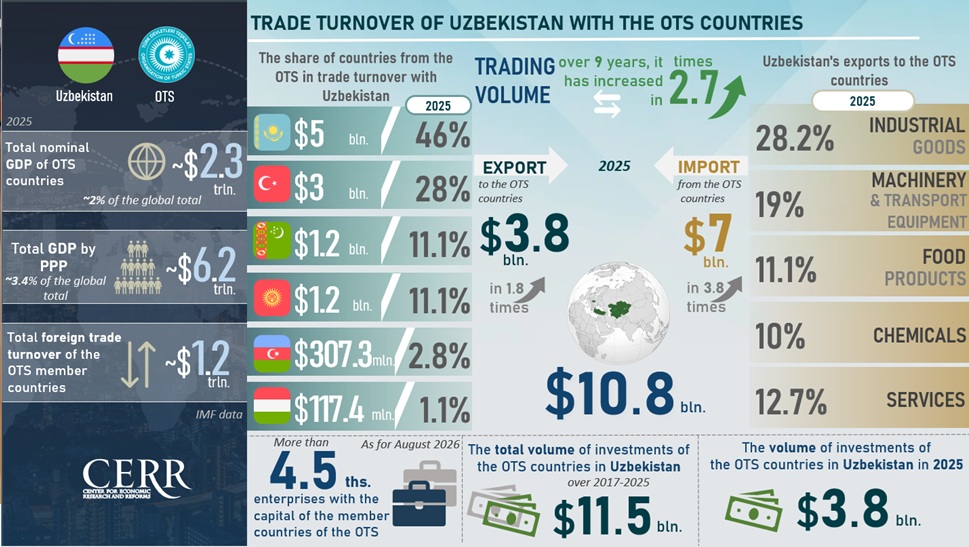
Uzbekistan has moved its economic cooperation with the Turkic states into a practical dimension
Ahead of the 13th Summit of the Organization of Turkic States, scheduled to be held in Ankara, economic cooperation within the OTS is acquiring new substance.
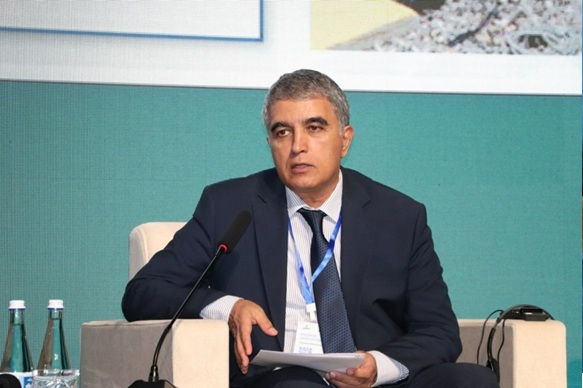
Water security in the turkic world: shared interests and common solutions
Water is a precious blessing that transcends national borders and has long connected peoples and civilizations.

Strengthening Transport Connectivity in Asia through the Development of the Trans-Caspian International Transport Corridor
Shifting international supply chains and expanding trade in Asia are driving demand for sustainable transport routes. For businesses, predictable delivery times, competitive rates, and reliable access to foreign markets are becoming increasingly important.