
Uzbekistan’s contribution to strengthening stability and cooperation in the SCO
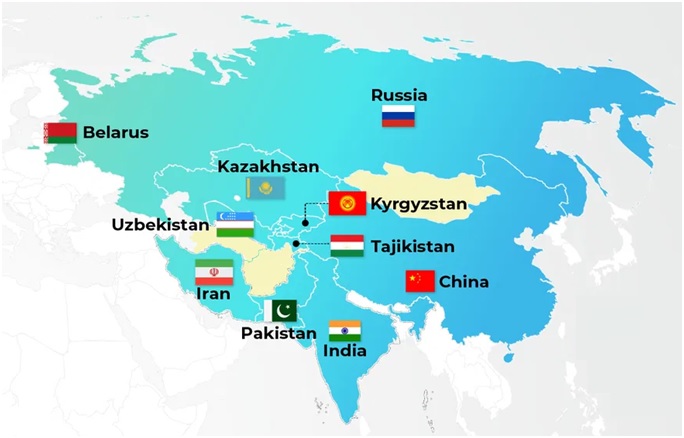
The Shanghai Cooperation Organization (SCO), on the threshold of its 25th anniversary, is entering a new stage of evolution, seeking to adapt to a changing geopolitical environment.
The next meeting of the SCO Council of Heads of State will take place in Tianjin on August 31 - September 1. The forum will sum up the results of China's chairmanship in the Organization, which, in difficult conditions, has done a great job of further strengthening mutually beneficial cooperation. This is evidenced by a solid package of documents prepared for signing following the summit, aimed at ensuring regional stability and security, strengthening interconnectedness, as well as sustainable economic development in the vast SCO space.
The Shanghai organization is becoming one of the pillars of the emerging multipolar world, offering an alternative approach to solving international problems based on mutual respect and cooperation. As noted by the President of the Republic of Uzbekistan Sh.M. Mirziyoyev, “today the SCO family is the world’s largest regional organization, uniting a vast geographical area and about half of the planet’s population.” He emphasized that the attractiveness of the SCO lies in its non-bloc status, openness, equality and refusal to interfere in internal affairs.
The new foreign policy strategy of Uzbekistan, implemented over the past eight years, is clearly reflected in the activities of the SCO. Within the framework of the Organization, the country puts forward many current initiatives and proposals that help improve its image in the international arena and correspond to the priority areas of socio-economic development. Uzbekistan is also actively contributing to enriching the existing agenda.
According to the leader of Uzbekistan, in modern conditions it is extremely important to prevent the SCO from turning into a confrontation-oriented bloc. The main goal is not to aggravate the international situation, but to demonstrate a peaceful agenda and use the potential of the SCO to solve common problems of humanity.
It was this vision that guided Uzbekistan from the first days of the creation of the Organization, advocating the progressive and comprehensive development of cooperation within the SCO. Being an active member of the SCO, our country chaired the Organization four times and made a significant contribution to its development.
The first SCO summit in Tashkent, held in 2004, was marked by the creation of the SCO Regional Anti-Terrorism Structure (RATS). The rules for granting observer status at the Organization were also adopted.
At the SCO summit in Tashkent in 2010, the procedure for admitting new members was approved, and the organizational basis for the SCO's activities was determined. In 2016, at the third Tashkent summit, a fundamental decision was made to expand the Organization - to admit India and Pakistan into its membership.
Since 2017, Uzbekistan has become more actively involved in the work of the Organization, putting forward proposals for the development of practical cooperation between the SCO countries. More than 80 of the 105 initiatives proposed by our country and aimed at deepening political, economic, innovative and humanitarian interaction were successfully implemented.
An important milestone in the activities of the SCO, undoubtedly, was the summit in Samarkand in 2022, at which more than 40 significant decisions, agreements, programs and conceptual documents were adopted. Among them, special attention was paid to the fundamental decisions of the heads of state on the second stage of expansion of the Organization - granting Iran the status of a member state, as well as on the beginning of the procedure for admitting Belarus to the SCO.
One of Uzbekistan’s key priorities is strengthening the role of Central Asia as the core of the SCO. As a result of the expansion, the countries of South Asia and the Middle East joined the Organization, and our region has become a natural link between the SCO states in the vast Eurasian space.
The development of regional cooperation in Central Asia helps to enhance interaction, strengthen security and ensure the prosperity of the SCO countries. In 2017, at the initiative of Uzbekistan, the Central Asian process of regional consolidation was launched, creating conditions for deepening cooperation.
Thanks to the political will of the Central Asian states, which made it possible to overcome numerous pressing problems and launch various joint projects, it was possible to create a stable and sustainable policy aimed at achieving the common goals of the region.
We can say that The strategy implemented in the SCO space under the leadership of Shavkat Mirziyoyev is based on such principles as constructiveness, pragmatism and initiative.
Firstly,starting from 2017, Uzbekistan’s attitude towards the Organization has become more constructive. Official Tashkent actively participates in all areas of SCO cooperation. Previously, country representatives did not fully participate in some security activities, including joint military and anti-terrorism exercises, as well as cultural and educational programs. Today, Uzbekistan influences the development of all areas and supports proposals of other members that meet common interests.
We can say that Uzbekistan, through its activity, contributes to the implementation of the principles of solidarity in accordance with the “Shanghai spirit”, which is the foundation of the SCO’s activities.
“The SCO is strong only when each of us is strong” - this is the statement of the President of the Republic of Uzbekistan at the 2020 SCO summit fully reveals the essence of the country’s constructive approach to working within this structure.
Secondly,the pragmatism of Uzbekistan’s foreign policy is also manifested in the SCO. The initiatives put forward by official Tashkent reflect national interests and priority directions for the country’s development and are fully consistent with the main objectives aimed at the sustainable development of the region. That is why these proposals are widely supported by all members of the Organization.
Recently, Uzbekistan has openly declared the need to direct the enormous potential of the SCO to the development of cooperation in such important areas from a practical point of view as transport, interconnectedness and logistics, innovative and digital development, cultural and people's diplomacy.
Thirdly,Uzbekistan has become one of the most proactive members of the SCO. This can safely be called the result of a strategy based on the above-mentioned constructivism and pragmatism. In other words, the desire to strengthen the Organization’s activities in important areas and enrich the agenda through new relevant areas is clearly reflected in the specific and large-scale initiatives put forward by Uzbekistan.
The similarity of priorities of Uzbekistan with the SCO member states is an important factor in deepening cooperation, turning the Organization into an effective engine of joint development.
All proposals of Uzbekistan are closely interconnected with the initiatives of the other member states, logically complement each other, and their implementation will lay a solid foundation for stability in the SCO space. This, in turn, depends on the development of strong trade and economic ties and effective transport and communication corridors.
Fourth,strengthening security in the SCO space remains one of the key tasks. Against the background of global challenges, such as traditional and new security threats, a growing deficit of mutual trust and the emergence of conflicts, the SCO continues to be a key player in ensuring stability in Central Asia.
The main task of the Organization is to jointly combat threats to regional and global security. An important step will be the adoption at the upcoming SCO summit in China of the Program to counter extremist ideology in the SCO space for 2026–2030, initiated by the President of Uzbekistan. It is aimed at consolidating efforts in the fight against ideological threats that undermine peace and stability.
Fifthly,deepening economic ties between member states is another important goal. This helps strengthen transport and logistics corridors, including the China-Kyrgyzstan-Uzbekistan railway, as well as simplify trade procedures and stimulate investment activity.
The key goal in the economic field is not only to increase trade turnover, but also to create joint production chains and technological clusters. In this regard, the Uzbek side initiated the development of a number of conceptual documents aimed at stimulating mutual trade, expanding investment cooperation and increasing transport connectivity.
Sixth,expanding cooperation in the humanitarian sphereThis area covers the development of tourism, educational exchanges and cultural initiatives aimed at strengthening mutual understanding between peoples. The SCO countries are seeking to promote their own cultural values, which, according to analysts, will help create a solid cultural foundation for long-term cooperation.
Experts believe that the further strategic development of the Organization will be strictly based on the provisions of key documents: the"SCO Charter", "Treaty on Long-Term Good Neighborliness, Friendship and Cooperation"and the "Main Directions of the SCO Development Strategy for medium-term perspective."The Shanghai organization strives to expand dialogue with other international organizations, such as the UN, the EAEU and ASEAN, in order to jointly solve global problems and adequately respond to the challenges of our time.
Undoubtedly, the next SCO summit will become an important milestone in the history of the Organization, demonstrating the readiness of its members to renew and adapt to the conditions of a rapidly changing and difficult to predict geopolitical situation in the world. The decisions adopted at the summit will not only lay the foundation for further strengthening security and cooperation in Eurasia, but will also strengthen the position of the SCO on the world stage.
Bahrom Sotiboldiev,
Head of the ISMI Department
President of the Republic of Uzbekistan
Related news
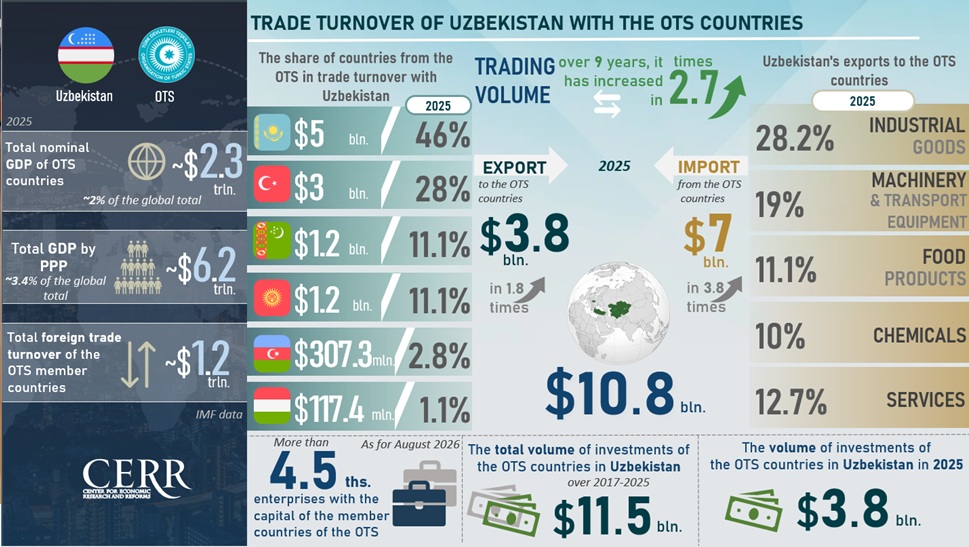
Uzbekistan has moved its economic cooperation with the Turkic states into a practical dimension
Ahead of the 13th Summit of the Organization of Turkic States, scheduled to be held in Ankara, economic cooperation within the OTS is acquiring new substance.
Water security in the turkic world: shared interests and common solutions
Water is a precious blessing that transcends national borders and has long connected peoples and civilizations.

Strengthening Transport Connectivity in Asia through the Development of the Trans-Caspian International Transport Corridor
Shifting international supply chains and expanding trade in Asia are driving demand for sustainable transport routes. For businesses, predictable delivery times, competitive rates, and reliable access to foreign markets are becoming increasingly important.