
A unique social protection system for Central Asia has been formed in Uzbekistan
A large-scale transformation of the social protection system is being implemented in Uzbekistan, aimed at improving the well-being of citizens and increasing the efficiency of social services. An important vector of this process is the Development Strategy of Uzbekistan “Uzbekistan - 2030”, aimed at a comprehensive and high-quality modernization of social policy.
In recent years, the country has been introducing innovative approaches to working with vulnerable categories of the population - low-income families, elderly people, persons with disabilities, victims of violence, women in crisis situations and children left without care parents.
Reforms are being implemented both at the legislative level and through specific programs and projects. A significant step was the creation in 2023 of the National Agency for Social Protection (NSPA) under the President of Uzbekistan - the only consolidated ministerial-level body in the region coordinating the implementation of social policies of the new generation.
Unlike neighboring countries, where social functions are distributed between several departments, Uzbekistan has combined all elements of social protection into a single digital system under the management of NASP. This made it possible to increase coordination of actions, efficiency, accountability and ensure a real improvement in the living conditions of vulnerable categories of the population.
Uzbekistan acceded to the Convention on the Rights of Persons with Disabilities in 2021. A number of benefits are provided for enterprises and organizations that employ such persons. Many institutions, streets and bus stops are gradually being adapted for the movement of people with disabilities.
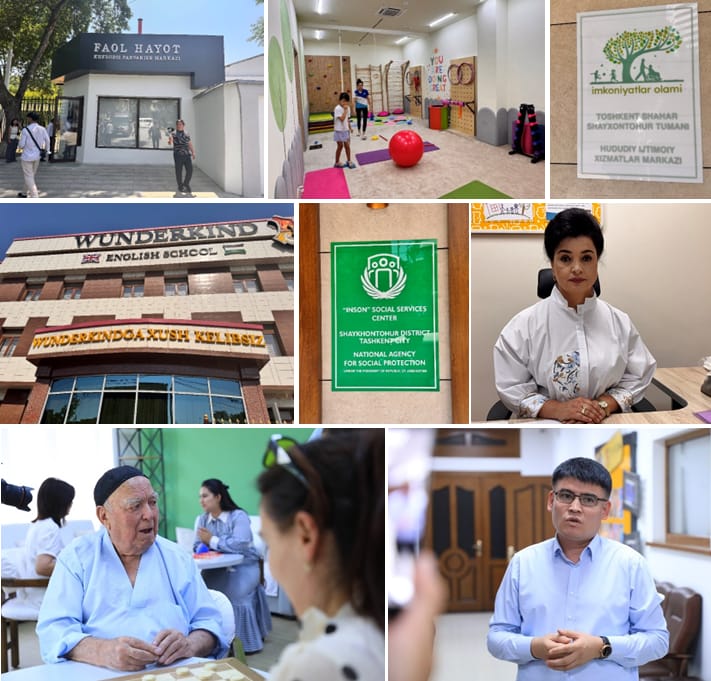
One of the key areas of reform is the development of the network of Inson Social Service Centers established in 208 districts and cities of the country. These centers operate on a “single window” principle and provide more than 100 types of social assistance, including psychological and legal counseling; food support; assistance for 12 categories of citizens, including the disabled, low-income and elderly people.
The centers are fully digitized, integrated with government systems and operate on the basis of an individual support model. Each citizen undergoes a needs assessment, receives a personalized support plan and accompaniment at all stages of recovery or social integration.
Each mahalla of Uzbekistan employs social workers, distributed on the basis of "region - district - mahalla" depending on the number of families in need and categories of the population.
In the second quarter of 2025, 1 million were admitted to the Inson centers 787 thousand applications, of which 1 million 204 thousand have been processed, and 496.2 thousand are in the process of consideration.
The most popular services are compensation for gas and electricity costs, child benefits and assistance to low-income families, as well as sanatorium treatment for the elderly and people with disabilities.
The program “From Poverty to well-being”, adopted by presidential decree of September 23, 2024, sets goals for preventing social orphanhood and caring for children deprived of parental care. The document is focused on creating conditions as close as possible to a family environment and on an individual approach to each child. In accordance with this, measures have been developed aimed at placing such children in foster care and providing them with social services. In particular, when placing a child in foster care, priority is given to preserving the family environment. The main forms of arrangement are guardianship, trusteeship or adoption. Placement in a specialized institution is considered only as a last resort.
Children who find themselves in crisis conditions are temporarily placed in family orphanages at Inson centers before being transferred to permanent care. An individual development plan is developed for each child. Record keeping is carried out through the “Social Protection” system, which records both identified orphans and families who have expressed a desire to take them into care.
Thus, the Inson centers act as legal representatives of children, protecting their interests, monitoring living conditions, targeted use of assistance and compliance with obligations by guardians.
President Uzbekistan Shavkat Mirziyoyev, having visited the Inson center in the Shaykhantakhur district of Tashkent, emphasized: “This is a place where they live with the concerns of every person, where they strive to make people happy. Through such a system, social justice and human dignity are established in our society.”
Particular attention in Uzbekistan is paid to families raising children with disabilities. As part of a public-private partnership, a specialized center “Imkoniyatlar olami” (“World of Opportunities”) was created, providing services to children from birth to three years. Previously, such children were exclusively under the care of their parents, and were accepted into specialized institutions only from the age of three. Now, if a risk of disability is identified during pregnancy, expectant mothers will be able to receive help and advice here, which will strengthen the care of the child. In addition, psychological support is provided.
From March 1, 2025, a day care service for children with disabilities aged 3 to 18 years began operating in the republic within the framework of a public-private partnership. It provides a wide range of services - social, rehabilitation, pedagogical and other necessary assistance. The initiative of the National Social Protection Agency under the President of Uzbekistan is aimed at promoting the social adaptation of children and allowing parents who were previously fully engaged in child care to return to professional activities.
One of the pilot projects in Tashkent is the private kindergarten “Wunderkind”, located in the Yashnabad district of the capital. Here, as part of the partnership, a day care service for children with special needs is successfully operating, pedagogical, social and rehabilitation services are provided.
Another project is the orphanage “Kichik Khazhmli Bolalar Uyi” No. 1, located in the Mirzo-Ulugbek district. Currently, there are 9 children in the institution - seven of them have various medical diagnoses (Down syndrome, dysplasia, anemia, anatomical heart defects), two are considered healthy. Education and upbringing are organized according to an individual approach - three children attend a specialized kindergarten, three attend a regular kindergarten, and three more are raised at home.
The institution pays special attention to an individual approach, love and care. Conditions have been created that are as close as possible to a family environment, and education is conducted in the spirit of family values. Teachers work according to individual development plans and social integration programs, taking into account the interests and abilities of each child. “Children themselves choose what they will eat for lunch and dinner, and sometimes even help teachers in the cooking process, which develops their sense of responsibility and independence,” emphasized one of the teachers.
It should be noted that at the moment there are 9 such houses in Uzbekistan - five of them are located in Tashkent, two each in the Kashkadarya and Samarkand regions.
According to the resolution of the Cabinet of Ministers of Uzbekistan “On measures to introduce the procedure for using new social services on a voucher basis for persons in need of external care”, the program “Faol khayotga kadam” (“Step into an active life”) is being implemented. Within its framework, adults with disabilities or in need of constant care are provided with free social services using vouchers. These include care, supervision and assistance at home, nutrition, hygiene support, and psychological assistance. An example of the implementation of the program was the center created in the Nodirabegim mahalla of the Mirzo-Ulugbek district. It seats 9 people and currently serves 7 citizens. The institution employs 5 specialists with extensive professional experience.
Primary school teacher at the “Wunderkind” school Iroda Khamidova:
– There are currently 7 children in a special center for children with disabilities, opened at our school and designed for 9 pupils. Two teachers and one assistant teacher work with them. There is a psychological service here, and the work of the center is organized in a 9-hour mode, 5 days a week.
Teachers make every effort to develop basic skills in children. For example, so that a child can learn to hold a spoon or show creativity using a pencil.
The center was opened on the initiative of our President, as part of a project to support children with disabilities.
Thanks to this decision, we created our center, and today there are all the necessary conditions here. There is a psychologist's office where not only children, but also their parents receive help. They undergo consultations, receive moral support and feel more confident, seeing in what conditions their child is and with what attention they are treated.
Chief Specialist of the Office for the Development of Medical and Social Services for Persons with Disabilities of the National Agency for Social Protection Farkhod Kamilov:
– The National Agency for Social Protection launched a pilot project on March 1, 2025 to organize day care services in seven regions of the republic, including the city of Tashkent.
Before October 1, we plan to extend this service to other regions of the country. But I want to note that we have already signed agreements with entrepreneurs in all regions of the republic. These agreements were concluded within the framework of a public-private partnership.
Today, the day care service covers 1,200 children, and we consider it important to better inform the public about their characteristics and needs.
There are psychological, medical and pedagogical commissions under the territorial departments of the agency. These commissions conduct a comprehensive examination of children with special educational needs and issue opinions on the most suitable form of education for them. This may be inclusive, special education or referral to a day care service.
It is important to understand that day care services do not involve an educational process. She is focused exclusively on education and care. The entrepreneur provides care for the child for 9 hours a day, which allows parents to rest, get a job or do other things.
With additional agreement with the parents, it is possible to extend the child’s stay in the center up to 12 hours. However, in any case, the child must return home - to the family, to the arms of the parents.
Our main goal is to reduce the number of cases of children being placed in boarding schools or prevent it altogether. It is for this purpose that such day care services were created.
IA «Dunyo»
Related news
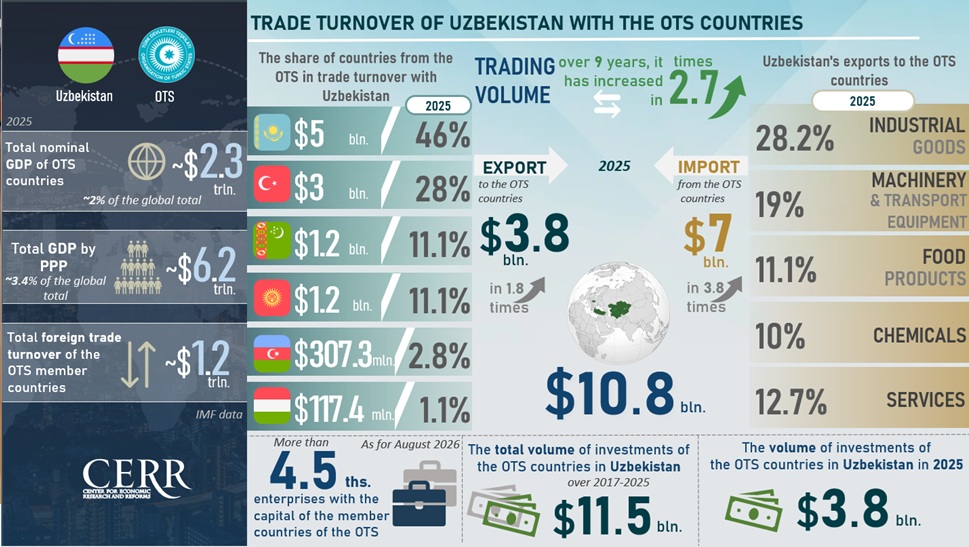
Uzbekistan has moved its economic cooperation with the Turkic states into a practical dimension
Ahead of the 13th Summit of the Organization of Turkic States, scheduled to be held in Ankara, economic cooperation within the OTS is acquiring new substance.
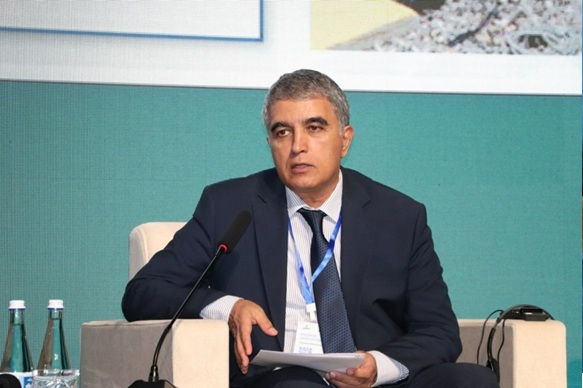
Water security in the turkic world: shared interests and common solutions
Water is a precious blessing that transcends national borders and has long connected peoples and civilizations.

Strengthening Transport Connectivity in Asia through the Development of the Trans-Caspian International Transport Corridor
Shifting international supply chains and expanding trade in Asia are driving demand for sustainable transport routes. For businesses, predictable delivery times, competitive rates, and reliable access to foreign markets are becoming increasingly important.