
Uzbekistan-Türkiye: a new stage of cooperation and prospects for the development of cultural and humanitarian ties
It is worth noting that one of the greatest achievements of Uzbekistan during the years of independence is ensuring peace, interethnic harmony and mutual understanding among the multinational population. In particular, the wise national policy developed in our country in recent years is based on the main idea: “Multinationality is the wealth of Uzbekistan.”
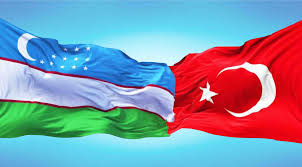
It should be emphasized that currently cooperation between Uzbekistan and Turkey is becoming increasingly important both in quantitative and qualitative terms. Relations between the two countries, as a truly new stage of strategic cooperation, clearly indicate that even today the Turkish and Uzbek peoples are truly historically fraternal peoples, not only in ethnic origin, but also in spirit. Despite all the changes in historical development, these two fraternal peoples are steadily and diligently strengthening their national statehood, carrying out the necessary reforms to remain competitive in a rapidly changing world. In this context, Turkey's developed industry, achievements in agriculture, tourism potential, extensive experience of statehood and the growing natural interest of Turkish investors in the Uzbek market are of great importance for our country.
Such closeness and commonality of approaches are the most reliable guarantee that the development of cultural and humanitarian ties between Uzbekistan and Turkey will continue to strengthen and deepen for the benefit of the peoples of the two countries.
In particular, the reason for this is the age-old ties of friendship, brotherhood and mutual understanding between the Uzbek and Turkish peoples, as well as the closeness of the culture, religion and traditions of the peoples of both countries. It also shows that the relationship has deep historical and cultural roots that provide a strong foundation. Moreover, culturally and historically, these two countries played a central role in the development of the civilization of the Turkic peoples. Therefore, at the VII Summit, held in Baku on October 15, 2019, Uzbekistan’s accession to the Cooperation Council of Turkic-Speaking States as a full member was highly appreciated by all participating states and was greeted with enthusiasm. In turn, it can be said without exaggeration that this event not only strengthened the spirit of brotherhood in the Turkic world, but also led to the emergence of a new regular format of cooperation between Ankara and Tashkent.
At the VIII summit of the organization, held in Istanbul on November 12, 2021, its name was changed to the Organization of Turkic States. The concept of the Turkic world for the period until 2040 was also approved at the summit. President of Uzbekistan Shavkat Mirziyoyev proposed holding the first summit of the Organization of Turkic States in Uzbekistan in 2022. The proposal was accepted, and the next, IX summit of the organization was held in Uzbekistan in November 2022.
It is important to emphasize that the leaders of the two countries celebrated in 2022 the 30th anniversary of the establishment of diplomatic relations and the 5th anniversary of the establishment of strategic partnership relations, and our point of view is confirmed by the agreement to strengthen cooperation in the field of reforms in Uzbekistan, the introduction of public-private partnership mechanisms and deepening partnerships in the fields of science, education, art, cinema, tourism and information.
In addition, the President of the Republic of Uzbekistan Sh.M. Mirziyoyev is actively implementing a large-scale reform program aimed at expanding the economic opportunities of Uzbekistan, increasing the well-being and standard of living of the population. The success of this policy, to some extent, depends on bringing our country’s effective relations with external partners in the international community to a new qualitative level. It is also worth noting that today Uzbekistan is responding to dramatic changes in the world with a new active, pragmatic and constructive foreign policy.
The goals of modernizing the economy of our country and increasing its global competitiveness require strengthening cooperation with foreign partners in the field of industrial cooperation, studying the experience of developed countries and attracting foreign investment and high technology on a large scale. In this regard, it should be noted that the economic development strategies of Uzbekistan and Turkey can complement each other in a number of important areas. This is due to the fact that Turkey is among the 20 largest economically developed countries in the world and has achieved high results in such important industries for Uzbekistan as tourism, textiles, automotive, construction and food processing.
In particular, Turkey's textile and jewelry industries are among the top five in the world. 44 Turkish construction companies are included in the list of the 250 largest construction companies in the world. According to this indicator, Türkiye ranks second after China, one of the world's economic leaders. While the country's food industry has managed to enter Western markets and strengthen its position there, the Turkish automobile industry is on the verge of a transition from the production of conventional cars to the mass production of domestic electric vehicles. This once again confirms that Türkiye is an important economic partner for us. Because the beginning of laying the foundations of a completely new export-oriented model of economic development in New Uzbekistan requires systemic changes in all sectors of the economy and further strengthening of ties with reliable external partners with whom industrial cooperation in these sectors can be developed.
Thus, in recent years, in a historically short period of time, a solid foundation has been laid for revolutionary changes in Uzbek-Turkish relations that will last for centuries - important program plans have been developed and decisive practical steps have been taken. There is no doubt that such development of relations will further increase the prestige of Uzbekistan and Turkey in the international arena, ensure the stability of the economic growth rates of both countries, the socio-economic well-being of the peoples and the full realization of their creative potential.
Not only bilateral relations are actively developing between Turkey and Uzbekistan, but also cooperation is being carried out in multilateral formats. Participation in the Organization of Turkic-Speaking States is also one of the important components of international cooperation between Uzbekistan and Turkey.
Currently, Uzbekistan has created ample opportunities for citizens of more than 130 different nationalities to actively participate in socio-economic, political-legal, spiritual and educational life, to understand their national identity and preserve their national values. It also provides for interethnic harmony and religious tolerance, national unity and solidarity, and, above all, the education of a harmoniously developed generation that understands its national identity on the basis of a rich historical and spiritual heritage, national values, customs and traditions, has a high sense of national pride and has a worldview formed on the basis of universal human values, modern technologies and scientific achievements.
Currently, in New Uzbekistan, cohesion and mutual understanding are the main principles of policy in the field of interethnic relations, aimed at maintaining unity and harmony in society, where an important aspect is not only the protection of the interests of various ethnic groups, but also the formation of a civil identity based on respect and attention to the rights of others.
In the direction of interethnic relations Decree of the President of the Republic of Uzbekistan No. UP-52 dated March 19, 2025 “On measures to bring to a new stage the strengthening of national harmony and ties with compatriots abroad” was adopted, in which the harmonization of interethnic relations in society and the formation of a single civic identity through strengthening friendship, mutual solidarity, tolerance and cohesion in society are identified as one of the priority tasks of strengthening national harmony and ties with compatriots abroad abroad.
The Committee is determined by the authorized republican executive body implementing state policy in the field of interethnic relations, supporting compatriots abroad and coordinating the activities of government bodies in this direction.
The main objectives of the Committee are: harmonization of interethnic relations, the formation of a single civil identity by strengthening friendship, mutual solidarity, tolerance and unity in society; strengthening the involvement of all nationalities and nationalities living in Uzbekistan with national development, by ensuring their rights and legitimate interests; development of socio-cultural, friendly ties with foreign countries through the mechanisms of public diplomacy; support for the mobilization of the socio-economic potential of compatriots abroad for the development of our Motherland, as well as in the systematic analysis of issues of national cohesion of the people of Uzbekistan and compatriots abroad in the name of common goals of society.
The Committee has taken significant steps to develop cooperation with the USA, Canada, China, Azerbaijan, Turkey and a number of other countries in order to bring the work on the consistent implementation of state policy regarding compatriots living abroad to a new level.
Currently, the Committee is implementing state policy aimed at ensuring interethnic harmony and tolerance in society and supporting the mobilization of the socio-economic potential of compatriots abroad for the development of our Motherland, establishing friendly international relations, strengthening friendship with civil societies of foreign countries, as well as implementing the mechanism of “public diplomacy” with 157 national cultural centers, 43 friendship societies located on the territory of the republic, as well as with more than 60 sister cities and about 100 societies compatriots abroad.
Enormous opportunities have been created for the preservation, demonstration and development of national identity, language, traditions, customs, history and culture of various nationalities. In addition, the role of national cultural centers created by representatives of different nationalities living in our country is of particular importance in strengthening the cultural cooperation of New Uzbekistan with foreign countries.
In particular, the Turkish National Cultural Centers were created in 1991 in Bukhara, in 1992 - in Tashkent, and in 1997 - the Turkish National Cultural Center Uzbekistan.
Since 1997, the main activities of the Turkish National Cultural Center of Uzbekistan (chairman Umar Ibrahimovich Salmanov) are aimed at reviving the Turkish language, culture, traditions and customs, therefore the Center has created a “Council of Elders”, “Council of Women”, “Youth Wing”, as well as a department for working with sports clubs and ensembles.
Currently, under the auspices of the Center, there are 3 folk ensembles: “Sevinch”, “Anadolu” and a women’s folk group.
In 1999, under the leadership of an honorary member of the Turkish National Cultural Center of Uzbekistan Mikail Suleymanov, the comedy theater "MIKO" was founded. The performances he created were shown in Russia, Kazakhstan, Kyrgyzstan and Azerbaijan. These theatrical productions are mainly aimed at strengthening unity, solidarity and harmony between representatives of different nationalities.
A number of representatives of Turkish nationality were awarded state awards for their contribution to strengthening interethnic harmony, mutual understanding and friendship in our country.
The first information about the arrival of the Turks on the territory of Uzbekistan is contained in diary of the Spanish ambassador Gonzalez de Clavijo. Written sources mention Turkish musicians at the court of Temurid Shahrukh. There is information that Turkish merchants and artisans settled on the territory of modern Uzbekistan in the late Middle Ages to engage in trade and craft.
When did the Turks arrive in Uzbekistan? We thought for a long time trying to answer this question. More than 100 sources were studied. As a result, we received different answers. The first representatives of Turkish nationality settled in the territory of modern Uzbekistan, in the lands of Akhsi, which corresponds to the territory of the modern Namangan region, when Turkic peoples migrated from the Yenisei to the state known today as Türkiye. The second part arrived during the reign of Amir Timur, that is, in the 1400s.
In 1992, the number of representatives of Turkish nationality living in Uzbekistan was 21,000 people, and today it has exceeded 50,000.
Currently, citizens of Turkish nationality living in Uzbekistan actively participate in political, economic, social and cultural life republic, making its worthy contribution to the development and progress of the state.
The visit of the President of Uzbekistan to Turkey opened a new era in the comprehensive strategic partnership between the two countries, based on mutual trust and expressing the desire for long-term, mutually beneficial cooperation for the benefit of our peoples.
Official visits of the leaders of the two countries contribute to strengthening political dialogue and demonstrating fruitful practical partnerships. In order to further develop bilateral cooperation, the parties discussed in detail the priority areas for further expansion of the partnership, including in such areas as trade and economics, investment, transport, textile industry, energy, agriculture, as well as cultural and humanitarian exchange.
In addition, in accordance with the Action Plan for 2026-2027, signed between the Ministries of Foreign Affairs of Uzbekistan and Turkey, the most established effective cooperation aimed at ensuring sustainable development and prosperity based on lasting security.
It is noteworthy that the first part of the book by the President of Uzbekistan Sh.M. Mirziyoyev “Modernity and New Uzbekistan” is called “The path of sustainable development chosen by humanity.” The fact that it reflects the priority criteria for human development in the 21st century and the good goals of global significance set out in the document “The 2030 Agenda for Sustainable Development” confirms our above ideas.
In general, the main and most important factor in maintaining socio-political stability in Uzbekistan is the ability to ensure unity and national harmony among the multinational population. It should be separately noted that national understanding, national unity, strengthening day after day in our society, serve the processes of unity on an ethnic and cultural basis among representatives of all nationalities living in Uzbekistan.
Saodat Davlatova,
Head of the Department of the Committee on Issues internationalrelations and
compatriots abroad of the Republic of Uzbekistan,
Doctor of Historical Sciences, Professor
Related news
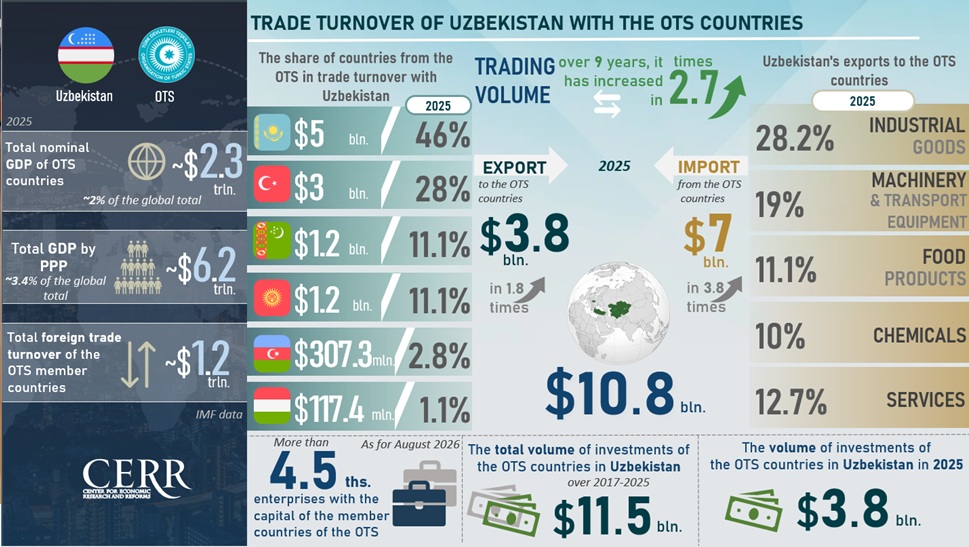
Uzbekistan has moved its economic cooperation with the Turkic states into a practical dimension
Ahead of the 13th Summit of the Organization of Turkic States, scheduled to be held in Ankara, economic cooperation within the OTS is acquiring new substance.
Water security in the turkic world: shared interests and common solutions
Water is a precious blessing that transcends national borders and has long connected peoples and civilizations.

Strengthening Transport Connectivity in Asia through the Development of the Trans-Caspian International Transport Corridor
Shifting international supply chains and expanding trade in Asia are driving demand for sustainable transport routes. For businesses, predictable delivery times, competitive rates, and reliable access to foreign markets are becoming increasingly important.