
Uzbekistan is building routes to the future together with international partners
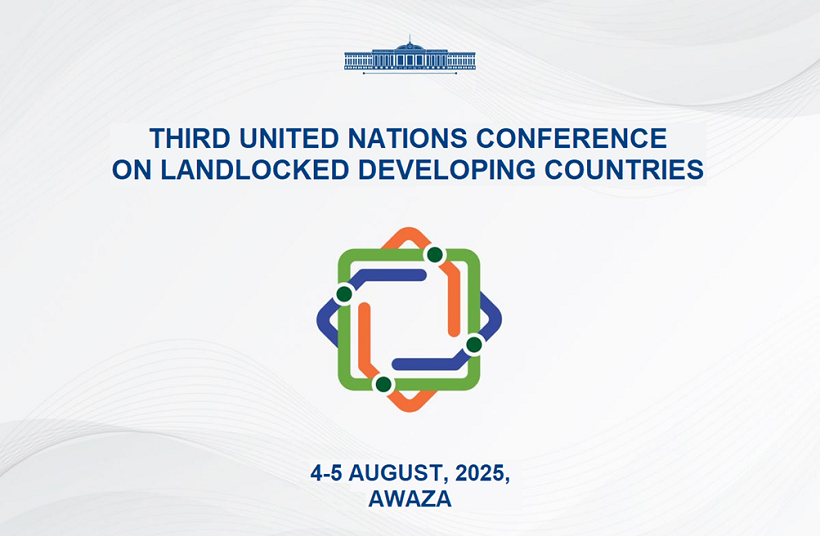
On August 5, President of Uzbekistan Shavkat Mirziyoyev will take part in the III UN Conference on Landlocked Developing Countries (LLDC-3), which will be held in the tourist area Avaza in Turkmenistan.
III Conference is organized by the UN Secretariat jointly with the government of Turkmenistan.
The upcoming forum is expected to be attended by heads of state and government, more than 100 high-level delegations, including representatives of 32 developing countries, as well as UN Secretary-General Antonio Guterres.
The conference will include political, diplomatic, trade, economic, cultural and humanitarian events, including the national days of the Central Asian countries, which will present their culture, art and national cuisine. An exhibition will also be organized dedicated to national achievements, investment and infrastructure projects, and technological solutions of the countries of the region.
The Group of Landlocked Developing Countries includes 32 UN member states. Among the CIS countries, its participants are Armenia, Azerbaijan, Kazakhstan, Kyrgyzstan, Moldova, Tajikistan, Turkmenistan and Uzbekistan. The main goals of the group are to develop and promote the collective economic interests of member countries, the effective implementation of globally agreed objectives and programs of action, and strengthening a common position on major international economic issues within the UN, the World Trade Organization and other multilateral forums.
The International Conference on Landlocked Developing Countries is the main decision-making platform for LLDCs and is held once every ten years.
The first conference was convened on August 28-29, 2003 in Almaty (Kazakhstan) in accordance with UN General Assembly resolution 57/242. This meeting was preceded by two sessions of an open-ended intergovernmental preparatory committee.
The conference resulted in the adoption of the Almaty Program of Action (APA), aimed at creating a global framework for creating efficient transit transport systems, improving administrative procedures and simplifying border control procedures.
The second LLDC conference took place on November 3-5, 2014 year in Vienna (Austria). The main outcome of the event was the Vienna Program of Action for 2014-2024. It provided for the consistent satisfaction of the special needs of landlocked developing countries in solving the problems they face in the field of development and poverty eradication and other measures.
Uzbekistan actively participates in international efforts within the framework of these documents aimed at solving specific problems. In particular, measures are being consistently implemented to develop a sustainable transport and logistics infrastructure, diversify trade routes and strengthen regional cooperation. They have become one of the key areas of the national development strategy, which is directly related to the achievement of the UN Sustainable Development Goals.
In 2022, the UN General Assembly unanimously approved a special resolution on strengthening connectivity between Central and South Asia, initiated by Uzbekistan in co-authorship with 40 countries.
In recent years, the country has become an initiator and participant in large-scale projects, such as the Trans-Afghan Railway Corridor, the development of the Middle Transport Corridor, the Belt and Road Initiative, Chinese-Central Asian projects.
This is complemented by efforts to modernize the internal infrastructure - the construction and electrification of railways and the creation of modern logistics hubs and terminals. In parallel, Uzbekistan is actively promoting its agenda in the Organization of Turkic States, the Economic Cooperation Organization, the Shanghai Cooperation Organization and other regional formats.
The multi-vector approach is already yielding results: transit volumes through Uzbekistan are growing, its role as a transport hub in Eurasia is strengthening. And most importantly, the country is strengthening its resistance to external risks and paving the way for full integration into the global economy, despite objective geographical restrictions.
Thus, Uzbekistan’s double distance from the sea is no longer perceived as a challenge. Today for Uzbekistan, this is a strategic factor that determines international priorities and turns the country into an active player in the new Eurasian logistics.
The participation of the President of Uzbekistan Shavkat Mirziyoyev in the upcoming UN conference in Turkmenistan, as experts emphasize, will once again confirm the country’s commitment to strengthening international solidarity and finding sustainable solutions to the problem under discussion and will make it possible to make a constructive contribution to the formation a new agenda for the integration of landlocked countries into global economic processes.
IA “Dunyo”
Related news
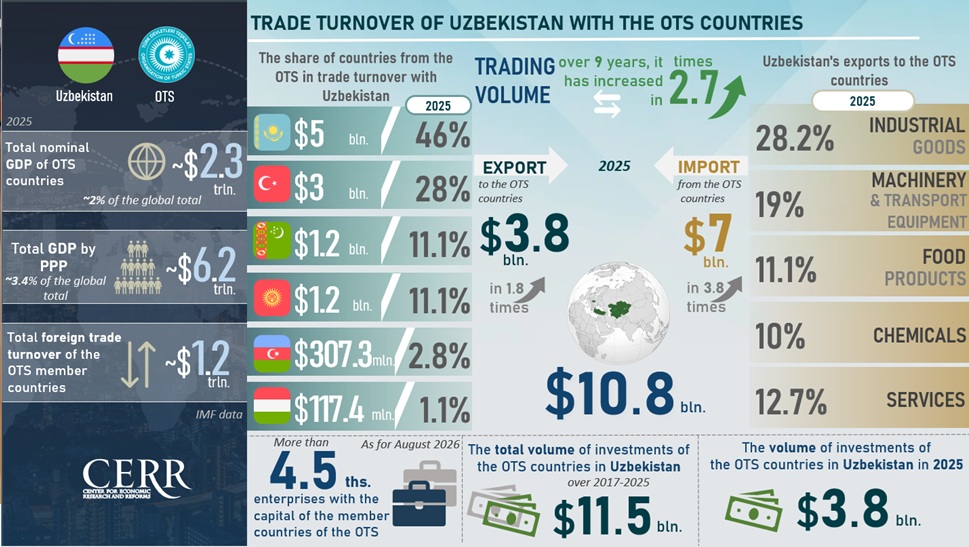
Uzbekistan has moved its economic cooperation with the Turkic states into a practical dimension
Ahead of the 13th Summit of the Organization of Turkic States, scheduled to be held in Ankara, economic cooperation within the OTS is acquiring new substance.
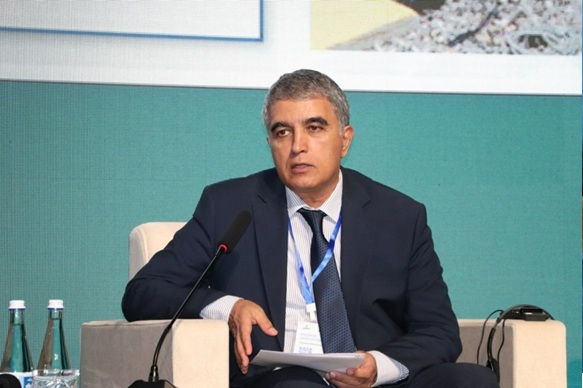
Water security in the turkic world: shared interests and common solutions
Water is a precious blessing that transcends national borders and has long connected peoples and civilizations.

Strengthening Transport Connectivity in Asia through the Development of the Trans-Caspian International Transport Corridor
Shifting international supply chains and expanding trade in Asia are driving demand for sustainable transport routes. For businesses, predictable delivery times, competitive rates, and reliable access to foreign markets are becoming increasingly important.