
Uzbekistan and China: strategic partnership in an era of global change
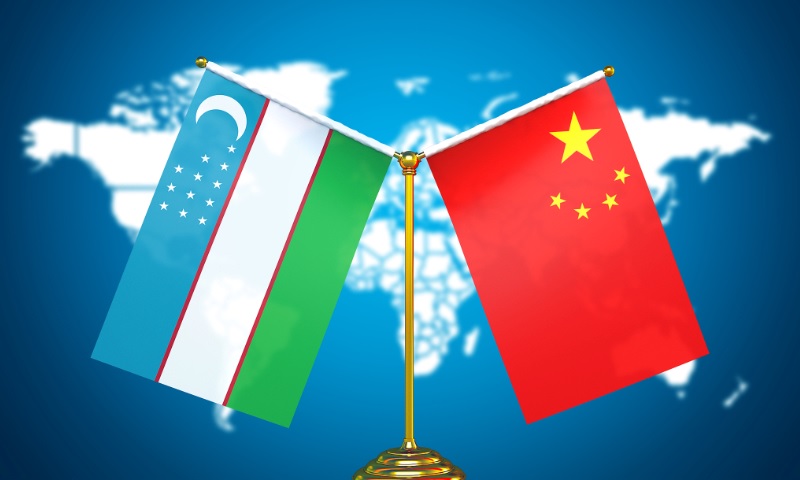
In international relations of the 21st century there are examples of alliances that not only secure economic benefits, but form new guidelines for entire regions. One such example is the interaction between Uzbekistan and China, whose cooperation in recent years has acquired the status of an all-weather comprehensive strategic partnership in a new era.
Leaders setting the course
The role of regular contacts at the highest level cannot be ignored. In January 2024, President of Uzbekistan Shavkat Mirziyoyev visited Beijing on a state visit, during which he met with Chinese President Xi Jinping. More than 40 documents were signed then, covering interaction in energy, industry, and the development of humanitarian ties, and in the summer of 2025, the heads of the two states again held talks in Astana, emphasizing an unprecedented level of mutual trust.
These visits laid the foundation for a systemic dialogue: the format of strategic consultations of foreign ministers was launched, and interregional exchanges noticeably intensified. Thus, in June 2025, the Second Uzbek-Chinese Interregional Forum was held in Samarkand, which showed that cooperation between the two countries is not limited to the capitals, but goes deep into the regions.
Economy: growth measured in billions
China has held the title of the largest trade and economic economy for several years partner of Uzbekistan. In 2023, mutual trade turnover exceeded $13 billion, and in 2024 reached $14 billion. The goal for the next few years is $20 billion, and it seems realistic given the rate of growth.
Investments confirm the strategic nature of cooperation. The total portfolio of joint projects has already exceeded $60 billion, with more than $10 billion invested in the economy of Uzbekistan in 2024 alone, and another $3 billion in the first months of 2025. There are already about 4,000 enterprises in the country with the participation of Chinese capital, of which more than 800 were created over the past year.
This dynamics is ensured by reforms in the investment policy of Uzbekistan. In recent years, 89 free economic zones and almost 700 industrial sites of various formats have been created, offering tax incentives and modern infrastructure. This reduces barriers for investors and speeds up the launch of new production facilities.
Energy remains one of the key areas of bilateral cooperation. Uzbekistan has set an ambitious goal: to increase the share of renewable energy sources to 54% by 2030. Chinese companies have actively joined this transformation. In December 2024, large solar power plants were launched in the Kashkadarya and Bukhara regions. The projects worth $650 million were the largest in the region and set the tone for the development of green energy in Central Asia.
In the transition to new energy sources, an equally significant step was cooperation with the Chinese auto giant BYD. In 2024, production of electric and hybrid cars began in Uzbekistan, and in the coming years it is planned to increase production to 300 thousand units per year. This will not only saturate the domestic market, but also turn the country into an exporter of modern transport solutions.
The path to a new Eurasia is opened by interaction between Uzbekistan and China in the field of logistics. The integration of Uzbekistan into global trade chains is impossible without the development of transport infrastructure. The symbol of this strategy was the start of construction in December 2024 of the China-Kyrgyzstan-Uzbekistan railway. The new route through Central Asia should connect the country with markets in East and Southeast Asia, which will give a powerful boost to its exports and strengthen its position as a regional logistics hub. This project fits seamlessly into the Belt and Road Initiative and opens up prospects for deep integration into the Eurasian corridors.
Humanitarian ties: investments in human capital
Cooperation between the two countries goes far beyond economics. China provides technical and humanitarian assistance, including supplies of medical and educational equipment. The PRC's experience in the fight against poverty is being actively implemented.
In the educational sphere, new joint Uzbek-Chinese projects have opened in recent years: a branch of the Chinese Northwestern University of Agriculture and Forestry, the International Mathematical Center at Urgench State University, and the “Lu Ban Workshop” program has been launched. The 20th anniversary of the Confucius Institute in Tashkent, which plays a key role in the dissemination of the Chinese language and culture, was also an important milestone.
In 2026, cross-weeks of culture and art are planned, which will add a new dimension to humanitarian interaction.
Cooperation at multilateral platforms and interregional communications
The bilateral dialogue is actively supported by interaction within international structures. In June 2025, the parties confirmed their readiness to strengthen coordination at the UN, SCO platforms, as well as in the “Central Asia – China” format. Uzbekistan views the SCO as a strategic platform for attracting investments in renewable energy, the development of mechanical engineering and the creation of new transport corridors.
The Protocol signed in the summer of 2025 on the completion of bilateral negotiations on Uzbekistan’s accession to the WTO is a vivid example of how partnership with China is acquiring an international dimension. Beijing's support on such platforms demonstrates that this is not only about regional interests, but also about the global trade architecture.
Cooperation is actively developing at the regional level. At the beginning of June 2025, Samarkand hosted the Second Uzbek-Chinese Interregional Forum, which became a platform for practical interaction between business structures, discussion of new projects in the agricultural sector, textile industry, tourism and small business. This format is especially important for expanding horizons: regions of Uzbekistan gain direct access to Chinese investors, and Chinese provinces find new opportunities for cooperation in Central Asia.
To summarize, I would like to note: Uzbekistan and China demonstrate that strategic partnership is not a declaration, but consistent work supported by concrete results. Multi-billion dollar investments, new transport corridors, joint green energy projects, educational initiatives and cultural exchanges are turning bilateral relations into the foundation of regional stability.
Today we can confidently say: the union of Tashkent and Beijing has become one of the key pillars of the new Eurasia. This partnership is not limited to the pragmatics of the current day - it forms a strategic vector that determines the future of Central Asia in the global coordinate system.
Ilzat Kasimov,
Deputy Minister of Investment,
industry and trade
Republic of Uzbekistan
Related news
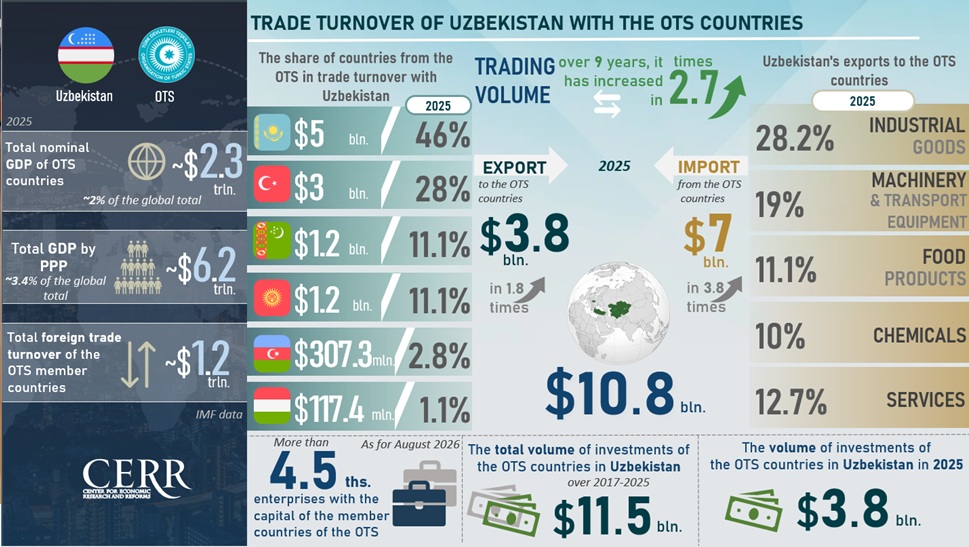
Uzbekistan has moved its economic cooperation with the Turkic states into a practical dimension
Ahead of the 13th Summit of the Organization of Turkic States, scheduled to be held in Ankara, economic cooperation within the OTS is acquiring new substance.
Water security in the turkic world: shared interests and common solutions
Water is a precious blessing that transcends national borders and has long connected peoples and civilizations.

Strengthening Transport Connectivity in Asia through the Development of the Trans-Caspian International Transport Corridor
Shifting international supply chains and expanding trade in Asia are driving demand for sustainable transport routes. For businesses, predictable delivery times, competitive rates, and reliable access to foreign markets are becoming increasingly important.