
Uzbekistan and Kazakhstan: partnership for a sustainable future of the region
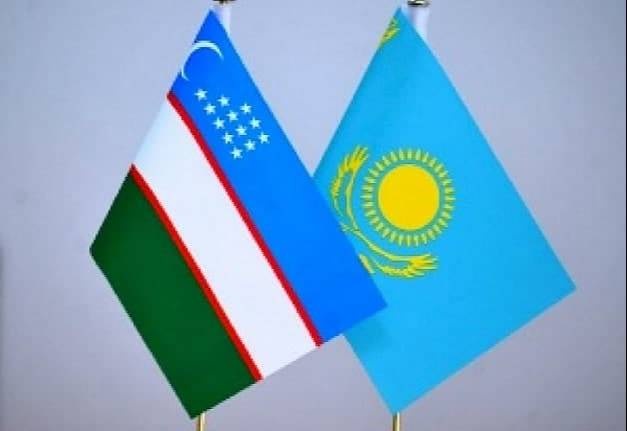
Cooperation in the field of ecology and environmental protection between Uzbekistan and Kazakhstan demonstrates the dynamic development and strengthening of strategic interaction based on trust, mutual understanding and a common desire for environmental safety of the Central Asia.
The partnership between the two countries in the field of ecology has a strong legal basis. The basis for joint activities was the Intergovernmental Agreement on Cooperation in the Field of Environmental Protection and Rational Use of Natural Resources, signed on June 2, 1997. A new impetus for interaction was given by the updated agreement concluded on December 22, 2022, which came into force on November 20, 2024. Within the framework of this agreement, the Uzbek-Kazakh joint working group on environmental protection and water quality in the Syrdarya River basin operates effectively. The group regularly exchanges data and jointly monitors the state of the river, and also organizes mutual visits of experts. The planned accession of Kyrgyzstan and Tajikistan to this platform will expand regional cooperation and increase the efficiency of environmental monitoring in the Syrdarya basin.
One of the significant achievements was the signing of a Memorandum of Cooperation on the conservation of wildlife on the Ustyurt Plateau between Uzbekistan and Kazakhstan in February 2024 on the sidelines of the CMS COP-14 conference in Samarkand. Later, Turkmenistan also joined it, which emphasized the multilateral nature of the initiative. In March 2025, the first meeting of the parties took place in Astana, following which the Action Roadmap for 2025–2030 was approved.
Bilateral contacts are actively developing in other directions. In recent years, numerous visits by high-level delegations have taken place: participation of ministers in international forums and congresses, meetings of the Interstate Commission on Sustainable Development of IFAS, as well as the exchange of experience in reforestation and combating desertification.
In the field of transboundary issues, ecology remains an area of constructive interaction. Thus, previously recorded appeals from the Kazakh side regarding the solid waste landfill in Keles (Tashkent region) were promptly resolved - the landfill was reclaimed and closed.
Long-term cooperation in the environmental area is accompanied by mutual recognition of merit. On November 13, 2024, the Minister of Ecology and Natural Resources of Kazakhstan, Erlan Nysanbaev, was awarded the badge of Uzbekistan “Defender of Nature” (“Tabiat himoyachisi”) - a sign of high trust and respect for teamwork.
In addition to bilateral cooperation, Uzbekistan and Kazakhstan are actively promoting multilateral environmental initiatives.
Among the key documents is the Memorandum on the management and protection of the transboundary UNESCO World Heritage Site “Western Tien Shan”, signed in 2019 by Kazakhstan, Kyrgyzstan and Uzbekistan. In 2021, a Memorandum on the conservation of the snow leopard and its ecosystems in the Western Tien Shan and Pamir-Alai was signed in Glasgow.
A landmark achievement was the inclusion of the “Turan temperate deserts” (Kazakhstan, Turkmenistan, Uzbekistan) in the UNESCO World Natural Heritage List on the 45th session of the World Heritage Committee in Riyadh in September 2023.
Regional environmental initiatives are also supported within the framework of the SCO, IFAS, CAREC and the Blue Peace Central Asia program. Joint statements developed by the countries of the region were repeatedly presented at the largest climate platforms, including COP-28 in Dubai.
Of particular importance was the opening in February 2024 of the Central Asian University for the Study of the Environment and Climate Change (Green University), which became a new center for training specialists in the field of ecology and sustainable development.
In 2025, the countries continued active exchange of experience and ideas: participation in the Eco Expo Central Asia exhibition in Tashkent, the meeting of Central Asian Ministers of Ecology in Aktau, international forums in Almaty and Pavlodar.
All these events are united by one goal - a sustainable future of the region is impossible without joint actions.
Thus, Uzbekistan and Kazakhstan demonstrate an example of effective and efficient cooperation based on mutual respect, strategic vision and shared responsibility for the conservation of natural heritage. Bilateral and multilateral initiatives form a solid foundation for further strengthening the environmental security of Central Asia, where every joint decision becomes a contribution to the common green future of the region.
Makhmud Khaidarov,
Chief Specialist of the Department of International Cooperation and Ratings of the Ministry of Ecology,
Environmental Protection and climate change
Related news
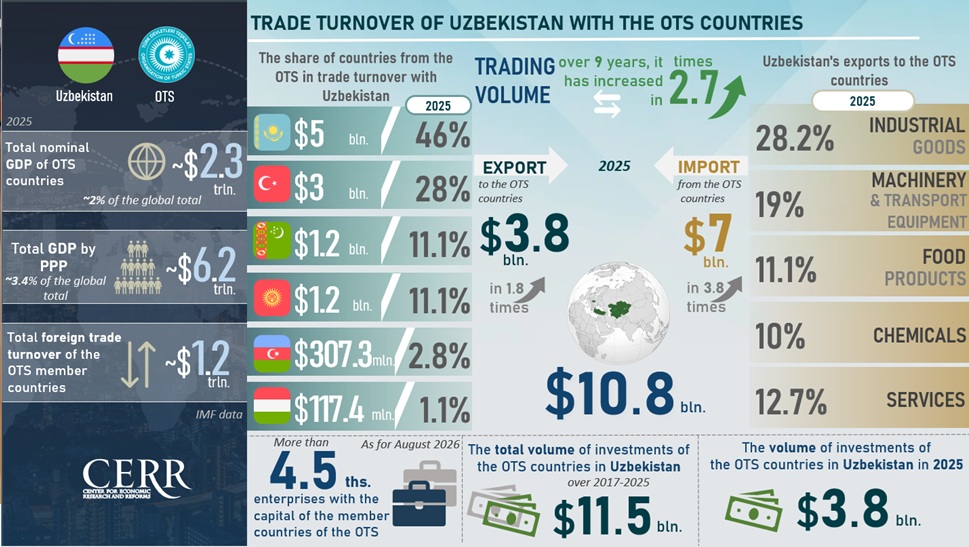
Uzbekistan has moved its economic cooperation with the Turkic states into a practical dimension
Ahead of the 13th Summit of the Organization of Turkic States, scheduled to be held in Ankara, economic cooperation within the OTS is acquiring new substance.
Water security in the turkic world: shared interests and common solutions
Water is a precious blessing that transcends national borders and has long connected peoples and civilizations.

Strengthening Transport Connectivity in Asia through the Development of the Trans-Caspian International Transport Corridor
Shifting international supply chains and expanding trade in Asia are driving demand for sustainable transport routes. For businesses, predictable delivery times, competitive rates, and reliable access to foreign markets are becoming increasingly important.