
Uzbekistan and Finland: similarity of approaches to building good neighborly regional relations
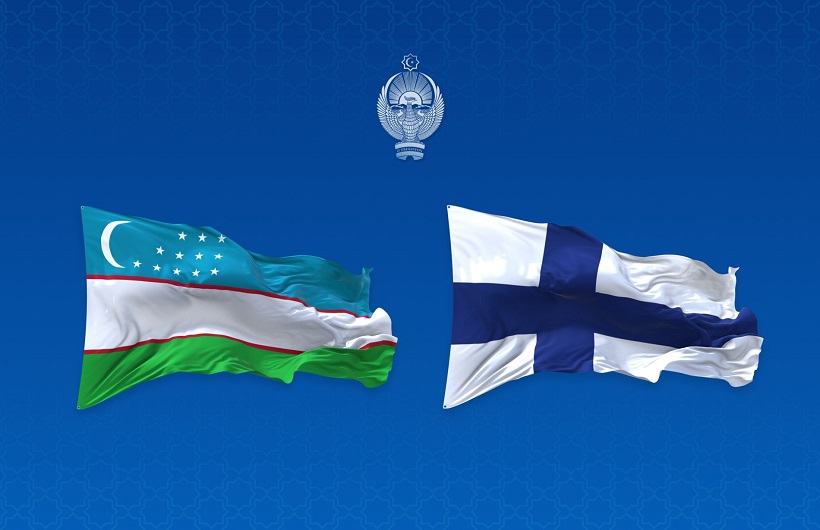
In a period of growing disunity among global powers, the approaches of the so-called “middle” states in the formation of stable regional relations offer possible solutions to achieve global peace and cooperation.
Uzbekistan, a Central Asian country at the heart of the historic Silk Road, and Finland, a northern European state with unique experience as a neutral border state in the Cold War, demonstrate how a consistent commitment to dialogue can lead to regional stability in the face of tense global relations.
Separated by geography, these countries have developed strikingly similar approaches to ensuring sustainable development, peace and stability in their regions, and addressing key regional security issues through strengthening multifaceted and mutually beneficial good neighborly relations with neighbors, multilateral and long-term partnerships with interested countries and organizations.
Different historical contexts were reflected in the cultural characteristics of the peoples of Uzbekistan and Finland, but contributed to the development of similar diplomatic philosophiesfocused on stability, cooperation, sovereign equality, mutual respect and multilateralism interaction.
Central Asia has been a single cultural and historical zone since ancient times, where a single political, economic and cultural space existed for centuries. Being one of the oldest cradles of human civilization, the region has an extremely rich history, a living cultural heritage, on the basis of which universal values have been formed, including the preference for cooperation over confrontation, the preference for tolerance over imposition, and the well-being of your neighbor is a factor in your well-being.
Since gaining independence in 1991, Uzbekistan has consistently promoted a policy of regional interaction, which, with the advent of President Shavkat Mirziyoyev in 2016, was declared a priority goal of Uzbekistan’s foreign policy. Tashkent’s “diplomatic offensive” to enhance intraregional cooperation has become one of the most significant policy changes that have transformed relations in modern Central Asia.
Tashkent’s unprecedented focus on dialogue and building trust with neighboring states has turned Uzbekistan into the main organizer of cooperation in Central Asia, a proponent of the formation of multilateral mechanisms of interaction - from water resource management to the expansion of transport corridors and industrial cooperation to border demarcation and regional security.
The positive effect of policy changes affected the entire region, where after 2016 there was a sharp increase in economic cooperation and an increase in the total GDP of the Central Asian states by almost 2 times from $273 billion to $520 billion. Trust and development of ties between the countries of the region allowed intraregional trade to expand 4.5 times - from $2.4 billion to $11 billion, as well as double the number of tourists in the region.
Collective openness and increasing stability of the region became attractive factors for third countries, contributing to the growth of the region's foreign trade by more than 200 percent - from $112 billion to $253 billion.
Finland’s diplomatic traditions, in turn, were shaped by its unique position at the junction of the eastern and western “spheres of influence.” The vulnerability of the geographical position explains the desire for interaction and stability.
Finland consistently advocates strengthening friendly relations with all countries, especially neighboring ones, and developing connections between Nordic cooperation structures (Nordic Council, Nordic Council of Ministers, Nordic Investment Bank, etc.). This approach finds institutional expression in Finland's active role in the OSCE, promoting measures aimed at dialogue and trust.
Finland's Chairmanship of the OSCE in 2025, which marks the 50th anniversary of the Helsinki Final Act, is symbolic, representing a relevant example of its calling to build bridges, build trust in line with Finland's dialogue-based foreign policy. Finnish diplomacy has consistently emphasized the importance of common positions and approaches between states, which reflects Finland's consensus-oriented diplomatic style, which is also shared by Uzbekistan.
It should be noted that in foreign policy, both countries are committed to the same fundamental principles of international law. Respect for national sovereignty, non-interference in internal affairs and the inviolability of borders are practical guidelines that form the key elements of foreign policy, regional behavior and international positioning of Uzbekistan and Finland.
Thus, Tashkent’s approaches to regional interaction are consonant with Helsinki’s priorities for cooperation with the Nordic and Baltic countries. Tashkent's efforts to resolve border disputes and cooperate over water resources in the region are similar to Helsinki's approach to peace building and cooperation.
At the same time, both countries have established themselves as proponents of results-oriented partnership, pragmatic architects of projects that create mutual benefits and strengthen regional stability and interregional connectivity.
Under the leadership of President Sh. Mirziyoyev, Uzbekistan is promoting the development of transport infrastructure both within the region and with neighboring countries regions - in the West, East and South. Thus, the development of the “Middle Corridor” (Trans-Caspian International Transport Route) made it possible in four years – from 2020 to 2024 – to increase the flow of cargo transportation along it 6 times, reaching a volume of 4.5 million tons. Tashkent is also participating in the construction of the China-Kyrgyzstan-Uzbekistan railway and promoting the connectivity of Central and South Asia.
Economic cooperation and environmental protection are additional pillars of the regional strategy of Uzbekistan, which plays an important role in environmental programs, especially in mitigating the consequences of the Aral Sea disaster.
In turn, Finland, following a similar pattern of project-oriented cooperation, has been an active participant in Nordic and Barents Euro-Arctic Council initiatives, cross-border cooperation in the areas of environmental protection, innovation and people-to-people contacts, promoting the Trans-European Transport Network and Arctic connectivity initiatives.
Known for its environmental leadership, Finland is involved in cross-border economic projects with country partners Northern Europe and the Baltics.
Along with close cooperation with countries in the region, Uzbekistan and Finland are pursuing a policy of strategic multilateralism. The active participation of countries in various regional and global institutions reflects similar views that modern challenges require collective responses and that “middle powers” can exert effective influence in institutional interaction.
Thus, since 2016, Uzbekistan has significantly expanded its participation in regional organizations, primarily in the Shanghai Cooperation Organization (SCO), the Organization of Turkic States (OTS) and various structures of the Organization United Nations.
At the same time, the “Central Asia +” platform with more than 10 partner countries and organizations is actively used to develop interregional ties. At the first Central Asia-European Union summit in April 2025, agreement was reached on “deep and comprehensive cooperation between the two regions.”
Finland’s international activities, although much older, follow a similar pattern of active institutional participation. A member of the European Union since 1995, Finland continues its traditional engagement with the regional structures of Northern and Baltic Europe.
As the international environment becomes increasingly complex, Uzbekistan and Finland face similar challenges that are testing historically unique diplomatic approaches.
For Uzbekistan, the main test is to maintain the momentum in the region to deepen regional partnerships and intensify the region's cooperation with external actors in the face of growing geopolitical tensions, worsening environmental threats and accompanying economic turmoil.
The response to the changing geopolitical landscape and the needs for economic transformation in Central Asia, from Uzbekistan's perspective, is not isolation, but strengthening cooperation both between Central Asian countries and between regions.
For Finland, the challenge is to find a balance between its commitments within the EU and NATO and the traditional role of mediator in building consensus and dialogue, especially in organizations such as the OSCE, where it continues to promote “building dialogue and trust.”
Overall,Uzbekistan and Finland offer a compelling example of successfully promoting regional cooperationbased on a consistent commitment to dialogue and engagement. Despite very different geographical and historical contexts, both countries have developed similar foreign policy approaches, focused on conflict prevention, institutional interaction and pragmatic regionalism.
In an interconnected world of great power competition, the diplomatic approaches of Uzbekistan and Finland remind us that sustainable security and prosperity are built not through dictatorship, but through dialogue, not through isolation, but cooperation, not through appeals, but practical mutually beneficial cooperation.
And such foreign policy approaches have a positive impact on the lives of the citizens of the countries themselves. It is no coincidence that Finland has been recognized as the “happiest country in the world” for the eighth year in the World Happiness Report. In turn, Uzbekistan occupies a leading position in the same ranking in terms of happiness among Central Asian countries.
Sharif Akhmedov,
Chief Researcher
Institute for Strategic and Interregional Studies
under the President of the Republic of Uzbekistan
Related news
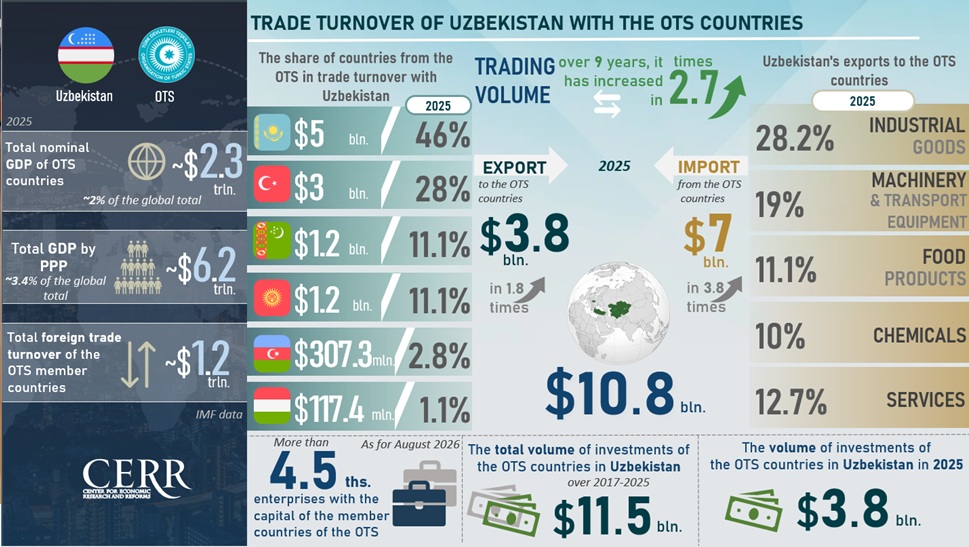
Uzbekistan has moved its economic cooperation with the Turkic states into a practical dimension
Ahead of the 13th Summit of the Organization of Turkic States, scheduled to be held in Ankara, economic cooperation within the OTS is acquiring new substance.
Water security in the turkic world: shared interests and common solutions
Water is a precious blessing that transcends national borders and has long connected peoples and civilizations.

Strengthening Transport Connectivity in Asia through the Development of the Trans-Caspian International Transport Corridor
Shifting international supply chains and expanding trade in Asia are driving demand for sustainable transport routes. For businesses, predictable delivery times, competitive rates, and reliable access to foreign markets are becoming increasingly important.