
Uzbekistan and the European Union: a step towards a new level of economic integration
On October 24, Brussels will host the signing of an Enhanced Partnership and Cooperation Agreement between Uzbekistan and the European Union - a document that can rightfully be called a turning point in the history of bilateral relationships. For Tashkent, this is not just a diplomatic success, but an important step towards deepening economic integration, expanding trade and investment ties and strengthening the country’s position in the European and global space.
The signing of the agreement was the logical result of an active dialogue, which in recent years has become systemic. Uzbekistan and the European Union have long been not limited to traditional forms of cooperation: they are building a new model of interaction - more flexible, technological and focused on sustainable development.
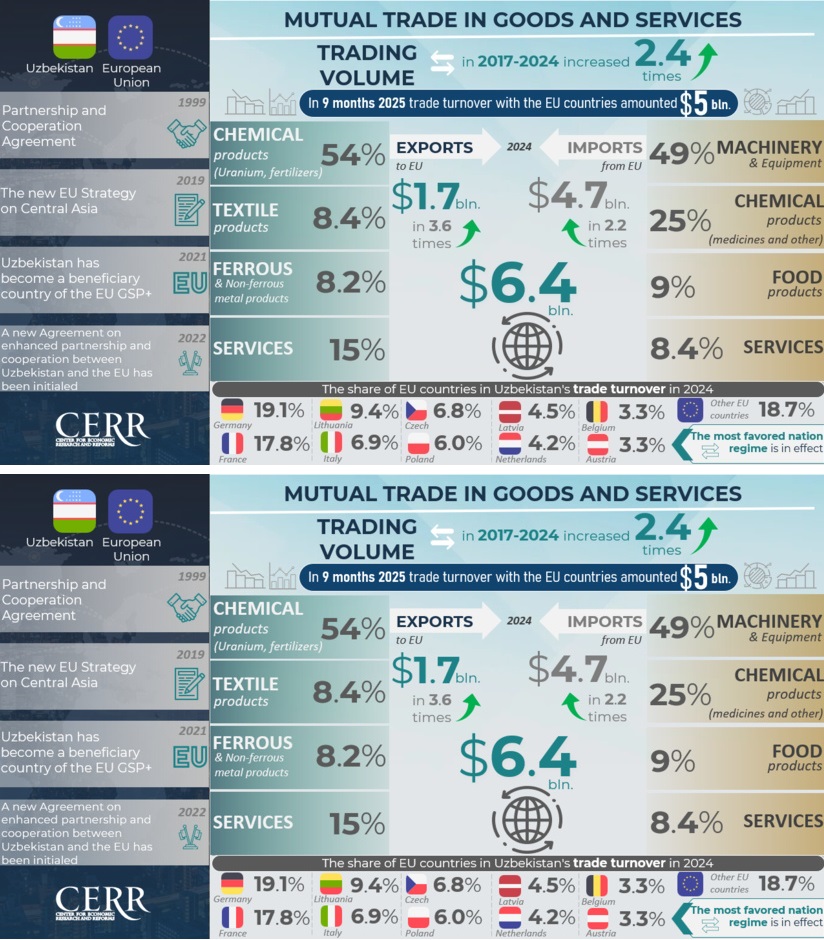
Today the European Union ranks third among the largest trading partners of Uzbekistan - after China and Russia. In 2024, the share of EU countries in Uzbekistan's foreign trade amounted to 9.7 percent, including 6.3 percent in exports and 12 percent in imports.
According to the Center for Economic Research and Reforms of Uzbekistan, from 2017 to 2024, bilateral trade turnover more than doubled - from 2 billion 600 million US dollars to 6 billion 400 million dollars. Exports increased 3.6 times, reaching 1 billion 700 million US dollars, and imports increased 2.2 times and amounted to 4 billion 700 million US dollars.
If previously the European Union occupied 3.8 percent in the structure of Uzbek exports, then by 2024 this figure reached 6.3 percent. The share of imports, on the contrary, decreased from 15.5 percent to 12 percent—a reflection of the diversification of foreign economic relations, including through the expansion of trade flows with Asia. At the same time, in 2024, trade turnover between Uzbekistan and the countries of the European Union increased by 5.2 percent, while exports increased by 26.9 percent, and imports remained at the level of the previous year.
The basis of Uzbek exports to Europe is chemical products, which account for 54 percent of the total volume - 877 million 400 thousand US dollars.
Germany (19.1% of trade turnover), France (17.8%), Lithuania remain the largest trading partners of Uzbekistan in Europe (9.4%), Italy (6.9%), Czech Republic (6.8%) and Poland (6%). In the first nine months of 2025, bilateral trade turnover has already reached $5 billion, confirming the steady growth and strategic direction of the partnership.
Investment cooperation is developing no less dynamically. In 2024, the volume of foreign direct investment and loans from the countries of the European Union, including the participation of European financial institutions, increased by 77 percent, reaching 4 billion 100 million dollars against 2 billion 300 million US dollars a year earlier.
From 2017 to 2024, Uzbekistan attracted 12 billion 400 million dollars of investments and loans from the European Union - 18 times more than in 2017. The largest investors were Germany ($1 billion 400 million), the Netherlands ($1 billion 100 million), Cyprus ($858.9 million), Czech Republic ($137.8 million), Italy ($99.8 million) and Sweden ($97.5 million).
Today, about 1 thousand enterprises operate in Uzbekistan with the participation of capital from European Union countries, from There are more than 200 companies with German participation.
The signing of the Agreement on Enhanced Partnership and Cooperation opens up new prospects for the parties. For Uzbekistan, this is an opportunity to accelerate the modernization of industry, strengthen the position of national business in European markets and attract technologies for the development of priority sectors - renewable energy, chemical and pharmaceutical industries, agriculture and logistics.
For the European Union, deepening cooperation with Tashkent means access to the dynamically developing Central Asian market and access to strategic resources that are becoming increasingly in demand during the transition period to a green economy.
The new agreement does not just expand the legal framework of interaction. It reflects a new philosophy of partnership - based on mutual benefit, innovative exchange and shared responsibility for sustainable development.
Related news
Uzbekistan and Azerbaijan Build a New Architecture of Cooperation
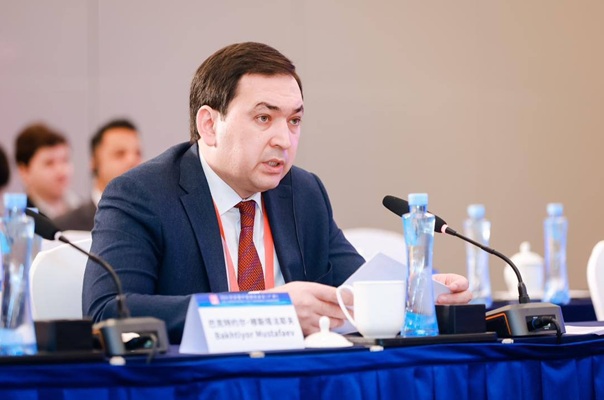
Deputy Director of the Institute for Strategic and Regional Studies under the President of Uzbekistan (ISRS) Bakhtiyor Mustafaev commented to a Dunyo IA correspondent on the outcomes of the Uzbekistan-Azerbaijan high-level summit held on August 23–24.
Uzbekistan’s Role in the SCO: Economy, Security and Regional Cooperation
This year, the Shanghai Cooperation Organization (SCO) is celebrating its 25th anniversary.
Economic Cooperation of Uzbekistan within the SCO at a New Stage of Development
The global economy is developing amid the restructuring of global supply chains.