
Uzbekistan–Azerbaijan: An Economy of Trust, Connectivity, and Joint Projects
Relations between Uzbekistan and Azerbaijan have, in recent years, become one of the most dynamic axes of cooperation between Central Asia and the South Caucasus.
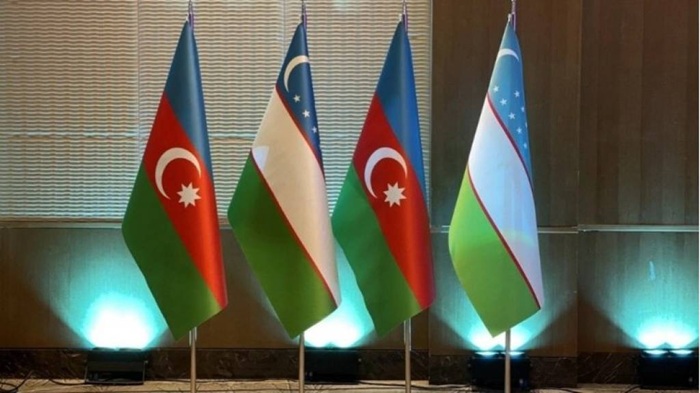
Relations between Uzbekistan and Azerbaijan have, in recent years, become one of the most dynamic axes of cooperation between Central Asia and the South Caucasus. They are built on sustained dialogue between the two countries' leaders, political trust, shared historical and cultural ties, and growing mutual interest in trade, investment, transport, industry, energy, and the development of regional transport corridors. As a result, bilateral cooperation is increasingly moving beyond the framework of a traditional partnership and evolving into a comprehensive model of economic cooperation.
Regular high-level contacts provide the strategic framework for this cooperation. In recent years, the two presidents have exchanged both state and working visits, giving bilateral relations sustained political momentum. The Joint Intergovernmental Commission on Bilateral Cooperation remains the principal mechanism for coordinating cooperation between the two governments. Fourteen meetings have already been held, while the upcoming session in Tashkent is expected to provide additional impetus to trade, investment, and broader economic cooperation.
Direct interregional ties remain an important pillar of this framework. The intergovernmental agreement on interregional cooperation, regional forums held in Tashkent, Guba, and Baku, as well as agreements signed between cities of the two countries, demonstrate that cooperation is gradually moving from the level of government decisions to practical engagement between regions. The upcoming Regional Forum is expected to serve as a platform for concrete agreements in trade, industry, tourism, and urban infrastructure.
Trade statistics confirm the growing economic interest between the two countries. Bilateral trade reached US$307.3 million in 2025. During January–May 2026, the positive trend strengthened further, with trade turnover increasing by 38.2 percent. The next strategic target is to increase bilateral trade to US$1 billion by 2030.
To sustain this momentum, both sides will need to move beyond growth in individual product categories toward a more diversified and resilient trade model. This includes expanding the range of traded goods, developing new market access channels, opening an Uzbek trade representation office in Baku, and utilizing emerging logistics opportunities. In this context, the southern route is of particular importance: promoting Azerbaijani products through logistics facilities in Termez could facilitate access to neighboring markets and give bilateral trade a broader regional dimension.
The investment agenda is supported by the expanding presence of Azerbaijani businesses in Uzbekistan. As of July 2026, 442 enterprises with Azerbaijani capital were operating in the country. These companies are active in trade, mechanical engineering, metal processing, finance, insurance, real estate, energy, services, and the food and textile industries. This demonstrates a transition from one-off trade transactions toward more sustainable forms of business engagement.
Financial support for a number of bilateral initiatives is provided through the Azerbaijan–Uzbekistan Investment Company. Its current portfolio includes nine projects with a total value of US$651 million, while the company's financing amounts to US$170.9 million. Funding has already been allocated for four projects, and five more have received approval. The significance of this institution lies not only in the volume of resources it provides but also in its ability to translate political agreements into practical projects across trade, education, healthcare, industry, logistics, and financial services.
Against this backdrop, industrial cooperation is becoming increasingly substantive. One of the key areas is the automotive industry. In Azerbaijan, production of Chevrolet vehicles and Isuzu commercial vehicles is being developed with the participation of Uzbek enterprises. The expansion of the manufacturing facility in Hajigabul is expected to establish a deeper production cycle, including welding and painting operations. This marks a shift from simple exports of finished products toward integrated manufacturing chains, component production, and technological cooperation.
Industrial cooperation extends beyond the automotive sector. In mining, the two countries are expanding cooperation in geological exploration and the development of deposits of precious and critical metals in Uzbekistan. This area strengthens the industrial dimension of bilateral cooperation and creates the foundation for more technologically advanced collaboration in the mineral resources sector.
Alongside mining, the oil, gas, and chemical industries offer considerable potential. The participation of SOCAR opens opportunities for joint activities in geological exploration, energy supplies, downstream processing, and the development of related service industries. More broadly, this enables bilateral cooperation to be viewed not merely through the lens of raw materials but as a platform for deeper industrial and technological integration with significant practical value.
Transport and logistics occupy a special place in the bilateral agenda. The two sides are exploring the construction and operation of ferries to serve Uzbekistan's transport needs via the ports of Kuryk and Alat. For Uzbekistan, this represents an additional opportunity to strengthen access to Trans-Caspian transport corridors, while for Azerbaijan it expands the role of its ports and logistics infrastructure in facilitating cargo flows between Central Asia, the Caucasus, and international markets.
Urban development, tourism, and city infrastructure also represent important areas of cooperation. Major projects involving Azerbaijani investors are being implemented in Tashkent, including hotel, tourism, and residential developments. Such investments are important not only as contributions to the real estate sector but also as investments in improving the urban environment, supporting tourism, and expanding the service economy.
Another promising area is the textile industry. Cotton-textile clusters involving Uzbek companies are being developed in Azerbaijan, combining raw material resources, manufacturing expertise, and access to new markets. Over the longer term, this cooperation could strengthen exports of value-added textile products while reducing dependence on raw cotton exports.
The sectoral agenda is further complemented by cooperation in finance, construction materials, electrical engineering, food processing, agriculture, pharmaceuticals, and the jewelry industry. Projects in these sectors are at various stages of development, but together they broaden and diversify the foundation of bilateral cooperation.
The strength of the current Uzbekistan–Azerbaijan partnership lies in its combination of political trust with practical mechanisms: investment capital, integrated production chains, interregional cooperation, and Trans-Caspian logistics. Transport corridors are no longer viewed solely as infrastructure projects but as elements of a broader economic architecture linking markets, enterprises, and regions. Consequently, cooperation between Uzbekistan and Azerbaijan is increasingly seen as one of the most stable and effective bridges connecting Central Asia, the Caucasus, and global markets.
Related news
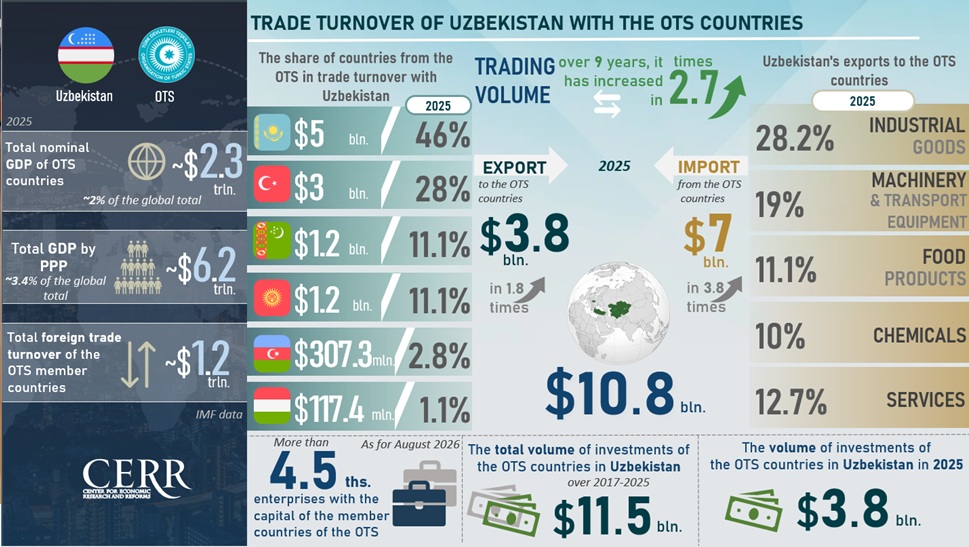
Uzbekistan has moved its economic cooperation with the Turkic states into a practical dimension
Ahead of the 13th Summit of the Organization of Turkic States, scheduled to be held in Ankara, economic cooperation within the OTS is acquiring new substance.
Water security in the turkic world: shared interests and common solutions
Water is a precious blessing that transcends national borders and has long connected peoples and civilizations.

Strengthening Transport Connectivity in Asia through the Development of the Trans-Caspian International Transport Corridor
Shifting international supply chains and expanding trade in Asia are driving demand for sustainable transport routes. For businesses, predictable delivery times, competitive rates, and reliable access to foreign markets are becoming increasingly important.