
Uzbekistan and the Czech Republic Are Entering a New Stage of Cooperation
Uzbekistan and the Czech Republic maintain strong business, trade-economic, investment, and cultural ties, and these relations are expected to intensify significantly during 2024–2026.
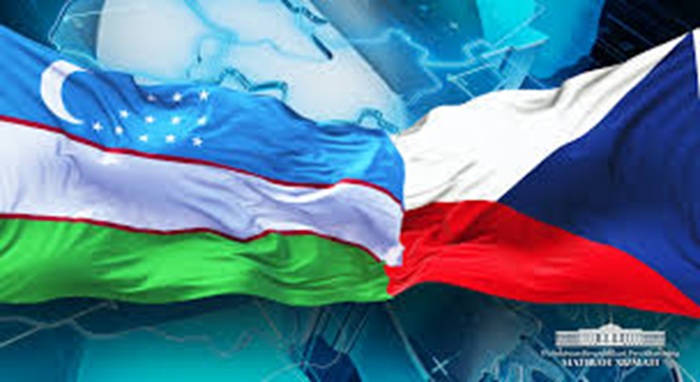
Uzbekistan and the Czech Republic maintain strong business, trade-economic, investment, and cultural ties, and these relations are expected to intensify significantly during 2024–2026. In March 2025, the 10th session of the Intergovernmental Commission on Trade-Economic and Scientific-Technical Cooperation was held in Prague, confirming a transition to a more systematic format of bilateral cooperation. The parties discussed issues such as launching new joint projects, establishing joint ventures, long-term financing, and expanding business support instruments. Special attention was given to projects in sectors such as transport, pharmaceuticals, electrical engineering, food processing, agriculture, leather industry, tourism, and education.
The Czech Republic’s leading engineering conglomerate specializing in transport vehicle manufacturing, Škoda Transportation (Škoda Group), the well-known pharmaceutical company Doctor Müller Pharma, and the engineering company ZVVZ Engineering, which specializes in air purification, ventilation systems, industrial engineering, and equipment supply, are among the major representatives of Czech industry and business actively participating in international cooperation, including in Central Asia.
From the Czech perspective, Uzbekistan is one of the largest markets in Central Asia. The official Czech business profile on Uzbekistan clearly identifies it as an important trading partner in the region and notes that Czech exports have increased significantly in recent years. The gradual growth of Czech investments in Uzbekistan is turning the Czech Republic into an important European investor in the Uzbek market.
Promising Areas of Cooperation
Currently, the most promising areas of cooperation include mechanical engineering, geology and mining, the chemical and pharmaceutical industries, and energy. The main focus is on localization of production, introduction of technologies, improvement of workforce skills and energy efficiency, as well as projects related to critical raw materials and high value-added products. Long-term financing, expansion of support mechanisms, development of inter-enterprise cooperation, and the establishment of joint ventures are key forms of project implementation. At present, 44 enterprises with Czech capital participation are operating in Uzbekistan.
Strengthening Digital and Technological Cooperation
In 2025–2026, strengthening digital and technological cooperation between Uzbekistan and the Czech Republic is reflected not only in general plans but also in several practical areas. This process can be described as a transition to a new stage in bilateral relations. Alongside trade, the role of startups, IT outsourcing, innovation, technical regulation, and technology-oriented investments is increasing. This creates a foundation for further development of joint projects in the digital economy, industry, and high technologies.
The development of cooperation in startups and innovation demonstrates that bilateral relations have expanded from traditional trade to a joint innovation ecosystem. The opening of offices of several Czech outsourcing and IT companies in Uzbekistan indicates a shift toward digital cooperation, often implemented in the form of Global Business Services (GBS), IT services, and remote services.
Technological cooperation is also being strengthened through standardization, metrology, and technical regulation. Issues related to standards, testing, and market surveillance are being addressed jointly. This is crucial for joint production, technological modernization, and bringing products to markets. Such cooperation creates an institutional foundation for industrial cooperation and the introduction of modern technologies. New agreements on expanding industrial investments and joint projects indicate a transition from isolated interactions to a more systematic form of technological partnership.
Cultural Relations Between Uzbekistan and the Czech Republic
Cultural relations are currently developing more through embassies, various festivals, and cooperation in education and tourism rather than through large intergovernmental cultural agreements. The Czech Embassy in Tashkent traditionally uses national receptions and cultural events to promote Czech music, cuisine, and beer culture. The diplomatic mission also places particular emphasis on the link between cultural initiatives and the development of bilateral dialogue and business.
On a broader scale, Uzbekistan has announced plans to hold “Days of Uzbek Culture” in more than 10 countries and to sign new international cultural memorandums. This creates additional opportunities for the development of cultural cooperation between Uzbekistan and the Czech Republic.
Conclusion
For Uzbekistan, the Czech Republic is an important European partner in technology, transport, pharmaceuticals, standardization, tourism, and industrial projects. For the Czech Republic, Uzbekistan is a rapidly developing Central Asian market with growing investment potential and a convenient platform for accessing the region. According to official statements, in the near future the main focus of cooperation will be on expanding trade, exchanging delegations, holding the next meeting of the Intergovernmental Commission on Trade-Economic and Scientific-Technical Cooperation, increasing investment, and other related activities.
Dildora Karimova
Project Manager, MHTI
Professor
Related news
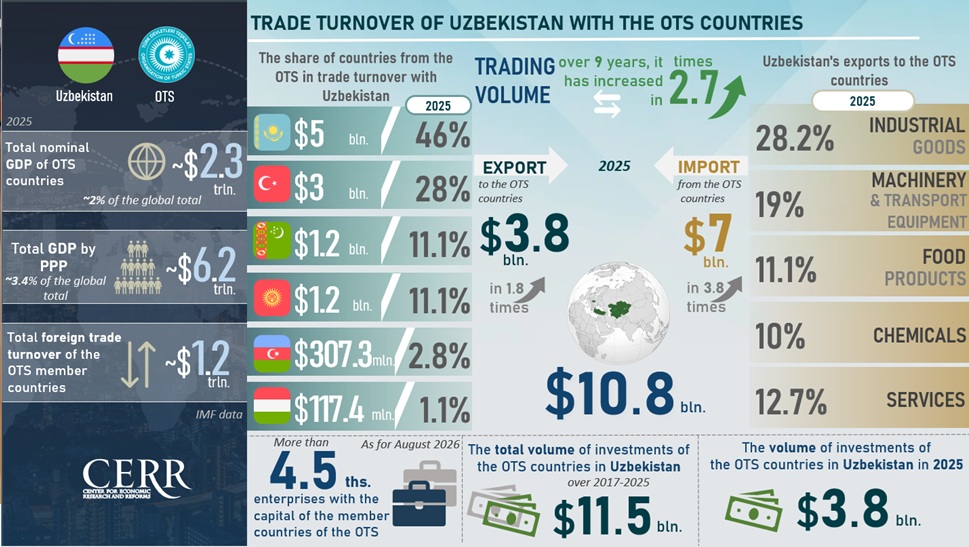
Uzbekistan has moved its economic cooperation with the Turkic states into a practical dimension
Ahead of the 13th Summit of the Organization of Turkic States, scheduled to be held in Ankara, economic cooperation within the OTS is acquiring new substance.
Water security in the turkic world: shared interests and common solutions
Water is a precious blessing that transcends national borders and has long connected peoples and civilizations.

Strengthening Transport Connectivity in Asia through the Development of the Trans-Caspian International Transport Corridor
Shifting international supply chains and expanding trade in Asia are driving demand for sustainable transport routes. For businesses, predictable delivery times, competitive rates, and reliable access to foreign markets are becoming increasingly important.