
Uzbekistan Allocated 3.6 Trillion Soums to “Challenging” Districts and Mahallas in Q1 2026
In Q1 2026, Uzbekistan continued active efforts to reduce poverty, expand employment, and support entrepreneurship.
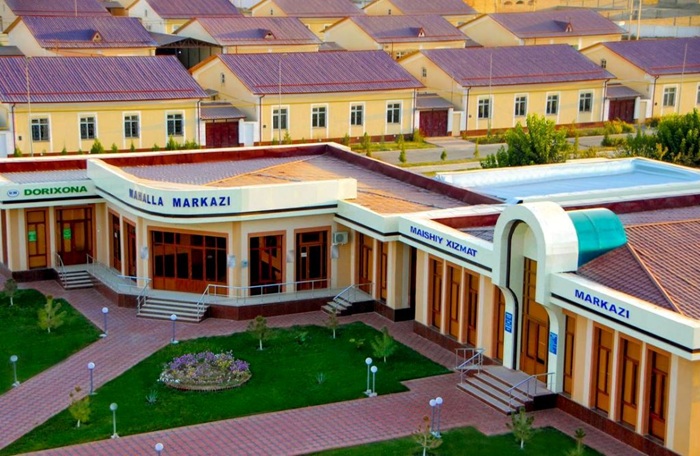
In Q1 2026, Uzbekistan continued active efforts to reduce poverty, expand employment, and support entrepreneurship.
Comprehensive measures aimed at increasing employment, raising household incomes, and broadening economic activity across the regions remain underway. During the first quarter of the year, 167 thousand people were provided with permanent jobs. At the same time, 737 thousand citizens received services aimed at creating additional income sources and improving their financial well-being.
Reducing the scale of informal employment remains an important priority. During the reporting period, the activities of 241 thousand informally employed citizens were brought into the formal economy. This creates additional opportunities for social protection, access to financial services, and sustainable employment.
Targeted social support programs also demonstrated strong effectiveness. Under the “Mehnatsevar Ayol” program, 26 thousand women were provided with income-generating employment opportunities. Under the “Barqaror Kelajak Sari” program, 58 thousand young citizens gained permanent and income-generating opportunities.
Special attention is being given to low-income families. For 86 thousand vulnerable households, 105 thousand different services were delivered on the basis of individual development plans aimed at employment, training, launching small businesses, and increasing incomes.
A significant volume of resources was directed to the development of small and medium-sized businesses. In Q1, business entities received credit resources totaling 35 trillion soums, including 8 trillion soums under state business support programs.
By program, financing was distributed as follows: 1.2 trillion soums under the “Oilaviy Tadbirkorlik Dasturi” program, 1.3 trillion soums under the “Kichik Biznesni Uzluksiz Qo‘llab-Quvvatlash” program, 1.1 trillion soums under the “Biznesga Birinchi Qadam” program, and 4.2 trillion soums under the “Mahalla Loyihasi” program.
Work also continued to deepen mahalla specialization and launch local initiatives. During the reporting period, 21 thousand microprojects were implemented, helping increase incomes for 52 thousand residents.
To accelerate development in territories facing heightened socio-economic challenges, 3.6 trillion soums was allocated from the republican budget to 37 selected challenging districts and 903 challenging mahallas.
Additional support is being provided to territories granted the status of “New Image of Uzbekistan.” A total of 4 trillion soums was allocated to 33 districts and cities, as well as 330 mahallas with this status.
The measures being implemented are creating a sustainable foundation for further poverty reduction, expanding entrepreneurial activity, and improving living standards in all regions of the country.
Center for Economic Research and Reforms Media Sector
Related news
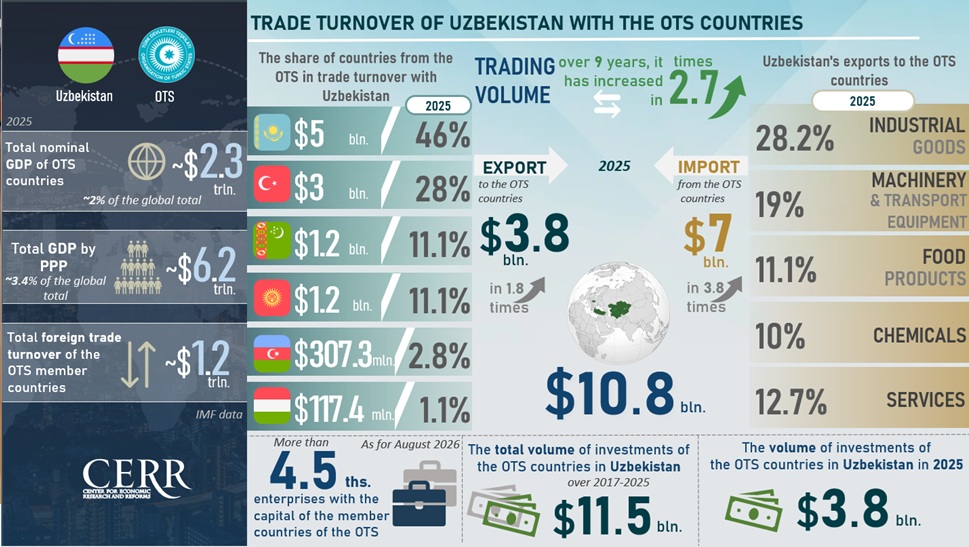
Uzbekistan has moved its economic cooperation with the Turkic states into a practical dimension
Ahead of the 13th Summit of the Organization of Turkic States, scheduled to be held in Ankara, economic cooperation within the OTS is acquiring new substance.
Water security in the turkic world: shared interests and common solutions
Water is a precious blessing that transcends national borders and has long connected peoples and civilizations.

Strengthening Transport Connectivity in Asia through the Development of the Trans-Caspian International Transport Corridor
Shifting international supply chains and expanding trade in Asia are driving demand for sustainable transport routes. For businesses, predictable delivery times, competitive rates, and reliable access to foreign markets are becoming increasingly important.