
Samarkand UNESCO Summit: recognition of the role of Uzbekistan in preserving world heritage
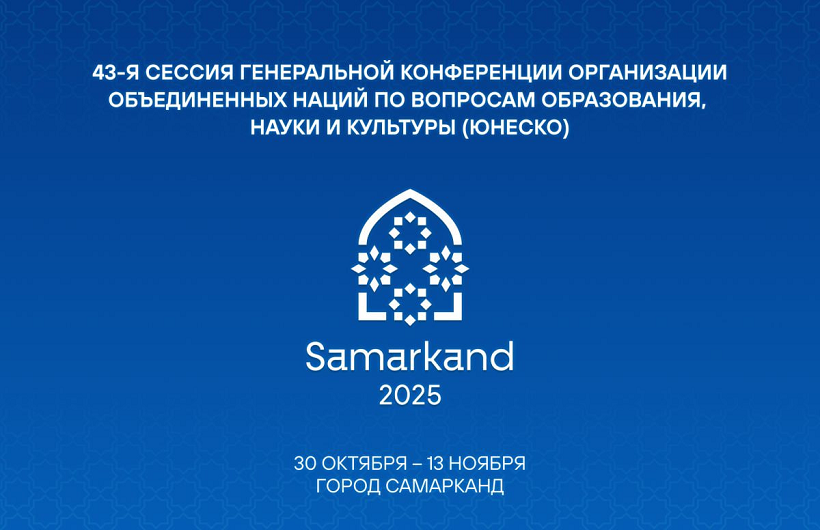
In the history of international organizations, events rarely occur that can become a symbol of a new era. The holding of the 43rd session of the UNESCO General Conference in ancient Samarkand is one of such events.
For the first time in the organization's 40 years of existence, the General Conference is being held outside of Paris, where its headquarters are located. This historic step was recognition of the growing authority of New Uzbekistan, its contribution to the preservation of the cultural and spiritual heritage of mankind, as well as to the development of international humanitarian cooperation.
Samarkand, a city in which eras and cultures are intertwined, has become not just a platform for dialogue between states, but also a symbol of UNESCO ideals: mutual understanding, tolerance and cultural diversity. The holding of such a large-scale forum here reflects global recognition of Uzbekistan’s course, focused on cultural revival, education and science, which form the basis of the concept of the Third Renaissance proclaimed by President Shavkat Mirziyoyev.
Uzbekistan became a member of UNESCO in 1993, and since then cooperation between the republic and the organization has been developing dynamically. Since 1996, the UNESCO Representative Office has been operating in Tashkent. Over the past years, active contacts between the leadership of Uzbekistan and the Director-General of UNESCO, Audrey Azoulay, have contributed to building a trusting dialogue and strengthening partnership.
Uzbekistan twice served on the Executive Board of UNESCO - in 1997-2001 and 2009-2013, and since 2022 has been a member of the Intergovernmental Committee on protection of intangible cultural heritage. Today, the country is implementing the UNESCO Country Program for 2022–2026, covering the areas of education, science, culture, communication and information.
One of the key areas of cooperation was the protection and popularization of the unique cultural heritage of Uzbekistan. To date, seven sites of the country are included in the UNESCO World Heritage List: the historical center of Bukhara, Ichan-Kala, Samarkand - the crossroads of cultures, Shakhrisabz, ancient cities along the Great Silk Road, Western Tien Shan and Turan deserts.
Particular attention is paid to intangible cultural heritage. The UNESCO list includes 16 elements of Uzbek culture - from shoshmakam and Boysun culture to the art of bakhshi, the traditions of pilaf and the celebration of Navruz. These internationally recognized values reflect the wealth of the spiritual world and the creative energy of the Uzbek people.
In recent years, on the initiative of Uzbekistan, together with UNESCO, large-scale cultural forums have been held: the Sharq Taronalari and Atlas Bayrami festivals, the Makom Art Forum, the Bakhshi and Crafts festivals in Kokand and the Lazgi dance festival in Khiva. These projects have turned the country into one of the centers of cultural dialogue in Eurasia.
Fruitful cooperation also covers the field of education. There are eight UNESCO Chairs and 24 associated schools in Uzbekistan, and Tashkent and Fergana are part of the UNESCO Global Network of Learning Cities. In 2024, the UNESCO Chair in Sustainable Historical Tourism was opened at the Silk Road International University of Tourism and Cultural Heritage in Samarkand.
Uzbekistan actively participates in UNESCO global initiatives in the field of science and technology. The country's two biosphere reserves - Chatkal and Lower Amudarya - are included in the World Network of Biosphere Reserves, and multimillion-dollar projects are being implemented in the field of water diplomacy and climate resilience.
An important step was the establishment in 2024 of the UNESCO-Uzbekistan International Prize named after Abu Rayhon Beruni for scientific research in the field of ethics of artificial intelligence. The first ceremony of presenting this award will take place in Samarkand within the framework of the 43rd session of the General Conference.
In recent years, Uzbekistan has initiated a number of resolutions adopted by UNESCO, including the “Khiva Process: Promoting International Cooperation in Central Asia”, the “Tashkent Declaration on Access to Information”, as well as documents aimed at the development of education and sustainable development.
It is symbolic that Samarkand, where the 43rd session is now beginning its work, is becoming not just a meeting place for representatives of almost two hundred countries of the world, but also a space of ideas that unite the past and the future. Here, on the land where the sciences and arts of the East once flourished, a modern dialogue about the future of humanity will be heard - in the spirit of UNESCO and the Third Renaissance.
IA«Dunyo»
Related news
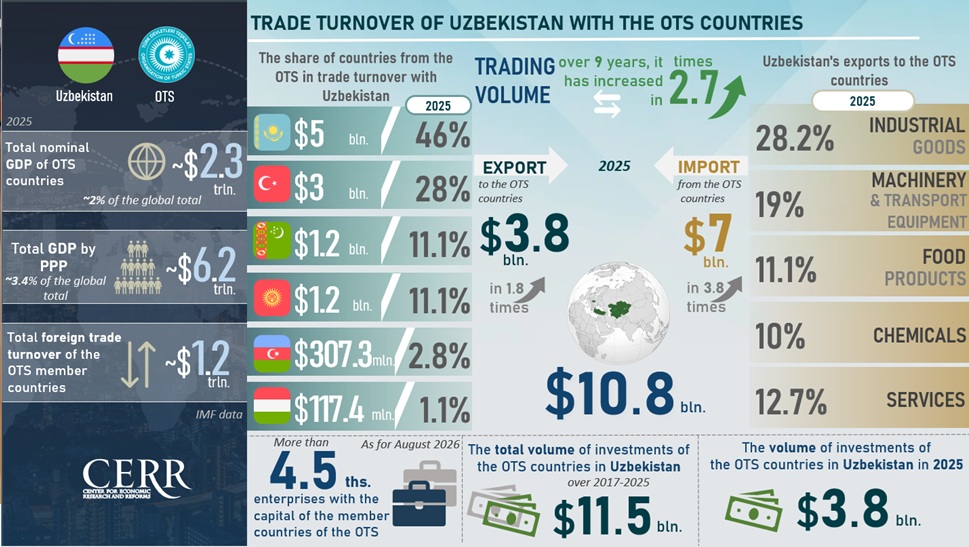
Uzbekistan has moved its economic cooperation with the Turkic states into a practical dimension
Ahead of the 13th Summit of the Organization of Turkic States, scheduled to be held in Ankara, economic cooperation within the OTS is acquiring new substance.
Water security in the turkic world: shared interests and common solutions
Water is a precious blessing that transcends national borders and has long connected peoples and civilizations.

Strengthening Transport Connectivity in Asia through the Development of the Trans-Caspian International Transport Corridor
Shifting international supply chains and expanding trade in Asia are driving demand for sustainable transport routes. For businesses, predictable delivery times, competitive rates, and reliable access to foreign markets are becoming increasingly important.