
Religious tolerance and interfaith harmony in Uzbekistan
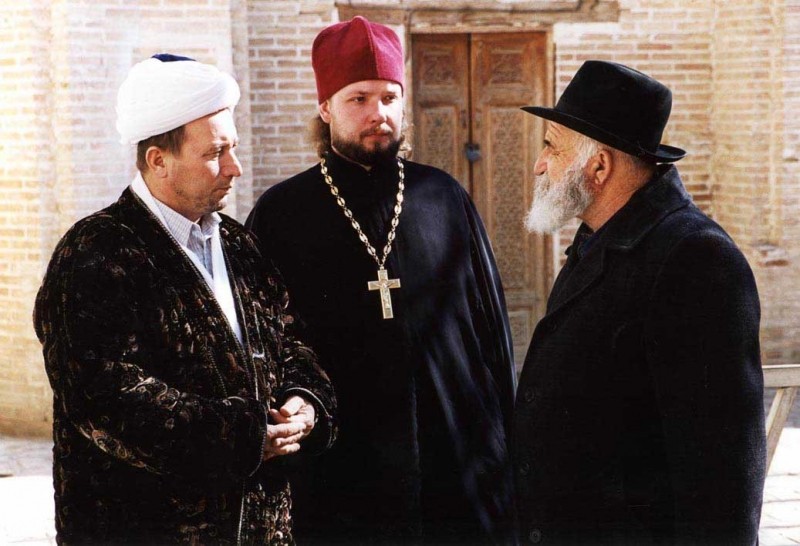
The declaration of independence and the commitment of the Government of Uzbekistan to the ideals of democracy, the choice of a secular path of development of society gradually made it possible to create equal legal conditions for the existence of religions in general and religious groups in in particular.
In the religious sphere, this large-scale work is carried out by relevant government bodies and civil society institutions and is aimed at ensuring citizens the right to freedom of conscience guaranteed by the Constitution; strengthening religious pluralism, tolerance and interfaith dialogue.
One of the significant results of joint work is the adoption in December 2018 by the UN General Assembly of a special resolution "Education and religious tolerance."
Adoption of the resolution was the practical implementation of the initiative of the President of the Republic of Uzbekistan Shavkat Mirziyoyev, put forward at the72nd session of the UN General Assembly. The main goal of the proposed resolution is to“ensure universal access to education, eliminate illiteracy and ignorance.”
It is noteworthy that the resolution was not only unanimously supported by all UN member states, but was also adopted with the co-authorship of over50countries. This indicates the high recognition by the international community of the relevance and timeliness of the initiative of the President of Uzbekistan.
In recent years, significant changes have occurred in Uzbekistan and large-scale reforms have been implemented in many areas, including in the religious and educational sphere.
A number of legislative acts have been adopted aimed at further improving activities in the religious sphere.
For the purpose of in-depth study of Islam and teaching its scientific foundations, theInternational Islamic Academy of Uzbekistan was created. The Academy specializes in teaching secular and religious knowledge, training qualified personnel in the interpretation of the Koran, Islamic law, religious dogma and hadith.
Uzbekistan uses unique mechanisms for the revival of national and religious values, studying and promoting the rich scientific and spiritual heritage of the great ancestors, strengthening religious tolerance in society - activities have been established Center for Islamic Civilization, International Research Centers of Imam Bukhari, Imam Termizi, Imam Maturidi, Bahauddin Naqshbandi.
As a result of large-scale reforms and transformations carried out in the religious sphere, Higher Mir Arab Madrasahin Bukhara, School of Hadith Studiesin Samarkand, Imam Termizi Madrasah and Islamic Institute named after Imam Termizi in Termez.
In addition, a Charitable Public Fund has been established under the Muslim Board of Uzbekistan Waqf, whose tasks include financing the reconstruction of mosques, holy places of pilgrimage and visitation, and other objects, ensuring the material and technical base and providing material support to workers in this field. The Foundation was given the opportunity to manage funds received in 3 accounts: charitable, waqf and zakat (ushr, fidya, fitr).
In accordance with the adopted legislative acts, in order to further improve the activities of the Committee on Religious Affairs, a new composition of the Council on Religious Affairs, which is a public advisory body under the Committee, was approved.
The activities of the Council are inextricably linked with ensuring freedom of religion in the country and respecting the rights of religious organizations and believers. The initiatives of the Council members are fully implemented within the framework of the measures taken by the country's leadership in the field of protection and further strengthening of the rights and freedoms of religious movements.
The significance and timeliness of the measures taken by the country's leadership contributed to the holding of the international forumDialogue on May 16-20, 2022in Tashkent, Samarkand and Bukhara declarations. This event was part of the systematic and consistent efforts of Uzbekistan to practically implement the principles and provisions enshrined in the Special Resolution of the UN General Assembly “Enlightenment and Religious Tolerance”, adopted in 2018 on the initiative of President Shavkat Mirziyoyev.
I would especially like to note that at the last76th sessionof the UN General Assembly, adopted as a result of this forum, the “Bukhara Declaration”was recognized as an official UN document. As an official UN document, the document has been translated into 6 languages and distributed among UN member states, as well as specialized agencies of the organization.
The second round of the international forum took placeSeptember 10-13, 2025with the assistance of several NGOs from the United States. The event participants also visited Samarkand, where they got acquainted with the activities of the reconstructed Imam Bukhari complex.
In Uzbekistan there are special dates that are closely related to the religious life of believers: these are People's Friendship Day, celebrated on July 30 and International Day of Tolerance, celebrated on November 16. Both of these dates are marked not only by the holding of events, but also by the presentation of the corresponding badges - the badge Khalklar Dustligi (“Friendship of Peoples”) has been awarded since 2021, and the badge Diniy Bagrikenglik (“Religious Tolerance”) began to be awarded to distinguished citizens from2023 year. Among the awarded persons there are also representatives of various religious denominations of Uzbekistan.
At the same time, Uzbekistan attaches great importance to the preservation of religious and spiritual heritage, enrichment of existing funds, creation of necessary conditions for local and foreign researchers to work with historical sources, comprehensive study of samples of historical and cultural heritage.
Today in the country in order to ensure interethnic and interfaith harmony in society, a legislative framework has been created that provides for the observance of the rights and legitimate interests of citizens.
The Constitution of the Republic of Uzbekistan enshrines the norm on the freedom of religion of every person. Attention is also paid to improving and liberalizing national legislation in the field of religion. The procedures for obtaining permission to produce, import and distribute religious literature have been simplified. The procedure for state registration of religious organizations has been further optimized.
Currently there is a new Law “On Freedom of Conscience and Religious Organizations”, which helps ensure the constitutional rights of the country's citizens to freedom of conscience and religion.
Noting the fundamental innovations in the Law as a consistent continuation of large-scale reforms in the religious and educational sphere, special attention should be paid, first of all, to the creation of favorable conditions to ensure the freedom of conscience of every person, clarifying law enforcement practice.
Currently, a total of 2373 religious organizations of 16 religious denominations operate in Uzbekistan. Of these, Muslim organizations - 2174, which is 92 percent of the total.
In Uzbekistan there are also 181 Christian organizations, 8 Jewish communities, 7 communities of the Bahai Faith, one Hare Krishna society and one Buddhist temple, as well as an interfaith Biblical Society of Uzbekistan.
Recently, 134 religious organizations have been registered in Uzbekistan, of which 3 higher and one secondary specialized Islamic educational institution in Bukhara, Samarkand and Termez, 105 mosques and 25 non-Islamic organizations 7various religious denominations.
At the same time, the national legislation of Uzbekistan does not provide for any restrictions on the number of religious organizations or the timing of their registration.
Religious organizations operating in the republic, along with other public organizations, actively participate in spiritual and educational work, make a significant contribution to increasing the spirituality of society, the formation of youth strong convictions based on patriotism, as well as interfaith and interethnic tolerance.
It should be noted that religious policy in Uzbekistan is based on the principles of the secular nature of the state, tolerant and equal treatment of all religions. In the republic, representatives of various nations and ethnic groups professing Islam, Christianity, Buddhism, Judaism and other religions carry out their activities on equal terms.
Adherents of each faith have all the conditions created to freely and unhinderedly practice their religion.
Believers freely pray in mosques, churches, synagogues, observe fasting, and also make pilgrimages. Religious organizations have the right to own territory, publish literature, train their religious ministers, organize pilgrimages to sacred places.
The freedom of religion guaranteed by the national legislation of Uzbekistan has created all the necessary conditions for satisfying the religious needs of all citizens - representatives of 136 national and ethnic groups.
Representatives of different faiths freely celebrate all religious holidays. Thus, from year to year, Kurban Khayit and Ramadan Khayit are celebrated more and more widely among Muslims, Easter and Christmas among Christians, Passover, Purim and Hanukkah among Jews, Navruz among Baha'is, as well as holidays dedicated to Buddha and Krishna and other big ones. events.
Believers make pilgrimages to holy places: Muslims to Saudi Arabia for the rituals of Hajj and Umrah, Christians - to Russia, Greece and Israel, Jews - to Israel.
During the years of independence, more than 484 thousand Muslims made pilgrimage to Saudi Arabia, incl. 188 thousand - Hajj and 296 thousand - I will die, more than 3.2 thousand Christians and Jews visited religious shrines in Israel, Russia, Turkey, Italy, Georgia, Greece.
To satisfy the spiritual needs of society, a large amount of religious literature of various directions is published annually. To fully cover the religious life of Uzbekistan, a number of newspapers and magazines are published, including the newspapers “Islom Nuri”, “Word of Life”, magazines “Khidoyat”, “East from Above”.
Today, Uzbekistan is systematically implementing a set of measuresto protect the population from the negative influence of destructive ideasreflecting radical extremist ideology and religious fanaticism.
An important step in this direction was the use of acts of pardon. In particular,since 201729decrees of the President of the Republic of Uzbekistan on pardoning persons who have committed crimes have been adopted.
It should be noted that in recent years, as part of the consistent policy pursued in Uzbekistan in the field of protecting the rights and freedoms of citizens, special attention has been paid to measures aimed at protecting the rights, freedoms, honor and dignity of not only citizens living in the republic, but also our fellow citizens who find themselves in difficult life situations in foreign countries.
Unfortunately, some of our citizens, who fell under the influence of alien ideas, who believed false promises, in different years joined the ranks of international terrorist organizations in zones of armed conflicts abroad. The spouses and fathers of some of the women returned as part of humanitarian operations died during armed clashes.
Given this circumstance, on behalf of the President of Uzbekistan in 2019-2021 five humanitarian actions Mehr were successfully carried out, within the framework of which over 500citizens of the republic were returned to their homeland from armed conflict zones in the Middle East and Afghanistan, mainly women and children.
In order to further assist in their speedy reintegration and rehabilitation, a set of measures has been implemented at the state level to provide timely medical, psychological, material and moral assistance. Today, all repatriates have been provided with the necessary conditions for their adaptation to peaceful life and integration into society, provided with access to educational and other social programs, including through the provision of housing and employment.
In general, it is worth noting that an important distinctive feature of the religious life of modern Uzbekistan is the inadmissibility of establishing advantages or restrictions for one religion in relation to other faiths.
One of the main priorities of reforming society in order to ensure interethnic harmony and religious tolerance is to ensure and protect the rights and freedoms of citizens, their equality before the law, regardless of race, gender, nationality, language, social origin, beliefs, religion, personal and social status, which are enshrined in the Constitution of Uzbekistan.
Uzbekistan consistently and strictly fulfills its international obligations in the field of ensuring religious freedoms within the framework of international human rights treaties.
As is known, Uzbekistan has currently acceded to more than 70major international human rights documents. Accession to these documents contributed to the creation of an effective system for the protection of human rights in Uzbekistan.
It is important that the policy pursued by Uzbekistan in the field of religion, aimed at strengthening interfaith dialogue and religious tolerance in society, is an important factor of stability and security.
In conclusion, I would like to emphasize that the large-scale reforms carried out in the country are a clear confirmation of the consistent continuation by the President of the Republic of Uzbekistan of the principle “Everything in the name of man, in the name of his future.”
Committee on Religious Affairs
Related news
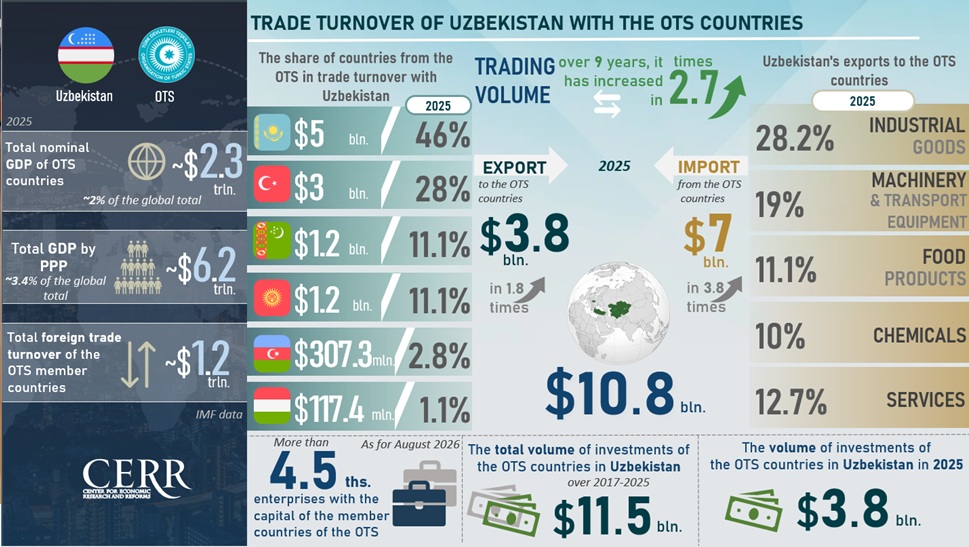
Uzbekistan has moved its economic cooperation with the Turkic states into a practical dimension
Ahead of the 13th Summit of the Organization of Turkic States, scheduled to be held in Ankara, economic cooperation within the OTS is acquiring new substance.
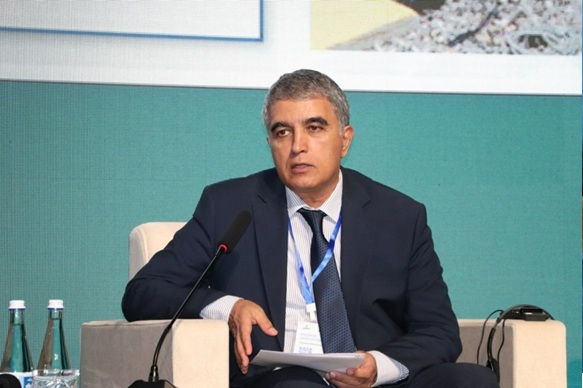
Water security in the turkic world: shared interests and common solutions
Water is a precious blessing that transcends national borders and has long connected peoples and civilizations.

Strengthening Transport Connectivity in Asia through the Development of the Trans-Caspian International Transport Corridor
Shifting international supply chains and expanding trade in Asia are driving demand for sustainable transport routes. For businesses, predictable delivery times, competitive rates, and reliable access to foreign markets are becoming increasingly important.