
The President visited the Imam Bukhari complex

President Shavkat Mirziyoyev arrived in Samarkand on May 28 and visited the mausoleum of Imam Bukhari. Verses from the Koran were read.
Imam Bukhari enjoys the greatest honor throughout the Islamic world, and the number of people wishing to visit his mausoleum is growing every year. In order to expand the conditions for pilgrims, a new complex is being built here.
The head of our state inspected the progress of construction work.
Its total area has been expanded to 44 hectares. To date, the construction of a mausoleum, a mosque for 10 thousand people and four minarets has been completed.
The new complex will become not only a place of pilgrimage, but also a center of education. It will include a museum, administration, hotels and service buildings. Hadiths from the collection “Sahih al-Bukhari” will be placed on the portal and walls of the ivans.
The President was informed about the conditions created in the complex. The need for wider landscaping of the internal territory and alleys was noted.
Official website of the President of the Republic of Uzbekistan
Related news
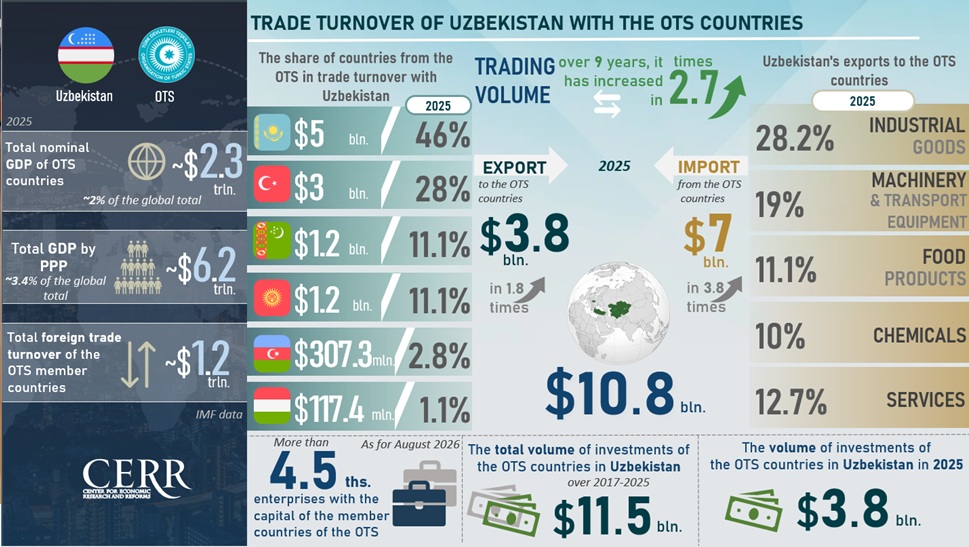
Uzbekistan has moved its economic cooperation with the Turkic states into a practical dimension
Ahead of the 13th Summit of the Organization of Turkic States, scheduled to be held in Ankara, economic cooperation within the OTS is acquiring new substance.
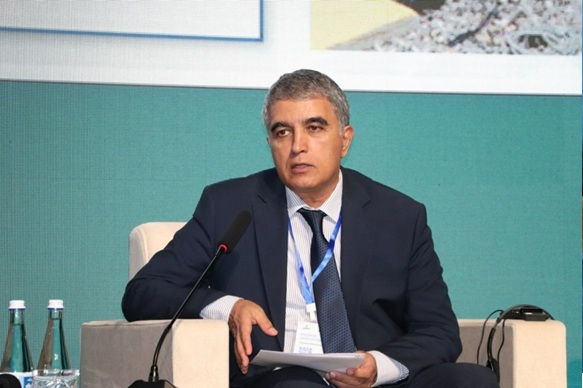
Water security in the turkic world: shared interests and common solutions
Water is a precious blessing that transcends national borders and has long connected peoples and civilizations.

Strengthening Transport Connectivity in Asia through the Development of the Trans-Caspian International Transport Corridor
Shifting international supply chains and expanding trade in Asia are driving demand for sustainable transport routes. For businesses, predictable delivery times, competitive rates, and reliable access to foreign markets are becoming increasingly important.