
The President got acquainted with plans for the digitalization of medicine and improvement of medical education
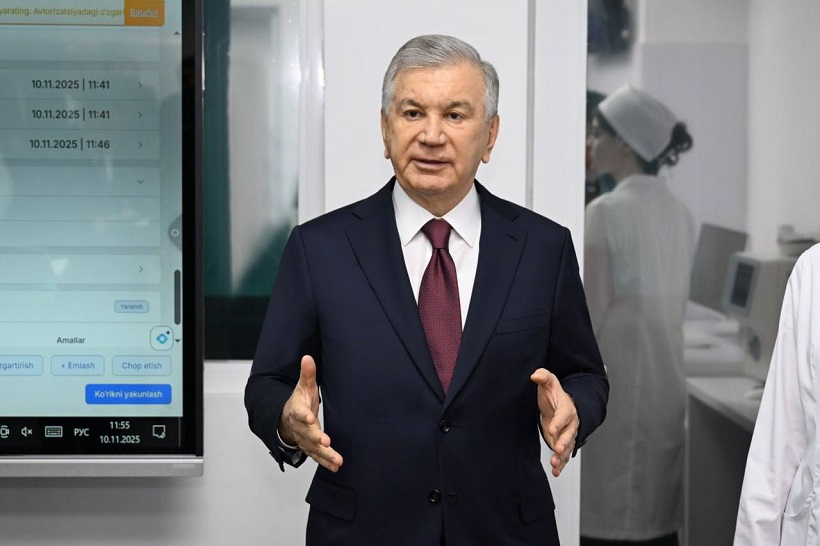
The President of the Republic of Uzbekistan Shavkat Mirziyoyev visited the Tashkent State Medical University on November 10 and got acquainted with the presentation of work on digitalization of the healthcare system, improving the quality of medical services and developing medical education.
In recent years, 230 trillion soums have been allocated to the healthcare sector. Using these funds, 187 new clinics and hospitals were put into operation in the regions, 1,244 institutions were reconstructed and equipped with modern equipment.
As a result, the capacity of primary care increased by 60 percent, and medical care became much closer to the population. More than 400 high-tech diagnostic and treatment services, which were previously performed only in the capital, are now available in the regions. Complex operations have been introduced in regional centers, and minimally invasive ones at the district level.
For the first time, kidney transplant operations have been established in 45 districts of the country.
These changes are felt by millions of citizens and are highly appreciated by international structures.
The modernization of medical education continues. The Tashkent State Medical University was created on the basis of three universities, and the Urgench Medical Institute began its activities. Eight medical universities have received international accreditation, which has significantly expanded the ability to train qualified personnel with modern knowledge and skills.
Thanks to improved infrastructure, the number of students at the Tashkent State Medical University has reached 29,864 people. The educational process has been transferred to modern standards, digitalization is actively continuing.
The President was presented with information on the introduction of digital technologies in healthcare. Medical institutions across the country are provided with modern solutions, and a unified digital infrastructure has been created. In 2024–2025, more than 3 thousand medical organizations are connected to local networks, the technical base has been updated.
The head of state was also shown the operation of the unified electronic medical information system DMED. It accumulates data on the health status of more than 36 million citizens. Electronic control has been introduced in the ambulance service, the arrival time of teams has been reduced from 25-30 to 10-15 minutes. In the near future, the “Online Doctor” service will be launched, allowing you to receive consultations remotely.
The “Electronic Prescription” system has been launched, thanks to which the number of cases of unjustified prescription of drugs has decreased by 40 percent, and the circulation of medicines has become more transparent. All medical data is protected by biometric mechanisms.
– We create modern medical institutions, introduce artificial intelligence, and bring the most advanced equipment. But the main thing is that these changes reach the lowest level. It is necessary to improve the qualifications of each medical worker and provide modern knowledge and skills. Only then will we get results,” the President emphasized.
The activities of the Center for Digital Health are also presented, where the work of all medical institutions is monitored in real time and indicators on chronic diseases and public health are analyzed.
The President noted that the digitalization of medicine provides convenience for patients, efficiency for doctors, transparency and resource savings for the state, and instructed to continue this work at an accelerated pace.
During the visit, the head of state got acquainted with educational laboratories working using artificial intelligence. In simulation rooms for intensive care, family medicine, emergency medicine, pediatrics, obstetrics and internal medicine, students practice practical skills. The created conditions and plans for further development were presented.
In conclusion, President Shavkat Mirziyoyev set tasks for decision-makers to further bring medicine closer to the population, improve the quality of services and expand the use of advanced technologies.
Related news
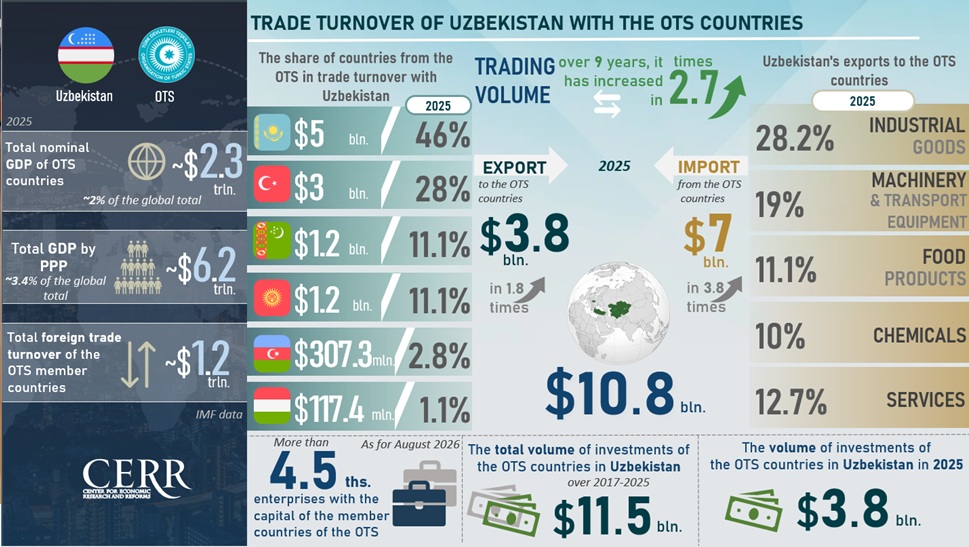
Uzbekistan has moved its economic cooperation with the Turkic states into a practical dimension
Ahead of the 13th Summit of the Organization of Turkic States, scheduled to be held in Ankara, economic cooperation within the OTS is acquiring new substance.
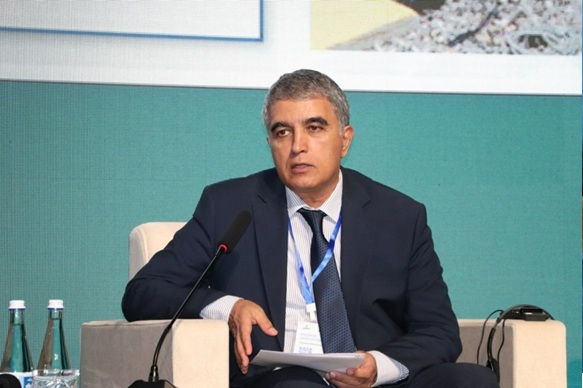
Water security in the turkic world: shared interests and common solutions
Water is a precious blessing that transcends national borders and has long connected peoples and civilizations.

Strengthening Transport Connectivity in Asia through the Development of the Trans-Caspian International Transport Corridor
Shifting international supply chains and expanding trade in Asia are driving demand for sustainable transport routes. For businesses, predictable delivery times, competitive rates, and reliable access to foreign markets are becoming increasingly important.