
Projects for the development of the creative economy and the creation of new cultural spaces were presented
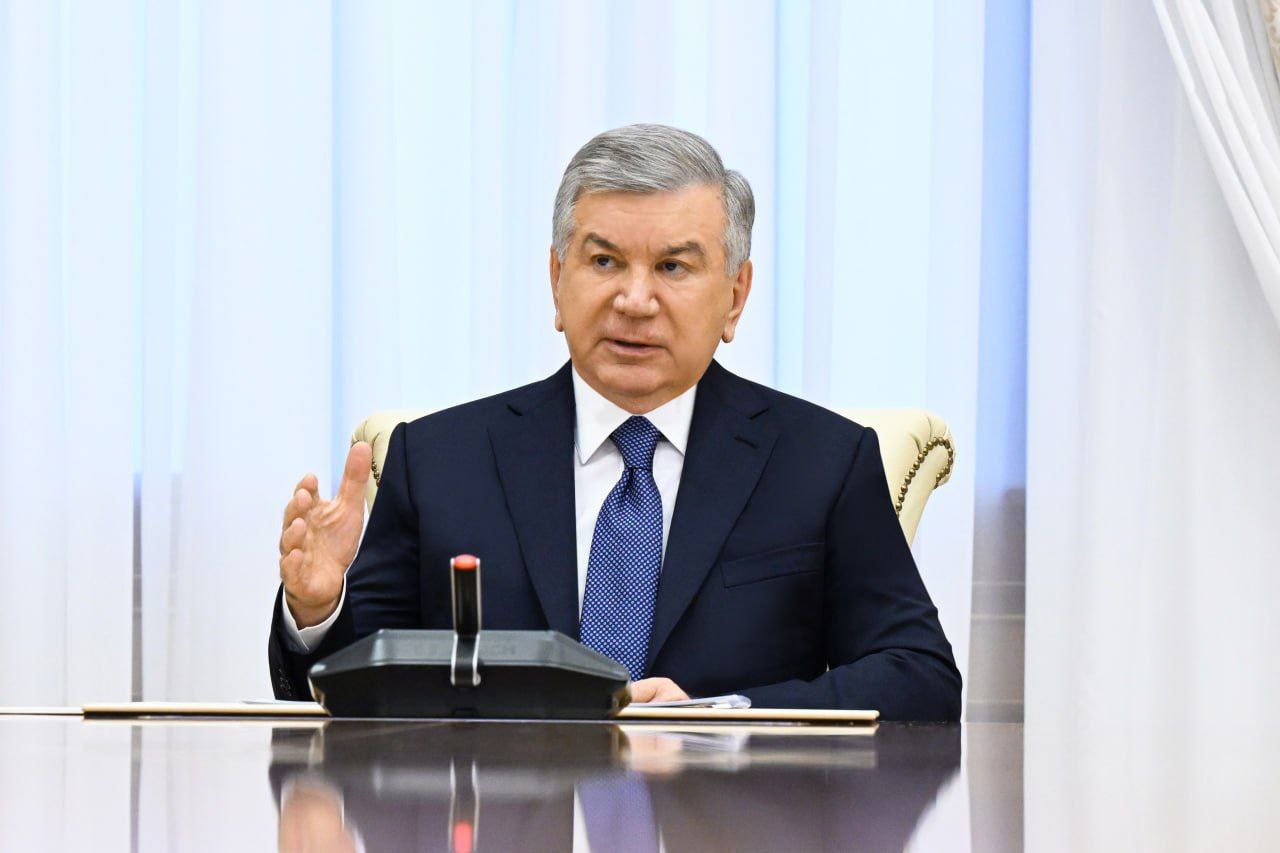
President Shavkat Mirziyoyev reviewed the presentation on the development of the creative economy, improving the infrastructure of cultural institutions and creating new creative spaces.
Today, the creative economy is becoming one of the main engines of growth in many countries. This area accounts for 3-7 percent of global gross domestic product. In our country, the share of the creative economy in GDP in 2024 amounted to 3.7 percent or 56.8 trillion soums, exports reached $770.6 million, and more than 319 thousand people are employed in the field.
The fact that more than 60 percent of the population is youth, as well as the rapid development of digital infrastructure and the presence of a rich cultural heritage, create a solid basis for a “big leap” in this sphere.
For this purpose, a separate law on the creative economy was adopted in 2024 and a legal framework was created for this industry. The Creative Industries Park was established and a special tax regime was introduced for its residents. In particular, the income tax and social tax rates were reduced from 12 percent to 6 percent. Entrepreneurs in the sector have been provided with a number of other benefits.
Due to these measures, by 2030 it is planned to increase the share of the creative economy in GDP to 5 percent or 145 trillion soums, increase exports to $1 billion and provide employment in this area for more than 500 thousand people.
The presentation discussed the concept of the Creative Industries Park, which will be located in the city Tashkent. A park, art objects, the Tashkent School of the International Programming Network, a book cafe, sports grounds, art pavilions, co-working spaces and office space, film and video production areas, a recording studio, a creative industries campus and a hotel for youth and creative workers will be created on its territory. The project will be implemented on the basis of public-private partnership.
It is also planned to create creative parks on the territory of New Tashkent and the city of Nukus.
The park in New Tashkent will house rental premises for creative residents, studios, media and conference rooms, commercial and service facilities, and the existing pavilion in Istiklol Park in Nukus will be reconstructed and transformed into a multifunctional social and cultural center.
The creative park project in Nukus is notable for the fact that it will house the national pavilion of Uzbekistan presented at EXPO-2025. A modern library will be built next to it.
The activities of cultural centers are critically analyzed.
It is noted that more than half of the republic’s over 800 cultural centers are in need of repair. It is indicated that most centers still function in the old way, limited mainly to holding festive events.
In this regard, a pilot project has been developed for the development of cultural centers based on modern standards. The project includes 4 centers in Tashkent, Kokand, Bukhara and Samarkand, the first of which is organized on the basis of the Gulshan cultural center in Tashkent. It will organize clubs, workshops, studios and circles in various areas on the principle of “culture - education - leisure - dialogue”.
During the presentation, plans were considered to create a Higher School of Traditional Arts in the city of Tashkent based on the experience of the Royal Foundation School of Great Britain.
This higher school will train bachelors and masters in ceramics and brickwork, decorative painting, wood carving, calligraphy in architecture, geometry and biomorphic ornaments. Training will be conducted in English according to a two-year program. By 2027, it is planned to train 50 specialists, and in 2031, the institution will ensure the annual graduation of 80 qualified personnel.
During the presentation, projects for the creation of the National Institute of Restoration, restoration of the Bibikhanum Mosque in Samarkand, and renovation of the summer amphitheater of the Turkiston Palace of Arts were also discussed. It was noted that design and restoration work should be carried out in full coordination with UNESCO.
Noting the strategic importance of the development of the creative economy for both the cultural sphere and the economy as a whole, the head of state instructed to ensure the high-quality implementation of the planned projects.
Related news
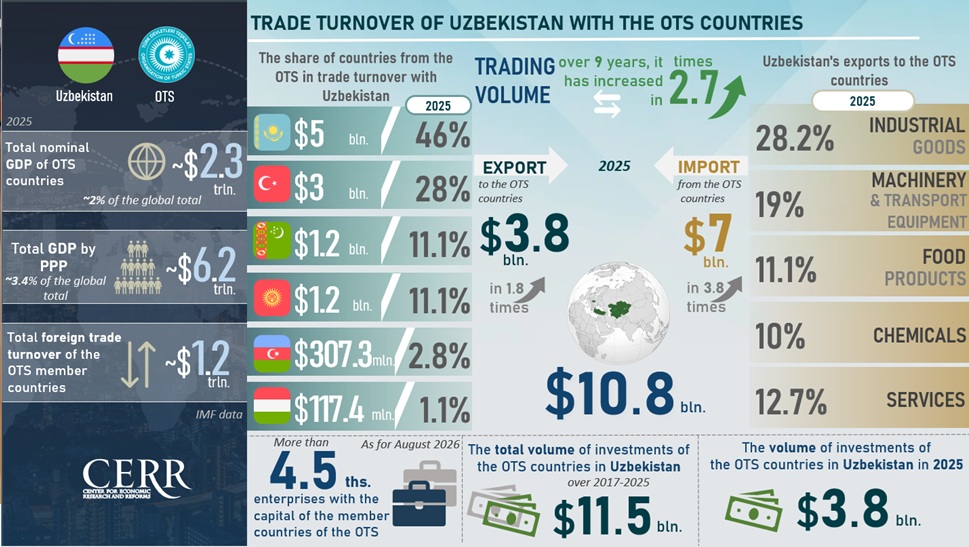
Uzbekistan has moved its economic cooperation with the Turkic states into a practical dimension
Ahead of the 13th Summit of the Organization of Turkic States, scheduled to be held in Ankara, economic cooperation within the OTS is acquiring new substance.
Water security in the turkic world: shared interests and common solutions
Water is a precious blessing that transcends national borders and has long connected peoples and civilizations.

Strengthening Transport Connectivity in Asia through the Development of the Trans-Caspian International Transport Corridor
Shifting international supply chains and expanding trade in Asia are driving demand for sustainable transport routes. For businesses, predictable delivery times, competitive rates, and reliable access to foreign markets are becoming increasingly important.