
Information is provided on the ongoing work to reduce unemployment and poverty in mahallas
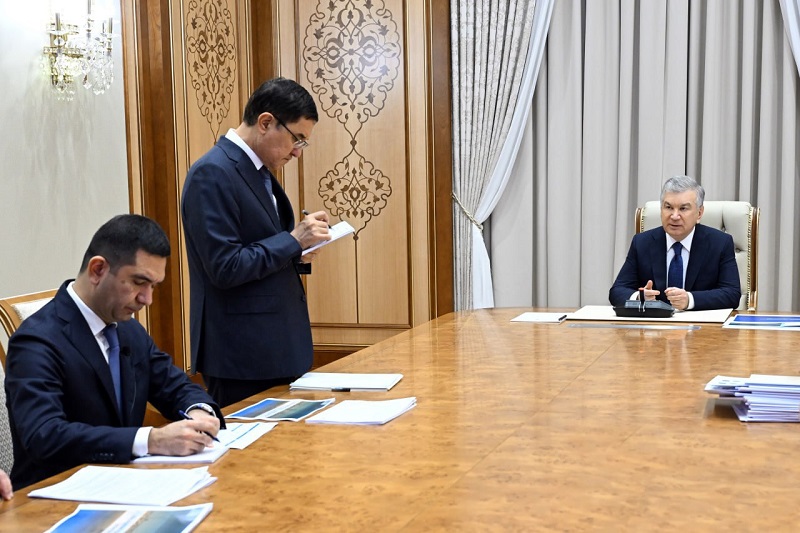
President Shavkat Mirziyoyev was presented with information on the measures being taken to transform mahallas into areas without unemployment and poverty, ensuring employment for the population.
At the meeting, held in a critical spirit, unrealized opportunities and shortcomings were identified.
It was noted that today there are no clear criteria for assessing the effectiveness of the members of the makhalla “seven”, and it is necessary to increase their responsibility for fulfilling the main task - reducing unemployment and poverty. It was emphasized that the activities of the G7 should directly affect the growth of employment and income of the population, and work in this area should be more targeted and result-oriented.
The President instructed to identify the problems of mahallas and their “growth points”, develop and implement systemic measures, paying special attention to resolving citizens’ appeals directly on the ground.
The state of work in the most problematic mahallas. The task has been set to pay special attention to such areas, to expand access to infrastructure, electricity, the Internet, as well as the possibility of using personal plots.
It is noted that by the end of this year the poverty level is expected to decrease from 8.9 percent at the beginning of the year to 6 percent. For the next year, the goal has been set to reduce this figure to 4.5 percent.
To achieve these goals, tasks have been identified for the integrated organization of work in mahallas: expanding the coverage of services aimed at sustainable employment, creating sources of income, training the population in professions and involving them in entrepreneurial activities.
It is especially emphasized that for each low-income family it is necessary to formulate individual programs based on its real capabilities and needs.
As part of the project approach, it is planned to reach 1 million low-income citizens through initiatives such as “Partnership of employment authorities with employers”, “Equal opportunities - inclusive employment”, “Towards a sustainable future”, “20 local brands”, “One contour - one product", "Development of entrepreneurship in mahallas", "Improving the irrigation of leased lands and household plots", "Renewal of old orchards", "1 thousand hectares of fruit orchards", "Export cooperatives" and other programs.
Measures are presented to reduce poverty and unemployment through the implementation of small and medium-sized projects in mahallas, including the development of infrastructure in border and enclave areas, the creation 24-hour streets, tourist mahallas, micro-industrial centers, development of coastal and road infrastructure.
The progress of the implementation of the employment program for 2025, the formation of a plan for 2026 and issues of reducing informal employment were also considered.
The President instructed the responsible structures to ensure targeted solutions to problems on the ground, to increase the effectiveness of practical work taking into account the real needs of the population, as well as achieve a high level of responsibility in fulfilling tasks to reduce unemployment and poverty.
Related news
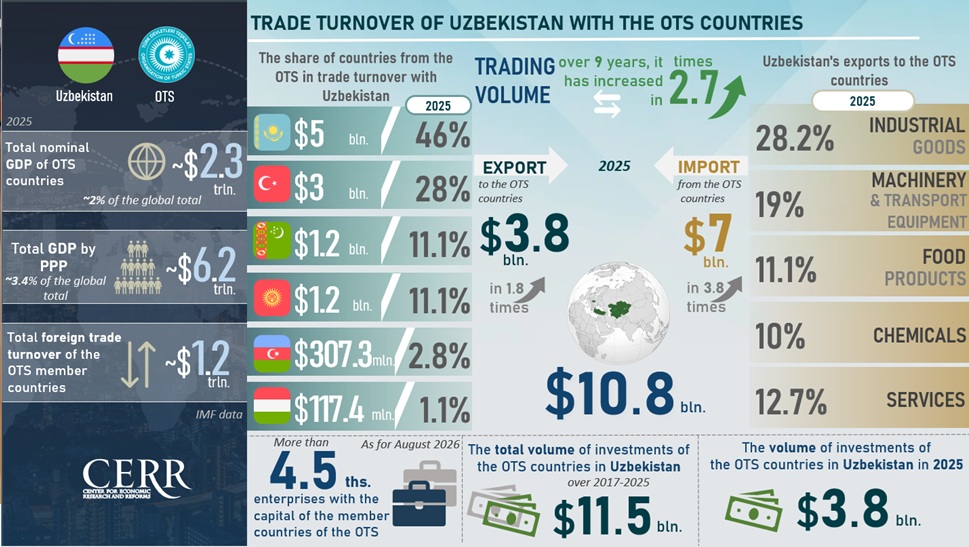
Uzbekistan has moved its economic cooperation with the Turkic states into a practical dimension
Ahead of the 13th Summit of the Organization of Turkic States, scheduled to be held in Ankara, economic cooperation within the OTS is acquiring new substance.
Water security in the turkic world: shared interests and common solutions
Water is a precious blessing that transcends national borders and has long connected peoples and civilizations.

Strengthening Transport Connectivity in Asia through the Development of the Trans-Caspian International Transport Corridor
Shifting international supply chains and expanding trade in Asia are driving demand for sustainable transport routes. For businesses, predictable delivery times, competitive rates, and reliable access to foreign markets are becoming increasingly important.