
The first summit “Central Asia – Japan”: a new stage of strategic partnership
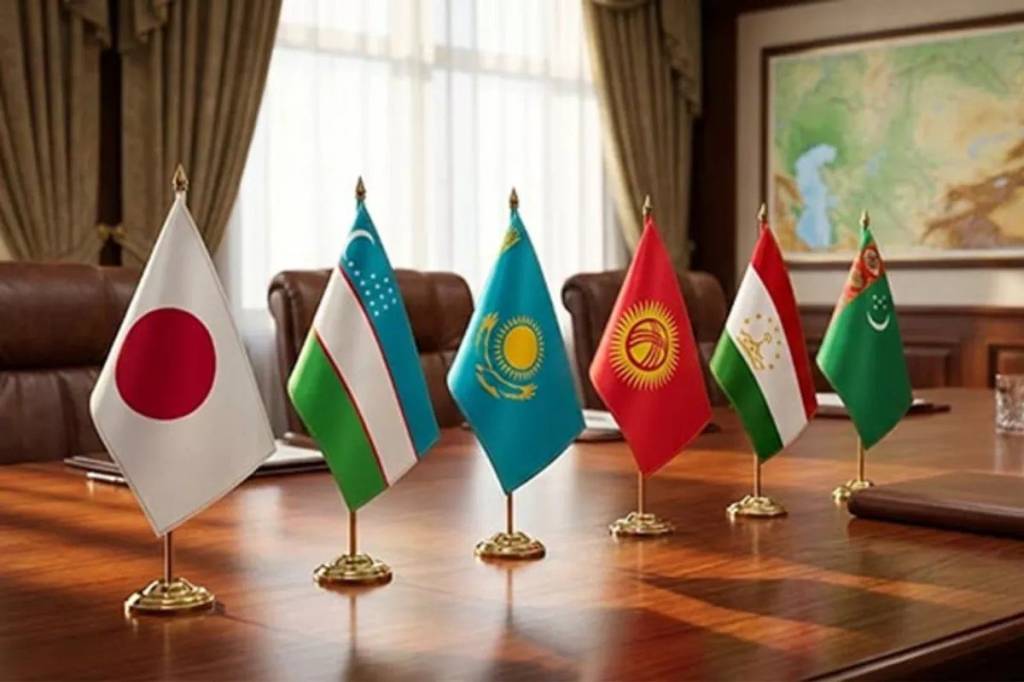
On December 19-20 of this year, the first summit in the “Central Asia – Japan” format will be held in Tokyo, during which the parties will discuss strengthening cooperation and prospects for further development partnership.
The upcoming meeting of heads of state takes on special significance in the context of current trends in Central Asia, where processes of regional cooperation have acquired new dynamics.
Its results will undoubtedly give an important impetus to the development of relations between the region and Japan, which will take them to a qualitatively new level, reflecting the strategic maturity of cooperation and emphasizing its importance both for the countries of Central Asia and for Tokyo.
The summit meeting is expected to create favorable conditions for the practical implementation of joint initiatives and the effective use of the unrealized potential of the partnership.
Japan was one of the first to recognize the independence of the new states of Central Asia. In its policy towards the region, Tokyo consistently relies on the principles of equality, mutual respect and consideration of the interests of partners without imposing any political conditions for the development of cooperation.
The Land of the Rising Sun has become a pioneer among external partners in perceiving Central Asia as a single regional space. Thus, back in 2004, on the initiative of Japanese diplomacy, the “Central Asia plus Japan” Dialogue was established, which became a pilot multilateral platform for cooperation between the states of the region in the “Central Asia +” format.
Within this mechanism, Japan consistently supports the “open, stable and independent development” of Central Asia. At the same time, Tokyo is building active and balanced interaction with each of the republics of the region.
As the President of Uzbekistan Shavkat Mirziyoyev noted, “Japan is our time-tested strategic partner, relations with which are developing on the basis of the principles of mutual trust and respect.”
Since the launch of the mechanism, nine meetings of foreign ministers have been held, and a wide range of expert and business discussions have been organized. In a joint statement following the 9th meeting, held in Tokyo in 2022, the foreign ministers of the countries of Central Asia and Japan confirmed their intention to further deepen partnership and mutually beneficial cooperation based on friendship and mutual trust formed over the years.
Over the past two decades, the Dialogue has established itself as an important platform for deepening relations and discussing joint projects, making a significant contribution to strengthening sustainable development in Central Asia.
Special attention is paid to the support that Japan provided to the countries of Central Asia from the first days of their independence. It was manifested in active promotion of the development of the economies of the region, including the implementation of infrastructure and energy projects through effective cooperation with key institutions - the Japan International Cooperation Agency (JICA), the Japan Bank for International Cooperation (JBIC), the Japan Trade and Investment Organization (JETRO), etc.
In this vein, the partnership attaches special importance to issues of infrastructure development, which is one of the strategic priority areas of cooperation. The use of advanced Japanese technologies makes it possible to modernize key transport hubs, increase the efficiency of logistics systems and strengthen the interconnectedness of the region.
Particularly noteworthy are the projects financed by Japan in Uzbekistan, which made it possible to reconstruct international airports in Samarkand, Bukhara and Urgench (1996-1999), to build a railway Tashguzar-Kumkurgan (2004) and electrify the Karshi-Termez line (2012), increasing the connectivity of the country's transport infrastructure.
Similar projects have been implemented in other Central Asian countries. In particular, with the active assistance of Japan, airports in Astana (2002-2005), Manas (2024-2025) and Dushanbe (2017) were modernized, a bridge was built across the Irtysh in Semey (1998), the road was reconstructed Bishkek–Osh (2025) and key roads were built in Tajikistan(since 2006).
These projects served as the starting point for a broader strategy to modernize transport and logistics infrastructure in the region. In 2017, Japanese Prime Minister Fumio Kishida launched the Transport and Logistics Cooperation Initiative, committing $153 million to projects aimed at improving transport efficiency and integrating Central Asian transport systems.
Japan is also playing a key role in modernizing Central Asia's energy system. Particular attention is paid to “green transformation” in the multilateral agenda.
In Uzbekistan, with the support of JICA and JBIC, projects for the construction and modernization of thermal power plants have been implemented, including Turakurgan (2014) and Talimarjan thermal power plant (2013), as well as the expansion of thermal power plant in Navoi (since 2013). In addition Moreover, at the end of October this year. JBIC has provided financing for two large solar and battery projects in Samarkand and Bukhara regions with a total capacity of 1,000 MW.
Japan actively supports energy and green projects in other Central Asian countries. Thus, a memorandum on low-carbon development was concluded with Kazakhstan and a project for the introduction of renewable energy sources in the Turkestan region was prepared together with the Japanese Komaihaltec Inc(2024). An agreement was reached with Kyrgyzstan on the construction of two small hydroelectric power stations on the Chon-Kemin River with a capacity of 24–25 MW and a solar station with a capacity of up to 100 MW together with MurooSystems Corporation (2024). In Tajikistan, the Sugd-500 substation is being modernized with the support of the EBRD and Japan (2025), and in Turkmenistan, it is planned to build a second green gasoline plant GTG-2 with Kawasaki Heavy Industries, Rönesans and ITOCHU (2025).
These initiatives will not only increase the share of renewable energy sources, but will also create an environmentally friendly and technologically advanced energy platform for the entire region, increasing its energy security and promoting the sustainable development of Central Asia.
The most important vector of Japanese cooperation in the countries of Central Asia is the development of human capital, considered as a strategic resource for the long-term sustainable development of the region starting from the first years of independence. Tokyo actively supports professional and educational exchange programs aimed at training highly qualified specialists capable of working with modern technologies.
In Uzbekistan, Kazakhstan and Kyrgyzstan, there are Uzbek-Japanese and regional centers for human resource development, where Japanese language courses, training in business, information technology and engineering, as well as cultural and humanitarian exchange have been conducted for more than 20 years. These initiatives are building a professional workforce capable of integrating into joint economic, technological and innovation projects with Japan.
Particular attention is paid to training specialists for the digital economy, energy sector, infrastructure projects and emergency management, which makes Japan's contribution to human capital strategically significant for strengthening the potential of Central Asia in the 21st century.
Undoubtedly, during the first The summit will consider a wide range of areas of cooperation. Some of them already have tangible results, while others still have potential for new joint initiatives. Among them, we can highlight a number of promising areas of interaction between our countries.
In the economic sphere, there remains significant potential for expanding trade and investment interaction. Since 2000, Japan's trade turnover with the region has increased 6-fold, from $400 million to $2.4 billion in 2024. However, this figure is still far from the current capabilities. Countries need to deepen economic ties, expand joint projects and develop new markets for regional goods.
The Osaka 2025 Expo was a good start in this direction, demonstrating the growing interest of Japanese buyers in Central Asian products and opening up opportunities for trade diversification.
There are also opportunities for new initiatives and joint projects in energy and green technologies. Central Asia has significant potential in the field of renewable energy sources. For example, in Uzbekistan alone it is possible to produce 500 gigawatts of solar, 100 gigawatts of wind and 10 gigawatts of hydropower.
In turn, Japan has recognized competencies in the field of energy efficiency, hydrogen technologies and renewable energy sources, which creates ample opportunities for modernizing the energy balance of the countries of Central Asia.
Collaboration in this area will expand the share of renewable energy sources, introduce modern storage systems, increase the reliability of energy supply and accelerate the transition to a low-carbon economy. Joint projects, including research into hydrogen, energy storage and thermal power modernization, have the potential to shape new industry standards for sustainable development in the region.
Significant steps are possible in transport and logistics. According to the UN, by 2050 the demand for freight transport in the world will increase 3 times. In this context, the development of transport infrastructure remains a key condition for the economic integration and competitiveness of Central Asia.
Japan has traditionally played a systemic role in the modernization of the region's aviation, railway and road hubs, ensuring the introduction of high technological standards of construction and management. Strengthening partnerships in this area will allow us to develop multimodal corridors, improve supply chains and increase the sustainability of regional transit routes, including destinations connecting Central Asia with East Asia, the Middle East and Europe.
Digitalization and the introduction of artificial intelligence technologies represent another area where the development of mutually beneficial cooperation is possible. Japan has advanced solutions in automation, cybersecurity and AI.
Using Japanese AI, automation and cybersecurity solutions in Central Asia can create a platform for the development of new industries, and developing a skilled workforce will be a key element of long-term technological sustainability.
Particular attention should be paid to the issues of climate resilience, adaptation to climate change and water management. Climate change is having an increasingly noticeable impact on Central Asia, raising water issues, land degradation and uncharacteristic weather events for the region. Over the past 30 years, temperatures in the region have risen by 1.5 degrees, twice the global average. And water shortages in the region could reach 30% by 2050.
In this regard, cooperation with Japan, which has global competencies in climate planning, adaptation strategies and low-carbon technologies, becomes critical. Tokyo can support the development of climate monitoring systems, joint scientific programs and projects on sustainable water management, which will strengthen the region's ability to cope with long-term climate risks.
In addition, strengthening cooperation in the field of prevention and response to emergencies related to climate change is promising. Joint initiatives could include the introduction of modern forecasting, monitoring and risk management systems to enable countries to more effectively adapt to extreme weather events and minimize social and economic impacts.
The identified areas are important for the countries of Central Asia, which are interested in deepening economic cooperation, modernizing infrastructure, developing energy and human capital, as well as for Japan, which is seeking to strengthen strategic partnerships and expand its presence in the region.
The meeting at the level of heads of state will be the starting point of a new stage of interaction, where Japan acts not only as an external power, but also as a reliable a strategic partner capable of supporting the long-term development of Central Asia based on knowledge, technology and mutual interests.
SherzodFayziev
Deputy Director
International Institute of Central Asia
Related news
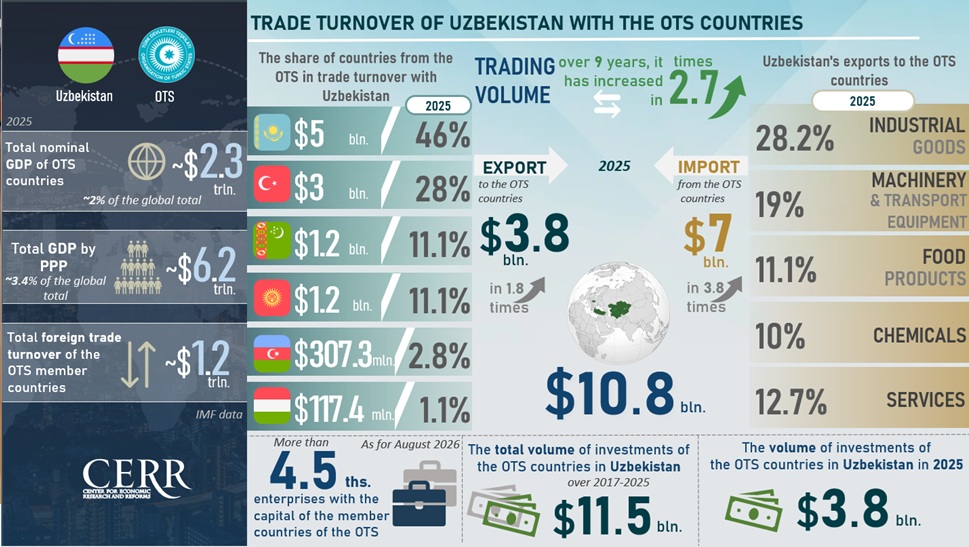
Uzbekistan has moved its economic cooperation with the Turkic states into a practical dimension
Ahead of the 13th Summit of the Organization of Turkic States, scheduled to be held in Ankara, economic cooperation within the OTS is acquiring new substance.
Water security in the turkic world: shared interests and common solutions
Water is a precious blessing that transcends national borders and has long connected peoples and civilizations.

Strengthening Transport Connectivity in Asia through the Development of the Trans-Caspian International Transport Corridor
Shifting international supply chains and expanding trade in Asia are driving demand for sustainable transport routes. For businesses, predictable delivery times, competitive rates, and reliable access to foreign markets are becoming increasingly important.