
Pakistani media: US and Central Asian countries intensify strategic dialogue
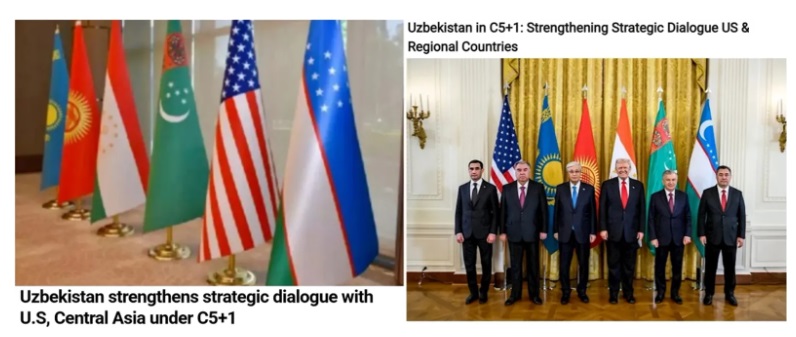
The popular Pakistani electronic publications “Global News Pakistan” and “The Diplomatic Insight” published an article entitled “Uzbekistan on the C5+1 platform: strengthening the strategic dialogue between the United States and countries Central Asia”
The material notes that modern Central Asia is gradually turning into an area of sustainable growth and mutual trust. Countries in the region, prioritizing practical initiatives in the areas of trade, energy, transport and innovation, persistently strive to build balanced relationships with global partners. One of the key mechanisms of this process is the “C5+1” format, uniting the countries of Central Asia and the United States.
As emphasized in publications, in recent years the “C5+1” format has transformed from a diplomatic tool into an effective platform for coordinating initiatives and implementing joint projects. The meeting of ministers of the countries of Central Asia, held in Samarkand, reflected an approach based on trust and a focus on practical results.
The author informs that the main areas of the meeting agenda were ensuring food security, strengthening climate resilience, developing a green and digital economy, diversifying transport corridors, as well as deepening industrial cooperation.
It is reported that following the meeting, memorandums were signed with USAID on decarbonization and digitalization of customs procedures, which creates opportunities for harmonizing trade rules, facilitating exports and attracting new investments.
“The numbers speak for themselves - the foreign trade turnover of the countries of Central Asia reached $220 billion, which is almost twice as much as in 2017. The volume of mutual investments increased 5.6 times, and the total GDP of the region over the past five years increased by 40 percent, exceeding $406 billion. This growth reflects not only quantitative changes, but also a transition to a qualitatively new level - from individual initiatives towards the formation of a unified strategy for regional development,” the publications write.
Pakistani media note that the participation of Central Asian countries in the “C5+1” format gives the process of regional integration a new quality - it helps to harmonize national interests with global trends in sustainable development.
It is also emphasized that the “C5+1” format opens up broad opportunities for the countries of the region - attracting investments and technologies, development of new markets, development of the energy sector, implementation of educational programs and exchange of experience with leading international companies.
“Central Asia is gradually transforming from a geography of intersections into a region of synergy. The “C5+1” format serves as the basis for uniting the efforts of regional and global partners within a single strategy based on trust, mutual benefit and sustainable growth. For Uzbekistan, participation in this platform is not easy direction of foreign policy, but an instrument for implementing a national strategy aimed at industrialization, export development and improving the well-being of citizens,” the publication notes in conclusion.
Related news
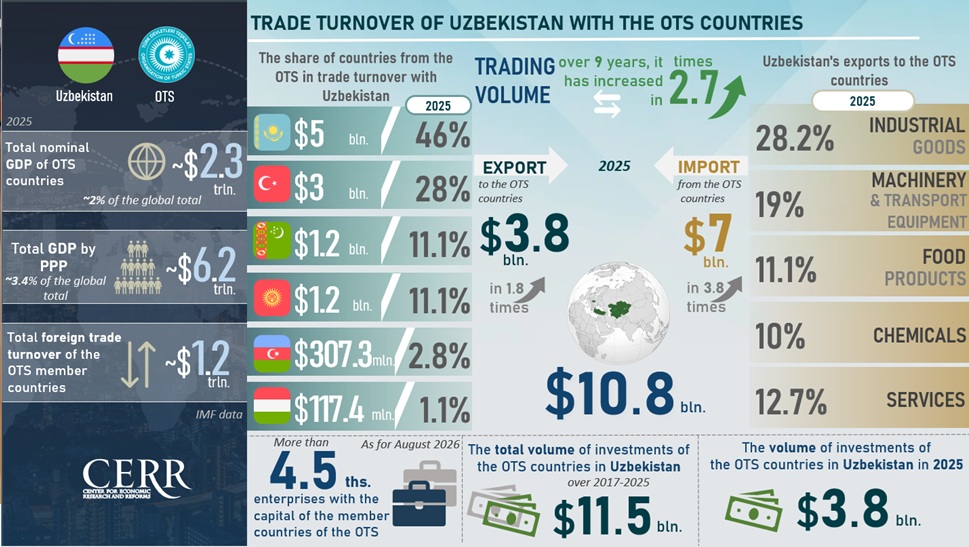
Uzbekistan has moved its economic cooperation with the Turkic states into a practical dimension
Ahead of the 13th Summit of the Organization of Turkic States, scheduled to be held in Ankara, economic cooperation within the OTS is acquiring new substance.
Water security in the turkic world: shared interests and common solutions
Water is a precious blessing that transcends national borders and has long connected peoples and civilizations.

Strengthening Transport Connectivity in Asia through the Development of the Trans-Caspian International Transport Corridor
Shifting international supply chains and expanding trade in Asia are driving demand for sustainable transport routes. For businesses, predictable delivery times, competitive rates, and reliable access to foreign markets are becoming increasingly important.