
New reserves and opportunities for increasing food exports have been identified
Agricultural reforms have received international recognition. This month, Uzbekistan was elected to the Council of the Food and Agriculture Organization of the United Nations (FAO). This opens up wide opportunities for promoting national and regional initiatives and attracting additional investments.
Our products are highly valued abroad due to their naturalness and excellent taste, forming the “Made in Uzbekistan” brand. The country occupies a leading position in the world in the export of dried plums, apricots, peaches, raisins, cherries and legumes.
In the first 6 months of this year, food exports increased by 44 percent, amounting to $1 billion 326 million. The geography of exports has expanded to 16 new countries.
At the same time, the situation in the world is becoming increasingly unstable, climate anomalies are becoming the norm. In such conditions, every export market is of great importance.
However, the available capabilities are not fully used everywhere. For example, the growth rate of food exports in Surkhandarya, Tashkent regions and Karakalpakstan lags behind other regions. And the Navoi region was unable to reach its last year’s volumes. In 21 regions, exports did not reach 70 percent of last year's levels.
In addition, this year 80 percent of fruit and vegetable exports are sent to just 5 countries. Exports to high-demand countries such as the UK, Italy, Sweden, Japan, India and Qatar remain low. The insufficient activity of our diplomatic institutions and trade representatives abroad was pointed out.
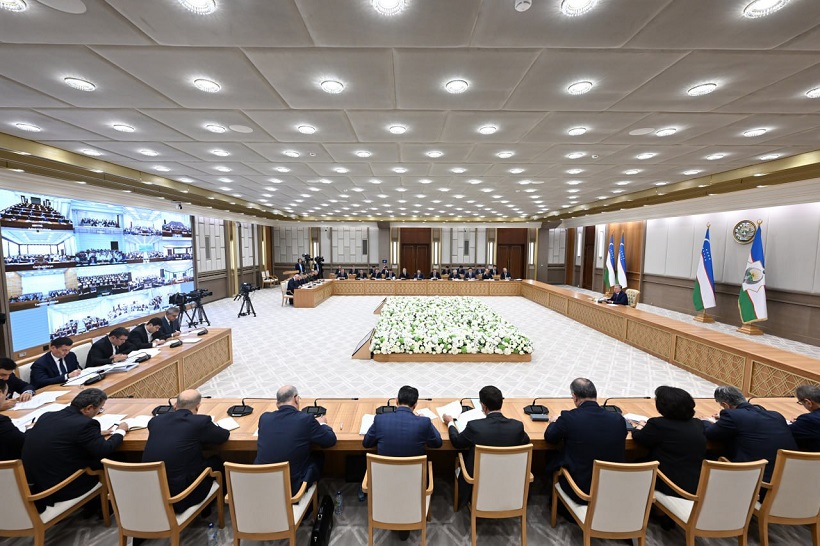
At the meeting, these shortcomings were analyzed and measures were identified to improve the efficiency of agriculture and increase exports. This is noted as the most important area of the country's economic security. The need to grow crops resistant to climate change and drought was emphasized.
Based on the analysis, additional reserves and opportunities for export by region were indicated.
Due to outdated operating methods, 75 percent of last year's horticultural exports occurred between May and October, when the world market is saturated. To ensure year-round supplies and sales at higher prices, it is necessary to develop product processing.
For example, advanced entrepreneurs began to use the technology of blast freezing cherries for sale in winter. Also, in conditions of a shortage of their own products, they imported and re-exported. In this regard, the need to increase the production of export products, especially cherries, was noted.
This year, 16 modern packaging plants have been launched, but this is not enough. Only 18 percent of exported products have modern packaging. The goal is to launch another 15 such enterprises by the end of the year.
Beans are one of the largest export resources. Annual exports of beans, mung beans, chickpeas and millet amount to $450 million. But due to labor shortages, up to 30 percent of the crop is wasted, reducing export potential.
In developed countries, farmers harvest legumes using special combines. Therefore, it was decided to allocate subsidies for the purchase of such equipment up to 15 percent of its cost and compensate for part of the interest rate on loans exceeding 10 percent.
To reduce transport costs, processed products can now be exported from any customs point.
Today, creating new and updating old orchards requires 350 million high-yielding and in demand on foreign markets seedlings. Agrostar companies have been created in 16 regions, which are tasked with starting work with growing seeds, seedlings and producing fertilizers.
Instructions were given to build in vitro laboratories for Agrostar companies, modern agricultural complexes with equipment for storing, packaging, sorting and processing products.
Today, the area of greenhouses in the country is 5,100 hectares, and the volume grown products over the past seven years has grown from 110 to 546 thousand tons.
However, due to the heavy credit burden, high prices for fertilizers and unstable gas supplies, more than 600 hectares of greenhouses stopped working, and 128 hectares became the property of banks due to debts.
To support greenhouses, it was decided to provide guaranteed gas supplies in the winter to those farms that undertake to export their products. Also, greenhouses that have switched to coal or alternative fuel and have export obligations will be given the opportunity to return to gas heating.
To ensure working capital, prepayment for gas from October to March will be 50 percent. Contracts with gas companies must be concluded before October 1.
The loan repayment period for greenhouses that switched to coal or alternative fuels will be extended. When creating greenhouses with heat pumps, up to 20 percent of costs or 4 percent of the credit rate will be compensated.
From this year, all greenhouses, regardless of category, will pay land tax at the agricultural land rate. Until 2028, the social tax rate for greenhouse workers will decrease from 12 to 1 percent.
The Tax Committee has been tasked with analyzing the efficiency of using gas redirected from greenhouses to other industries. If low added value is created there, the gas will be returned to the greenhouses.
A separate task has been set to finally solve the problems associated with the negative impact of greenhouses on the environmental situation in the Tashkent region.
Currently, water-saving technologies are used on 224 thousand hectares, which has saved 420 million cubic meters of water and additionally used 65 thousand hectares of land. This year, 1.2 trillion soums have been allocated for this purpose.
By the end of the year, it is planned to additionally introduce drip and rain irrigation on 10 thousand hectares and carry out laser leveling of 200 thousand hectares of land.
The Ministry of Economy and Finance has been instructed to provide financing for these works and formulate a budget of 2 trillion soums for the next year.
How It is known that laws have recently been adopted on planting crops along fields and on cooperation in agriculture. The adoption of the new Water Code is also an important step to ensure food security in conditions of water scarcity. It was emphasized that it is advisable to continue work on legislative strengthening of measures to increase incomes of the agricultural sector, stimulate exports and introduce advanced standards.
The government was instructed to establish a constant dialogue with exporters, greenhouse owners and producers of fruit and vegetable products, to promptly identify and resolve all issues and problems arising in interaction with government bodies.
The meeting also included reports from responsible persons were heard and successful examples of entrepreneurs who had achieved high results in the export and production of agricultural products were reviewed.
Official website of the President of the Republic of Uzbekistan
Related news
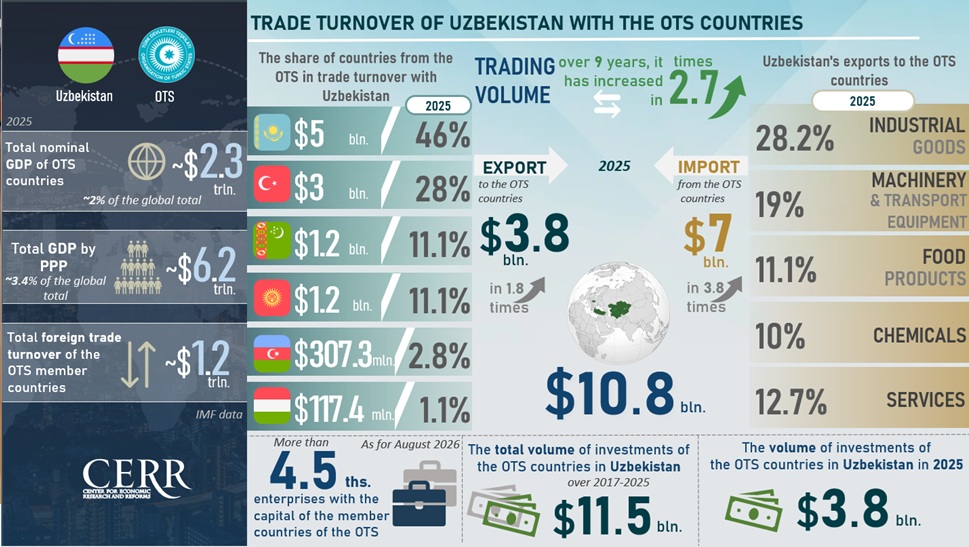
Uzbekistan has moved its economic cooperation with the Turkic states into a practical dimension
Ahead of the 13th Summit of the Organization of Turkic States, scheduled to be held in Ankara, economic cooperation within the OTS is acquiring new substance.
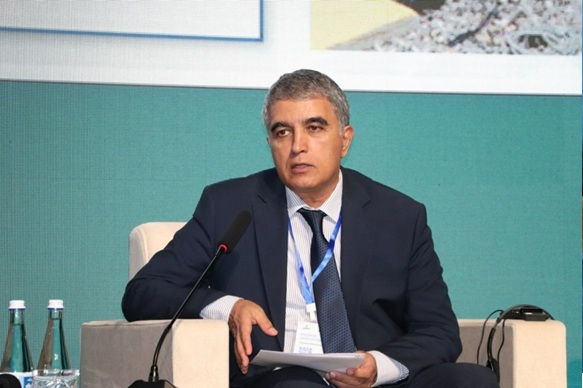
Water security in the turkic world: shared interests and common solutions
Water is a precious blessing that transcends national borders and has long connected peoples and civilizations.

Strengthening Transport Connectivity in Asia through the Development of the Trans-Caspian International Transport Corridor
Shifting international supply chains and expanding trade in Asia are driving demand for sustainable transport routes. For businesses, predictable delivery times, competitive rates, and reliable access to foreign markets are becoming increasingly important.