
Additional opportunities and challenges in the textile industry identified
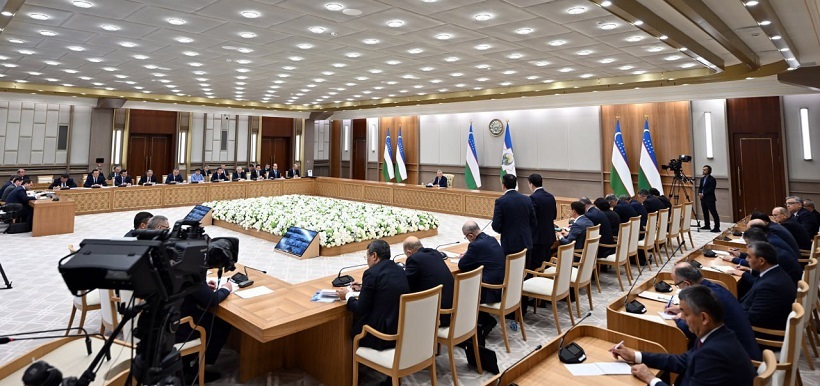
On August 13, a video conference meeting was held under the chairmanship of President Shavkat Mirziyoyev on the use of export potential and reserves in the textile industry industries.
Textiles are one of the key industries, providing 3 percent of the country's economy and 14 percent of industrial production. It employs over 500 thousand people. Over the past five years, 396 enterprises with a total value of $3.5 billion have been commissioned, and production volume has reached $10 billion.
However, the volatile world market conditions, declining demand and falling prices require prompt support measures.
Over the past three years, the world price of cotton has decreased on average from 3 thousand to 1.5 thousand dollars per a ton To adapt to these conditions, in 2022-2023, preferential loans for the purchase of cotton raw materials were extended three times, and last year subsidies in the amount of 1 million soums were provided for each ton.
Many textile enterprises have debt on commercial loans. Only 16 percent of them have international certificates, which makes it difficult to compete in the foreign market.
The lifting of the “cotton boycott” against Uzbekistan and joining the GSP+ system of preferences, which allows duty-free export of products to Europe, have opened up significant opportunities. However, cooperation with international brands and the scale of exports do not yet meet these conditions.
To study such problems, on behalf of the President, the opinions of more than 200 entrepreneurs were studied. At the meeting, based on the results of these meetings, new opportunities and tasks were identified.
First of all, attention is paid to the issues of financial recovery and cost reduction.
This year, the debt of clusters on loans for the 2022-2023 harvest was extended to five years with the condition of collateral. Now, starting August 1, clusters that have adequate collateral will only repay the principal debt. Interest accrued to the Agriculture Fund and banks will be collected after full repayment of the principal debt. In case of timely payment of both the principal and interest, half of the interest amount due to the Fund is returned to the entrepreneur.
In addition, a penalty in the amount of 377 billion soums, formed as of August 1 for loans for the 2022–2023 harvest, will be written off. Financial recovery measures will be developed for 144 enterprises with obligations on commercial loans.
For the timely harvest of the current cotton harvest, farmers will be provided with subsidies in the amount of 1 million soums per ton. If enterprises grow or purchase cotton with their own funds, they will be compensated for 10 percent of the cost of raw materials.
All enterprises in the textile chain are set a social tax rate of 1 percent. At the same time, the requirement for the social register is canceled, and the mandatory share of textiles in sales is reduced from 90 to 70 percent.
Enterprises that organize kindergartens for the children of their employees will receive subsidies for each pupil on conditions similar to private preschool institutions.
The cost of yarn largely depends on the cost of electricity. In this regard, enterprises will be allowed to connect solar panels installed for their own needs to the network.
Such measures will provide important support for the development of activities. However, clusters that do not have fiber processing capacity must establish effective cooperation with spinning mills. Otherwise, starting next year, they will lose their cluster status and the right to a preferential loan for the cotton harvest.
The government has been instructed to develop attractive financial measures for such clusters.
The meeting also discussed in detail the issues of increasing production and export volumes.
The average price of yarn and fabric produced in the country 10 to 15 percent higher than competitors since 90 percent of the product is made from cotton. Man-made fibers and mixed fabrics are widely used throughout the world.
To provide enterprises with cheaper raw materials, until January 1, 2028, mixed fabrics and textiles will be exempt from customs duties.
If several dyeing enterprises merge to build treatment facilities, part of their costs will be compensated by the Trade Development Company.
Export enterprises to open branches in the regions will be provided with loans for a period of five years in the amount of up to 10 billion soums at the main rate of the Central Bank at the expense of the Trade Development Company. The salaries of foreign designers, technologists, constructors and marketers will be compensated provided that at least 200 jobs are created and decent wages are paid.
The key condition for entering global markets is quality and compliance with standards. In this regard, the Technical Regulation Agency has been tasked with facilitating the acquisition of international certificates by textile enterprises and increasing the number of such enterprises to 300.
The importance of expanding the export of ready-made clothing to the markets of Europe and the USA was noted. Thus, in the USA the volume of the textile market is estimated at about 100 billion dollars annually. By adapting products to requirements, you can find your niche. For this purpose, instructions were given to open trading houses in New York and St. Louis.
The Ministry of Foreign Affairs and ambassadors were instructed to develop a “road map” for cooperation with major brands and invite them to a major exhibition in Tashkent.
It was noted that the use of artificial intelligence in the activities of enterprises can increase revenues by 20-30 percent and reduce the level of shadow economy. In this regard, a program for introducing the ERP system at textile enterprises will be developed.
The organizational issue was also discussed at the meeting. Given the rapidly changing rules of global trade, the need for a special approach in managing the industry was noted.
In this regard, the Light Industry Development Agency will be created, responsible for the textile, leather and silk industries.
A separate fund will be formed for the agency, through which state support and preferential working capital will be provided to enterprises. The fund will receive $200 million. A council of experienced entrepreneurs will be created under the agency.
The new structure, together with this council, will be responsible for reducing costs, increasing production and export indicators, developing cooperation and financial recovery of enterprises operating at low capacity. The task is also to attract international consultants and develop a textile development program until 2030, as well as expand the leather, silk and carpet industries.
The Prime Minister was instructed to establish strict control over the implementation of assigned tasks.
The meeting reviewed best practices and heard the opinions of industry leaders and entrepreneurs.
Official website of the President of the Republic Uzbekistan
Related news
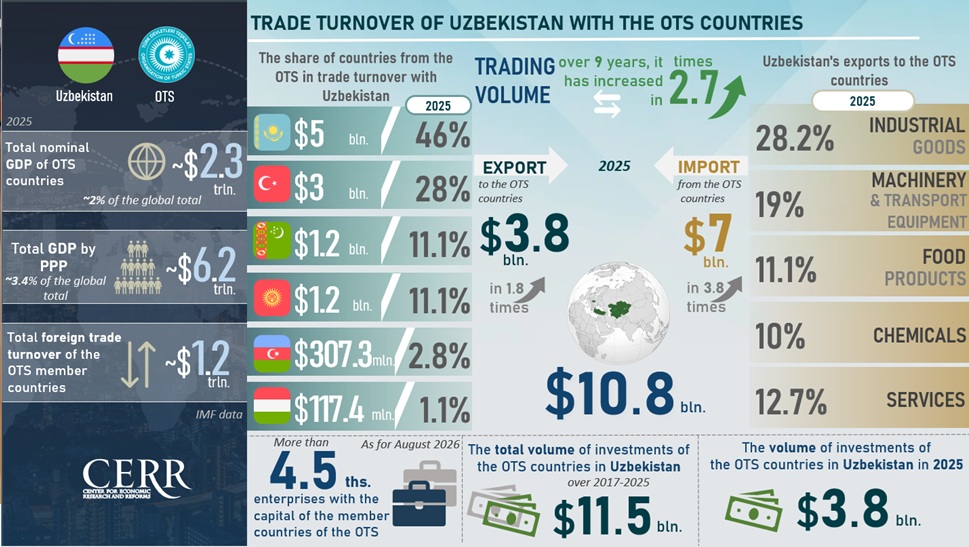
Uzbekistan has moved its economic cooperation with the Turkic states into a practical dimension
Ahead of the 13th Summit of the Organization of Turkic States, scheduled to be held in Ankara, economic cooperation within the OTS is acquiring new substance.
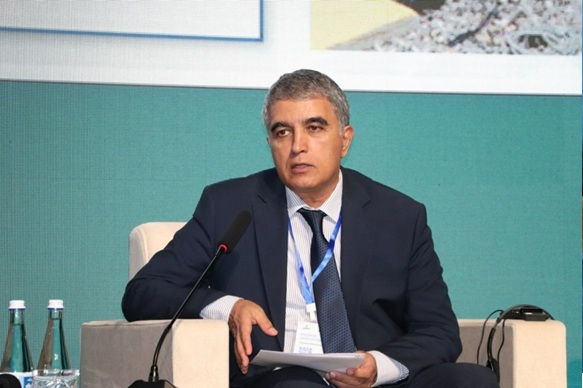
Water security in the turkic world: shared interests and common solutions
Water is a precious blessing that transcends national borders and has long connected peoples and civilizations.

Strengthening Transport Connectivity in Asia through the Development of the Trans-Caspian International Transport Corridor
Shifting international supply chains and expanding trade in Asia are driving demand for sustainable transport routes. For businesses, predictable delivery times, competitive rates, and reliable access to foreign markets are becoming increasingly important.