
One of Pakistan’s major business conglomerates has begun negotiations to enter the Uzbekistan market
The Ambassador of Uzbekistan, Alisher Tukhtaev, held talks with Muhammad Sohail Tabba, a member of the Board of Directors of Yunus Brothers Group (YBG) and head of Tabba Group.
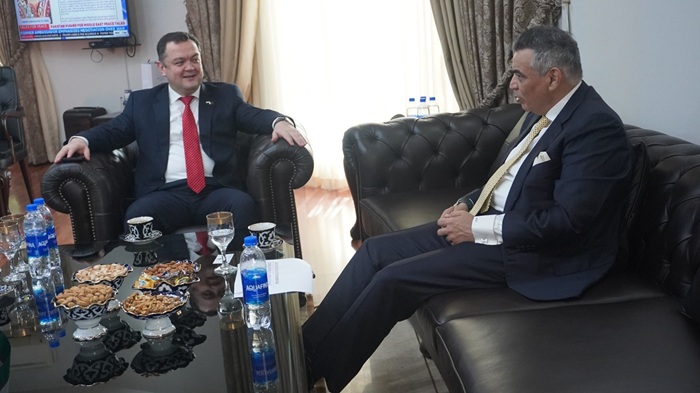
The Ambassador of Uzbekistan, Alisher Tukhtaev, held talks with Muhammad Sohail Tabba, a member of the Board of Directors of Yunus Brothers Group (YBG) and head of Tabba Group.
The meeting was organized with the aim of attracting foreign investment to the country, as well as effectively implementing the tasks set by the Head of State for the development of the textile and pharmaceutical industries in Uzbekistan.
At the beginning of the negotiations, Ambassador Alisher Tukhtaev familiarized the Pakistani side with the reforms being carried out in Uzbekistan in the textile and light industry sectors, the favorable conditions created for attracting foreign investment, the activities of cotton-textile clusters, and the opportunities offered by special economic zones. It was also emphasized in detail that there is significant potential for expanding cooperation between Uzbekistan and Pakistan in this field, as well as the activities of the Uzbekistan Trade House in Karachi.
Special attention was paid to the agreements reached during the official visit of the Prime Minister of Pakistan, Shehbaz Sharif, to Uzbekistan in February 2025, as well as the state visit of the President of Uzbekistan, Shavkat Mirziyoyev, to Pakistan on February 5–6 of the same year. In particular, it was noted that the initiative proposed by the Head of State at the Uzbek-Pakistani business forum—to transfer textile enterprises to the trust management of Pakistani investors—has generated great interest.
The Pakistani side was invited to consider the possibility of implementing a project for the production of textile fabrics in Uzbekistan, as well as participating in the management of small-scale textile enterprises in the country.
In turn, Muhammad Sohail Tabba noted that he had visited Uzbekistan several times, especially emphasizing that the city of Samarkand made a great impression on him. He also highly praised Uzbek national cuisine—bread, manti, samsa, as well as the taste of nuts and figs. He added that he is well aware of Uzbekistan’s capabilities in the textile industry.
The member of the YBG Board of Directors also expressed strong interest in the proposed initiatives and confirmed readiness to establish practical cooperation in the textile sector, provided that reliable partners from Uzbekistan are available.
“Additionally, we are ready to consider opportunities for implementing investment projects in such sectors as pharmaceuticals, energy, and mechanical engineering. We also manufacture Kia vehicles in Karachi and are aware that Uzbekistan has established production of passenger cars of well-known global brands. In this direction, we also see opportunities for joint project implementation,” he noted.
Following the meeting, an agreement was reached to initially organize online meetings with the participation of relevant ministries and agencies of Uzbekistan, as well as to arrange a business mission of the company’s delegation to the country.
Related news
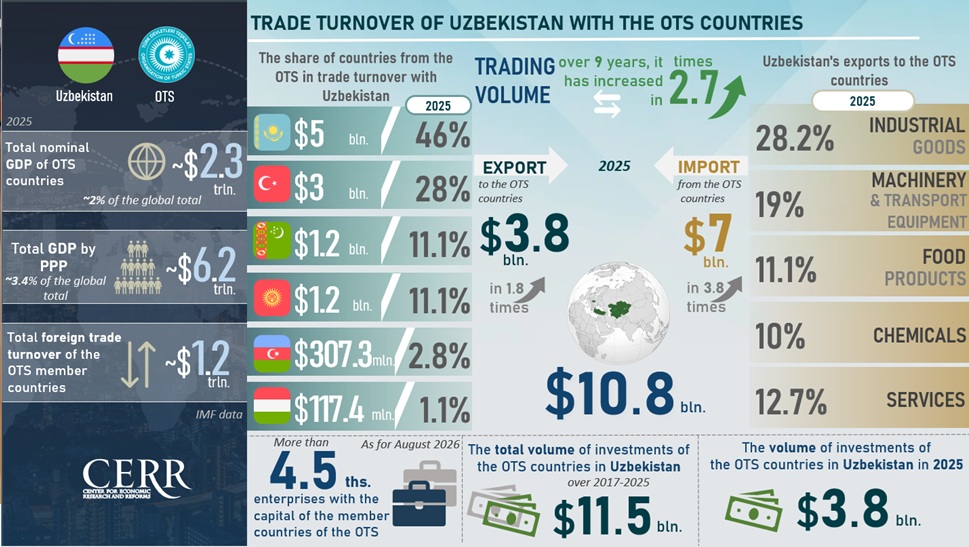
Uzbekistan has moved its economic cooperation with the Turkic states into a practical dimension
Ahead of the 13th Summit of the Organization of Turkic States, scheduled to be held in Ankara, economic cooperation within the OTS is acquiring new substance.
Water security in the turkic world: shared interests and common solutions
Water is a precious blessing that transcends national borders and has long connected peoples and civilizations.

Strengthening Transport Connectivity in Asia through the Development of the Trans-Caspian International Transport Corridor
Shifting international supply chains and expanding trade in Asia are driving demand for sustainable transport routes. For businesses, predictable delivery times, competitive rates, and reliable access to foreign markets are becoming increasingly important.