
Macroeconomic indicators and parameters of the state budget for next year were discussed
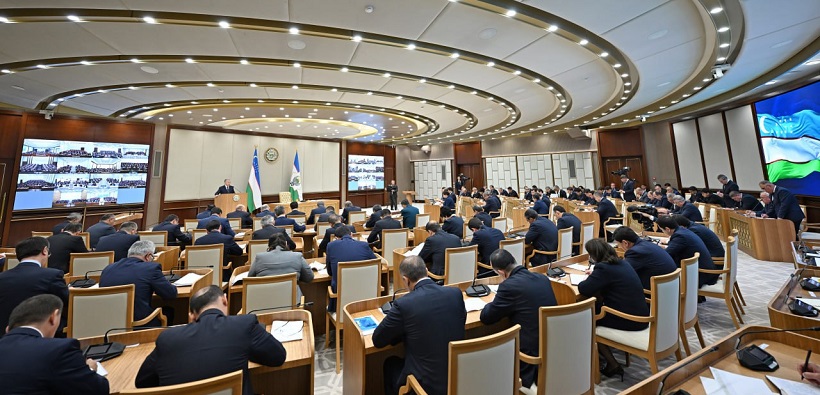
On October 27, an extended meeting was held under the chairmanship of President Shavkat Mirziyoyev to review the expected results of economic development this year and the main macroeconomic indicators for 2026 year.
In January–September of this year, the country's economy grew by 7.6 percent, which significantly exceeds forecast figures. Industrial production increased by 6.8 percent, construction work - by 14.2 percent, services - by 14 percent, agriculture - by 4.1 percent.
Gold and foreign exchange reserves increased by 35 percent compared to last year and reached $55 billion. Reputable international rating agencies highly assess the economic prospects of our country. Thus, for the first time, Fitch Ratings raised the sovereign rating of Uzbekistan by one level, and Moody’s and S&P Global changed expectations from “stable” to “positive.”
– Most importantly, the results achieved serve to improve the well-being of the people, the head of state noted.
Personal income increased by 18.4 percent, the volume of deposits increased by 35.3 percent, and average wages by 19.2 percent. Surveys show that confidence among the population and business is growing, employment opportunities are expanding and incomes are expanding.
The President emphasized that maintaining high growth rates until the end of the year and bringing GDP to more than $135 billion is one of the main goals of the economic complex.
The meeting, held in a critical spirit, reviewed the main plans for the next year.
Responsible officials reported that in 2026 it is planned to ensure economic growth at 6.6 percent, increase GDP to more than $150 billion, channel at least 400 trillion soums into the economy from all sources and keep the inflation rate no higher than 7 percent.
The President noted that to achieve these goals there are all the necessary opportunities and conditions, outlining important issues that require increased attention from the heads of ministries, industries and regions.
The draft budget for 2026 provides for the maintenance of current tax rates. It was emphasized that in these conditions it is necessary to consistently increase budget revenues and establish strict control over the effective spending of budget funds.
As the head of state noted, next year, reducing costs and increasing efficiency will become the main criterion for the work of managers at all levels.
Specific tasks were set to reduce costs and increase competitiveness in strategic industries, expand the participation of the private sector, and streamline the dividend policy of enterprises with state participation, analyzing the effectiveness of subsidies and benefits with the abolition of ineffective ones, reducing the share of the shadow economy, as well as increasing the revenue base of district and city budgets.
It was noted that it is necessary to accelerate the implementation of projects with the participation of funds from international financial institutions and move to a system in which new projects will be financed only after the completion of current ones.
An instruction was given to direct half of the balances of extra-budgetary funds of ministries and departments to a special fund and use these funds for the construction of schools and the development of healthcare.
Following the meeting, the main directions of the draft State Budget for 2026 were determined.
Official website of the President of the Republic of Uzbekistan
Related news

Uzbekistan has moved its economic cooperation with the Turkic states into a practical dimension
Ahead of the 13th Summit of the Organization of Turkic States, scheduled to be held in Ankara, economic cooperation within the OTS is acquiring new substance.

Water security in the turkic world: shared interests and common solutions
Water is a precious blessing that transcends national borders and has long connected peoples and civilizations.

Strengthening Transport Connectivity in Asia through the Development of the Trans-Caspian International Transport Corridor
Shifting international supply chains and expanding trade in Asia are driving demand for sustainable transport routes. For businesses, predictable delivery times, competitive rates, and reliable access to foreign markets are becoming increasingly important.