
The mausoleum of Makhdum Azam will become even more comfortable
Coming from the modern Kasansay region, this outstanding Sufi scholar was one of the leading mentors of the Naqshbandi tariqat. Having studied in his youth at a madrasah in Fergana, in Samarkand he reached the level of spiritual mentor under the guidance of Maulana Muhammad Kozi, a student of Khoja Ahrar Vali. Subsequently, he wrote more than 30 works devoted to the science of tariqa, and educated many students.
This scientist was awarded the title Makhdumi Azam for his services to science. After many years of serving education and spirituality, he found an eternal refuge in the Samarkand region.
Yalangtush Bahadir, who ruled Samarkand, erected a tomb over the grave of Makhdum Azam, and also built a large mosque and a madrasah for students here. After his death, he was buried here according to his last will. In total, the shrine houses more than 50 tombstones, most of which are identified and belong to specific individuals. Here, along with numerous scientists, two rulers of Afghanistan were also buried: Shah Hidoyat ibn Shah Qasim (1668) and Shah Saodat ibn Shah Hidoyat.
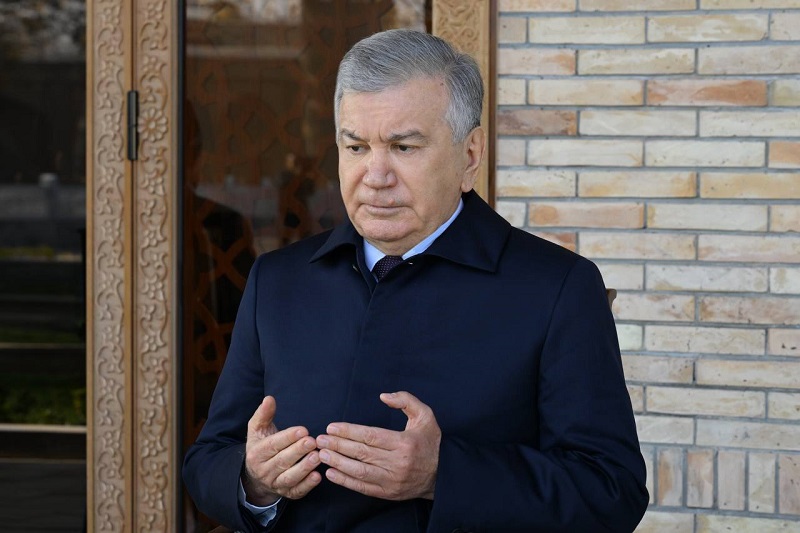
In the mausoleum where the great scientist found eternal rest, large-scale reconstruction work is being carried out as part of the project.
The total area of the mausoleum of Makhdum Azam is almost 5 hectares. This place is visited by numerous pilgrims. In order to improve conditions for them, a three-story modern car park, an entrance gate, a dining room and administrative buildings, a takhorathona, a mosque for a thousand people, as well as additional ivans are being built next to the mausoleum.
After completion of the reconstruction work, it will be possible to simultaneously receive 35 thousand pilgrims. Previously, the conditions allowed for receiving only 5 thousand visitors.
In addition, in order to create additional amenities for pilgrims, landscaping work is being carried out on the territory, and more than 40 trade and service facilities will be organized.
A prayer was read in honor of the great scientist, and verses of the Koran were read. The President also planted a tree on the territory of the complex.
Instructions were given for further improvement of the shrine, planting centuries-old trees in the park and creating amenities for visitors.
Related news
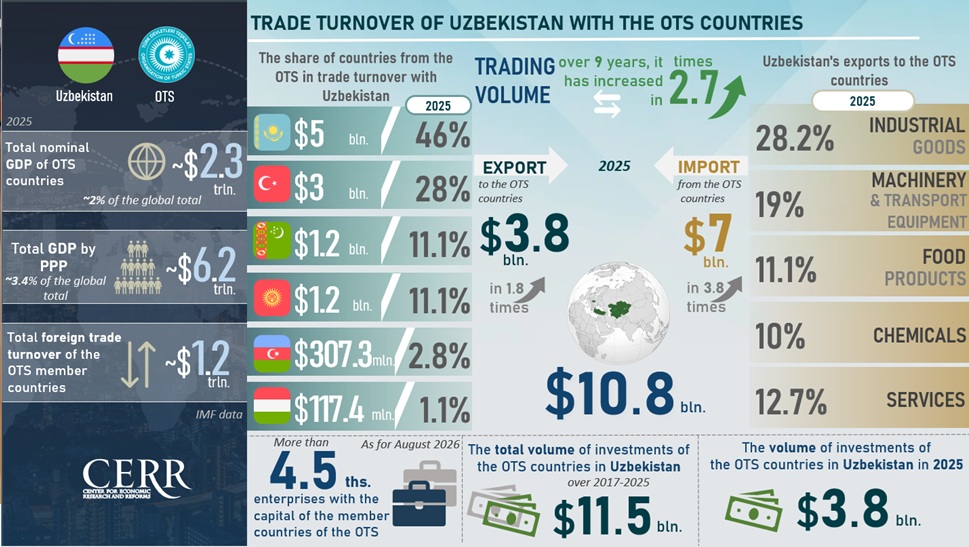
Uzbekistan has moved its economic cooperation with the Turkic states into a practical dimension
Ahead of the 13th Summit of the Organization of Turkic States, scheduled to be held in Ankara, economic cooperation within the OTS is acquiring new substance.
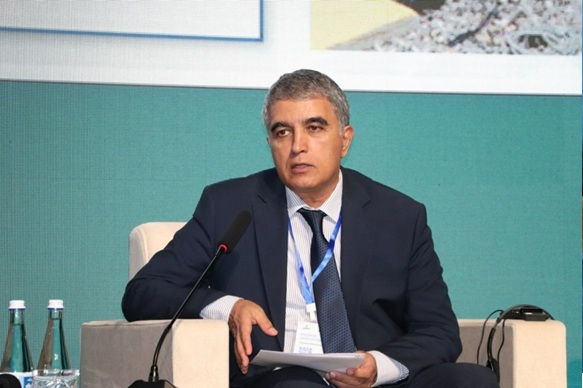
Water security in the turkic world: shared interests and common solutions
Water is a precious blessing that transcends national borders and has long connected peoples and civilizations.

Strengthening Transport Connectivity in Asia through the Development of the Trans-Caspian International Transport Corridor
Shifting international supply chains and expanding trade in Asia are driving demand for sustainable transport routes. For businesses, predictable delivery times, competitive rates, and reliable access to foreign markets are becoming increasingly important.