
By 2030, it is possible to completely eradicate absolute poverty in Uzbekistan
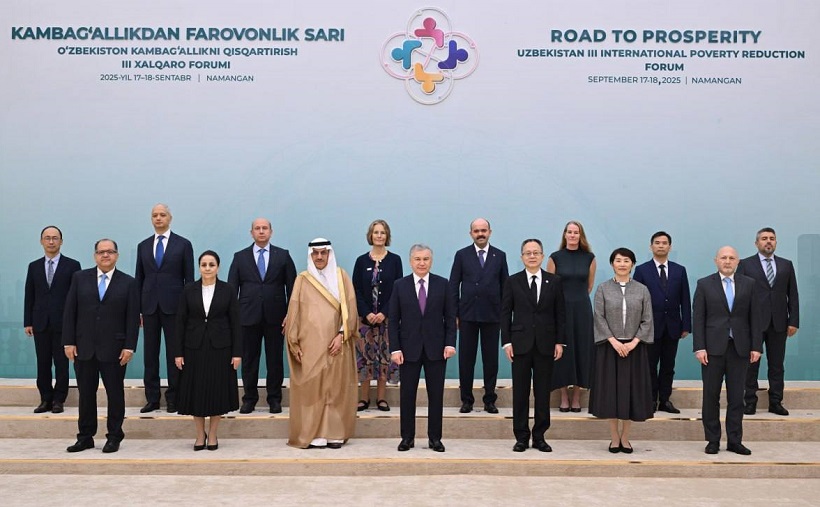
On September 17, the III International Forum “From Poverty to Prosperity” began in the city of Namangan. The President of the Republic of Uzbekistan Shavkat Mirziyoyev took part and spoke at the opening ceremony.
The Head of State noted that against the backdrop of geopolitical, economic and social instability in the world, as well as due to the consequences of climate change, the pace of global economic growth has slowed, which, in turn, has led to an increase in the number of poor people. These realities pose new, extremely urgent tasks for states, international organizations and the entire world community.
In such a difficult period in Uzbekistan, the fight against poverty has been elevated to the rank of state policy. All efforts are aimed at ensuring that every person - especially young people and women - can realize their full potential. The updated Constitution stipulates that pensions, benefits and social assistance cannot be lower than minimum consumer spending.
Thanks to consistent reforms, 7.5 million people have been lifted out of poverty, and in 2024 its level has been reduced to 8.9 percent. By the end of the year, the goal is to reduce the figure to 6 percent. The doubled economic growth played a significant role; It is expected that per capita income at the end of the year will reach 3.5 thousand dollars.
Based on testing new initiatives and studying best global practices, a New Uzbekistan model for poverty reduction has been formed. Addressed social registries have been introduced, and a total of $8 billion has been allocated for free medicines and social payments during the pandemic. This prevented 5.2 million citizens from falling into the “poverty trap” and prevented an economic recession.
A system of work has been introduced across the mahalla - at the lowest level. Individual work is carried out with each family, and the necessary resources are allocated to increase income. Every year, 2.5–3 billion dollars are allocated to improve mahallas, improve people’s lives and develop business infrastructure.
To increase the incomes of villagers, the area under cotton and grain has been reduced on 235 thousand hectares, and citizens have been allocated plots of 30–50 acres. This was an important step towards increasing the incomes of 800 thousand people.
– Thanks to such large-scale efforts, Uzbekistan aims to fulfill its commitment ahead of schedule - to halve poverty by 2030. Moreover, today we are ready to set an even higher bar: by 2030, according to international criteria, Uzbekistan has every opportunity to completely eradicate absolute poverty - and we will definitely achieve this,” the President emphasized.
The program “From Poverty to Prosperity” is being implemented, consisting of seven priorities.
First. Not just employment at any cost, but creating sustainable sources of income. In 2024, by attracting $35 billion in investments, over 9 thousand new enterprises will be opened and about 300 thousand highly profitable jobs will be created. The state creates conditions for business, and entrepreneurs, taking on social responsibility, help the poor get permanent jobs and income. This year alone, more than 270 thousand members of low-income families received permanent jobs.
Secondly. Quality education is the main driver of poverty reduction in the long term. Children from low-income families will be fully covered in preschool education; 80 percent of their expenses for learning foreign languages and acquiring a profession will be compensated. Over the past five years, over 800 thousand people have been trained in modern professions and employed in highly profitable jobs. International vocational training centers are being created to issue certificates recognized abroad.
Thirdly. Increasing women's participation in public life. Students are provided with interest-free loans for education, and the opportunity to study for a master's degree is created free of charge. Today, 53 percent of all students are women; This year alone, 1.7 million women got jobs. $1.5 billion has been allocated to support women's entrepreneurship in 2024; In 2025, it is planned to provide a permanent income to another 2 million women. As part of the “Daughters of the Digital Generation” program, 50 thousand girls will undergo training in IT, fintech and artificial intelligence.
Fourth. Health protection as the basis for unlocking human potential. Doctors are assigned to low-income families, and an annual comprehensive examination is carried out. The volume of guaranteed medical care will be expanded, and the costs of such families for medical services will be halved - due to free medicines and packages of guaranteed care.
Fifth. Targeted social protection. The system has been completely reformatted: the National Social Protection Agency has been created, Inson centers have been opened in all cities and regions, providing over 100 types of social services on a “one-stop” principle. Social workers work in each mahalla. In 2024, 2.7 million citizens received services and assistance. The introduced new forms of day care for those in need allowed 50 thousand able-bodied family members to return to work.
To improve the quality and coverage of social services, a $100 million project was launched jointly with the World Bank. Separate programs are being implemented to include children with disabilities in school and vocational education.
Sixth. Infrastructure as the key to reducing multidimensional poverty. Large-scale projects are underway in 1,000 mahallas with difficult conditions, where about 3.5 million people live. In 2025, another $400 million will be allocated to improve infrastructure in mahallas, create jobs and support entrepreneurship: 32 districts and 328 “difficult” mahallas have been selected, and separate development programs will be adopted for them. At the same time, projects worth $1.3 billion are being implemented in 810 mahallas on water supply, sewerage, roads, and the construction of schools and kindergartens. For the needy and low-income, $200 million in mortgage subsidies are provided annually.
Seventh. More than 70 percent of government spending goes towards achieving the Sustainable Development Goals. However, globally, developing countries need more than $4 trillion annually to achieve the SDGs. In these conditions, there is a need for a “new financial architecture for the fight against poverty” - with an objective assessment of risks, attracting resources and increasing their efficiency.
In this regard, a conference with the participation of international financial institutions, donor organizations and partner states will be held in Khiva in 2026.
The forum was attended by the President of the Islamic Development Bank, Muhammad al-Jassir, Vice President of the Asian Development Bank Inmin Yang, First Vice President of JICA Sachiko Imoto, UN Special Representative for Central Asia Kakha Imnadze, World Bank Global Director for Poverty Reduction Luis Felipe Lopez-Calva and about 200 international experts.
The sessions discussed innovative approaches on the topics: matching measures to market demand, Islamic finance opportunities, business inclusivity, investing in human capital.
The Forum will close on September 18.
Official website President of the Republic of Uzbekistan
Related news
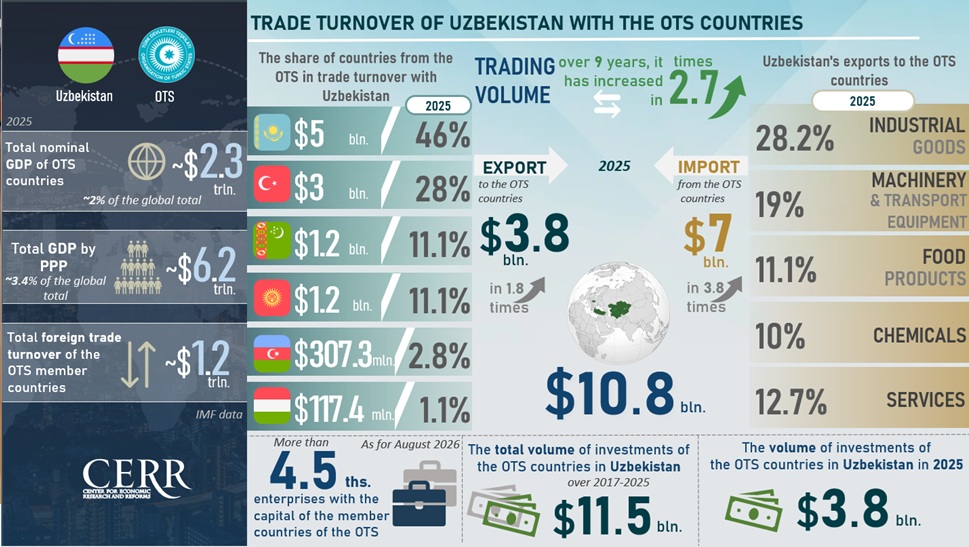
Uzbekistan has moved its economic cooperation with the Turkic states into a practical dimension
Ahead of the 13th Summit of the Organization of Turkic States, scheduled to be held in Ankara, economic cooperation within the OTS is acquiring new substance.
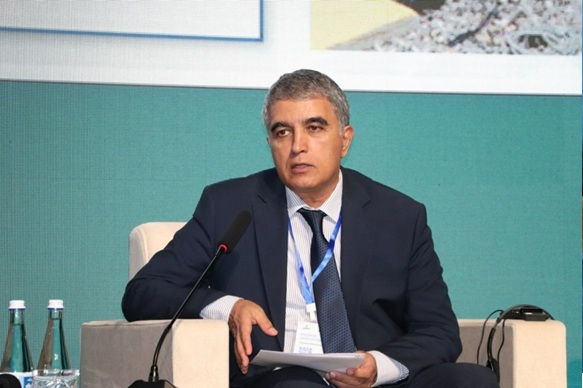
Water security in the turkic world: shared interests and common solutions
Water is a precious blessing that transcends national borders and has long connected peoples and civilizations.

Strengthening Transport Connectivity in Asia through the Development of the Trans-Caspian International Transport Corridor
Shifting international supply chains and expanding trade in Asia are driving demand for sustainable transport routes. For businesses, predictable delivery times, competitive rates, and reliable access to foreign markets are becoming increasingly important.