
Digital transformation of the SCO: strategic intentions and structural realities
The Shanghai Cooperation Organization (SCO) has entered a critical phase in its digital agenda. Over the past five years, the association has increasingly integrated digitalization into almost all areas of its activities - from electronic governance and cross-border trade to cybersecurity, infrastructure development and artificial intelligence. However, as it moves from declarations to practical implementation, the SCO is faced with a complex landscape defined by technological asymmetries, competing sovereignties and external geopolitical pressure.
Strategic context: digitalization as a geopolitical priority
The political leadership of the SCO member states has given digital transformation the status of one of the key strategic priorities. Digitalization is embedded in the long-term development plans and institutional architecture of the organization. This is reflected in a number of basic documents, including the Statement of the Council of Heads of State of the SCO on the Digital Economy (2020), the Statement on Digital Transformation (2023) and the Action Plan for Digital Transformation (June 2025).
The latest document systematizes cooperation in seven priority areas: 1) digital infrastructure and connectivity; 2) cybersecurity and data protection; 3) e-commerce and smart logistics; 4) artificial intelligence and robotics; 5) digital skills and training; 6) harmonization of regulation; 7) cooperation in the field of digital public goods.
Thus, digital transformation within the SCO ceased to be seen as a sectoral issue and began to be seen as a fundamental element of regional integration and strategic autonomy in an increasingly polarized global technological order.
Driving forces of SCO digitalization: from e-commerce to cyber norms
A number of trends confirm the association's increasing focus on digital integration.
First, cross-border e-commerce is growing rapidly in the region. In 2024, trade through digital platforms between China and other SCO countries increased by 14%, reaching $12.8 billion. Chinese companies such as Alibaba and JD.com expanded operations in Kazakhstan, Uzbekistan and Pakistan, cementing Beijing's leadership in regional platform economies.
Secondly, cybersecurity has become a key area of joint focus within the SCO. Member states stress the importance of deepening coordination in areas such as cyber defence, countering disinformation and developing approaches to data management. In this context, Moscow has put forward an initiative to formulate a common SCO framework approach to cyber sovereignty, while other participants, including China and Central Asian states, have expressed a willingness to contribute their experience and ideas to creating a more secure and trusted digital environment in the region.
Third, the SCO has begun to experiment with harmonizing regulation across member states. In 2023–2025 Several pilot projects were launched in the field of digital customs and logistics with the participation of China, Kazakhstan and Uzbekistan. Their goal is to simplify cross-border data flows, the use of digital signatures and mutual recognition of electronic licenses, which in the future should contribute to the formation of the “Digital Silk Road” within the SCO.
Structural challenges: asymmetry and fragmentation
Despite the progress achieved, the SCO faces four systemic challenges that limit the depth and scale of digital integration.
First, there is a significant asymmetry in the level of digital infrastructure and capacity of member states. China is significantly ahead of its peers in mobile Internet speed, AI development and digital government services. At the same time, some countries lag noticeably behind in terms of Internet access, the number of data centers and digitalization of the public sector. This forms a digital hierarchy within the SCO, complicating equal cooperation.
Secondly, the association lacks regulatory harmonization. Each state operates within its own legal framework in the areas of data protection, cybersecurity and digital trade. China is promoting a “cyber sovereignty” model, while Kazakhstan and Uzbekistan have chosen a hybrid approach, combining state control with market openness. These differences hinder the interoperability of digital systems and the scaling of joint projects.
Third, digital cooperation remains fragmented and develops mainly through bilateral or subregional formats. For example, technological interaction in the China-Central Asia, China-Russia or Pakistan-Russia formats often bypass the SCO mechanisms. Multilateral initiatives are inferior to bilateral ones due to differences in threat perceptions and overlapping alliances with external partners - the EU, the US or the Gulf countries.
Fourth, issues of trust and data governance remain. A number of member states are wary of the dominance of Chinese digital platforms and the Russian cyber agenda. Concerns include surveillance, data localization, and the extraterritorial influence of big tech companies. Despite the consensus in the rhetoric about the need for cooperation, real compatibility of systems is extremely rare.
A look into the future: will the SCO become a digital bloc?
The future of the SCO's digital transformation depends on the ability to reconcile two competing imperatives: integration and sovereignty.
On the one hand, the organization strives to create a common digital space that would support regional development, facilitate trade and increase technological sustainability. On the other hand, states remain committed to protecting digital sovereignty, wary of over-dependence on external technologies or regulatory dominance by major powers within the bloc.
To overcome this contradiction, the SCO could adopt a flexible digital architecture that allows for modular forms of cooperation: interested states could move forward on individual areas - e-commerce, cybersecurity or digital education - without the need for full consensus. In addition, it is important for the association to invest in building the capacity of lagging countries, including through the creation of a common Digital Development Fund or regional technology transfer mechanisms.
The creation of the SCO Digital Hub, proposed at the Digital Economy Forum in Tianjin (2025), could become a centralized coordination mechanism. Such a platform would ensure unification of standards, promote interoperability of systems and serve as a center for pilot projects in the fields of artificial intelligence, logistics and smart cities.
Conclusion: between strategy and structure
The SCO digital transformation strategy is ambitious and timely. It reflects a broader global development trend in which regional organizations are seeking to fill gaps in global governance. However, ambition alone is not enough. Unless the SCO overcomes structural imbalances, strengthens regulatory coherence and strengthens unity among member states, its digital agenda risks remaining declarative, without real strategic value.
As the digital space becomes a new arena of competition for influence, the SCO will have to determine whether it will remain a forum of disparate sovereign states or become an integrated bloc capable of shaping regional digital order. The next five years will likely be decisive for the answer to this question.
Ozod Tanbaev,
Leading Research Fellow
International Institute of Central Asia
Related news
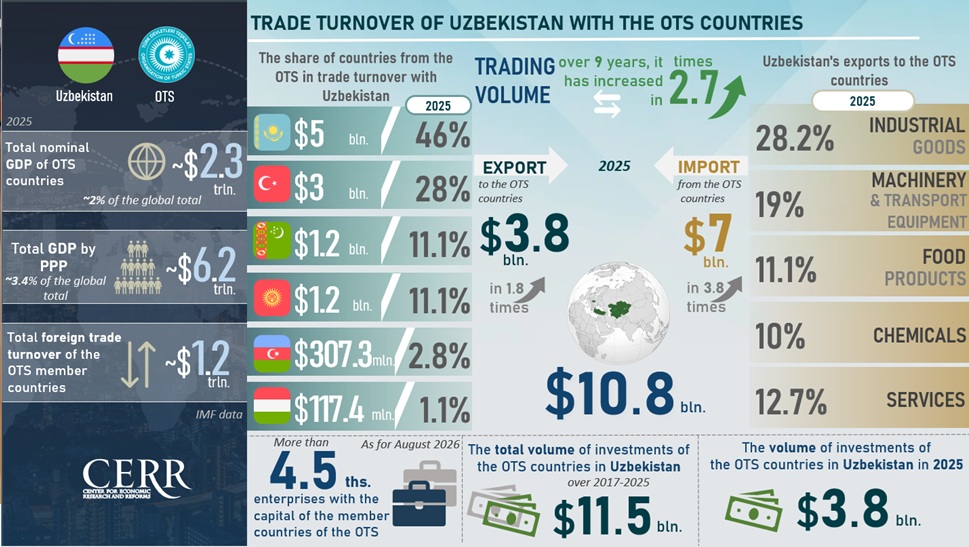
Uzbekistan has moved its economic cooperation with the Turkic states into a practical dimension
Ahead of the 13th Summit of the Organization of Turkic States, scheduled to be held in Ankara, economic cooperation within the OTS is acquiring new substance.

Water security in the turkic world: shared interests and common solutions
Water is a precious blessing that transcends national borders and has long connected peoples and civilizations.

Strengthening Transport Connectivity in Asia through the Development of the Trans-Caspian International Transport Corridor
Shifting international supply chains and expanding trade in Asia are driving demand for sustainable transport routes. For businesses, predictable delivery times, competitive rates, and reliable access to foreign markets are becoming increasingly important.