
The effectiveness of work in the fight against drug crime, in the areas of cybersecurity and prosecutorial supervision will be increased
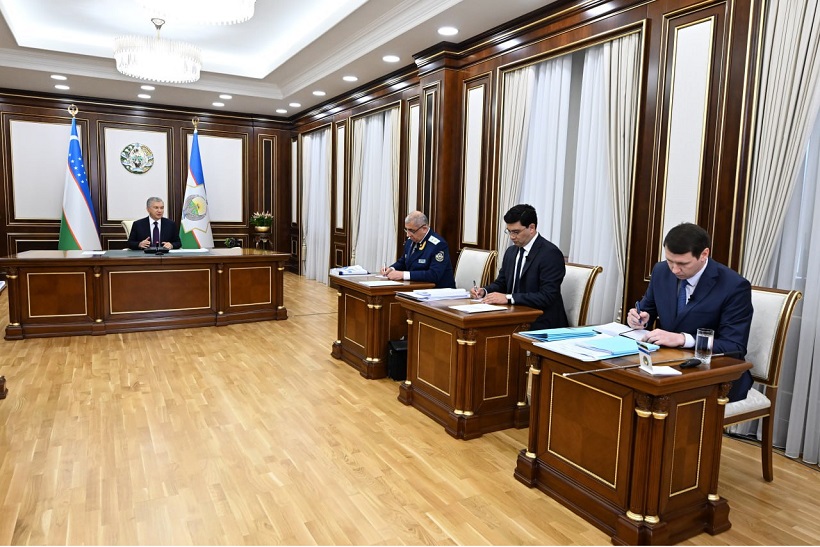
On November 3, President Shavkat Mirziyoyev reviewed the presentation of proposals to protect the nation’s gene pool from drug addiction, increase the effectiveness of the fight against cybercrime, as well as digitalize the prosecutorial system supervision.
In recent years, drug crime has become one of the global threats to humanity. According to analysts, more than 400 million people in the world suffer from drug addiction, and every year about 300 thousand people die from the consequences of drug use.
Unfortunately, this threat does not bypass our country. Since the beginning of the year, more than 11 thousand drug crimes have been identified, and about 2.5 tons of narcotic drugs have been seized. Every year, new forms and methods of drug crimes appear, their scope is growing, which indicates the need for an urgent, comprehensive organization to combat drug crime and drug addiction.
The meeting discussed the negative trends observed in this area.
In particular, psychotropic and synthetic substances in the form of dosage forms that are convenient for storage and sale are becoming increasingly widespread. especially among young people. The production of synthetic drugs is established in clandestine laboratories, sales are carried out mainly through the Internet in a contactless form, and the source of distribution is transnational criminal groups.
– Therefore, the time has come to introduce into national legislation norms aimed at preventing such threats, an uncompromising fight against them and the complete eradication of this evil, the head of state noted.
Responsible persons presented proposals to eliminate drug trafficking. Comprehensive measures and mechanisms have been proposed to ensure the effective protection of public health and the nation's gene pool from this threat.
It is indicated that the implementation of effective practical measures aimed at stopping the spread of drugs among students and the formation of an intolerant attitude towards this phenomenon among young people should be determined as one of the priority tasks of all bodies and organizations.
The need to eradicate drug trafficking, especially among young people, using more stringent criminal legal mechanisms, tighten responsibility for drug crimes committed against young people, organize large-scale operational search and investigative activities to identify and suppress the actions of online traffickers, organized groups and drug laboratories, as well as officials who provide them with protection.
The diagnostic system will also be radically improved, treatment and rehabilitation of minors and young people suffering from drug addiction.
Following the presentation, the President approved the draft National Program of Comprehensive Practical Actions to Prevent and Combat Drug Crimes for 2025–2026, which includes over 100 operational, preventive, organizational, educational and informational promotional activities. Relevant instructions were given to organize continuous work in this direction.
The meeting also discussed issues of combating cybercrime.
Today, more than 31 million citizens of Uzbekistan use the Internet. Over the past five years, the number of cybercrimes has increased 68 times; this year alone, over 46 thousand cases have been identified. Material damage caused to individuals and legal entities exceeded 1.2 trillion soums.
It was noted that the number of cases of fraud related to personal data, bank cards and electronic signatures has sharply increased. Many crimes are committed via the Internet, and one of the most common schemes remains cyber fraud with bank cards.
At the same time, there are no reliable mechanisms for protecting personal data, and individual business entities store client information in open databases. Cybersecurity measures are also insufficient when using biometric identification and electronic signatures in the field of public services.
The insufficient effectiveness of measures to prevent cyber-attacks in the banking system and identify dubious financial transactions is also indicated.
In this regard, the need for deep improvement of the legal, technological and methodological base of the industry is emphasized.
The importance of introducing mandatory cybersecurity requirements when working with personal data, creating a register of operators working with such data, and tightening responsibility for their misuse was separately noted.
It was proposed to introduce modern protection systems when issuing online microloans, to provide for the release of citizens from obligations on microloans issued fraudulently without their knowledge, and ensure 24/7 blocking of suspicious bank accounts.
The need for scientific research to prevent new types of cybercrimes was emphasized - attacks on smart devices and illicit possession of crypto-assets.
The President approved the proposals and instructed to increase the capacity of the Cyber Security Center of the Ministry of Internal Affairs, strengthen the effectiveness of the fight against cybercrimes, and introduce seven new types of expertise for the prompt detection of cybercrimes.
The main goal of digitalization of industries and departments is to reduce bureaucracy and corruption, ensure transparency and openness.
Thus, thanks to the digitalization of procurement procedures, 7.5 trillion soums have been saved this year. About a thousand types of public services are provided to the population and entrepreneurs remotely.
At the same time, since the beginning of the year, government bodies have adopted over 7 thousand illegal documents, and the activities of control bodies have led to the violation of the rights of 12.5 thousand entrepreneurs.
In this regard, it is necessary to create a system of remote supervision over the implementation of laws and completely digitalize the process of verifying the legality of decisions made by government departments.
The presentation provides information on proposals for the introduction of digital prosecutorial supervision in the system of the Prosecutor General's Office, automation of inspection and monitoring processes. This will make it possible to quickly identify violations of the law, track the actions of officials in real time and ensure the transparency of supervisory activities.
It is noted that the lack of a unified system for evaluating the activities of investigators and manual reporting negatively affect the efficiency of work. Reports take up to a week to prepare, and most criminal case files are still stored in paper form.
Since the beginning of the year, in 1,300 cases, investigators committed procedural violations when making decisions, and 637 cases were returned by the courts for further investigation due to shortcomings in the investigation.
In this regard, the task has been set to digitalize the entire process - from the moment a crime is reported to the execution of a court decision, as well as to introduce artificial intelligence technologies into investigative activities. This will speed up investigative actions, reduce the influence of the human factor and increase the responsibility of employees.
It was also ordered to begin training personnel in the areas of artificial intelligence, cyber and digital law to increase the capacity of law enforcement agencies in preventing and investigating digital crimes. It is indicated that the result should be the formation of a class of professional personnel capable of applying modern methods of analysis, identifying and effectively responding to digital risks and threats in advance.
Following the discussion, the President gave specific instructions to responsible managers to implement the assigned tasks.
Related news
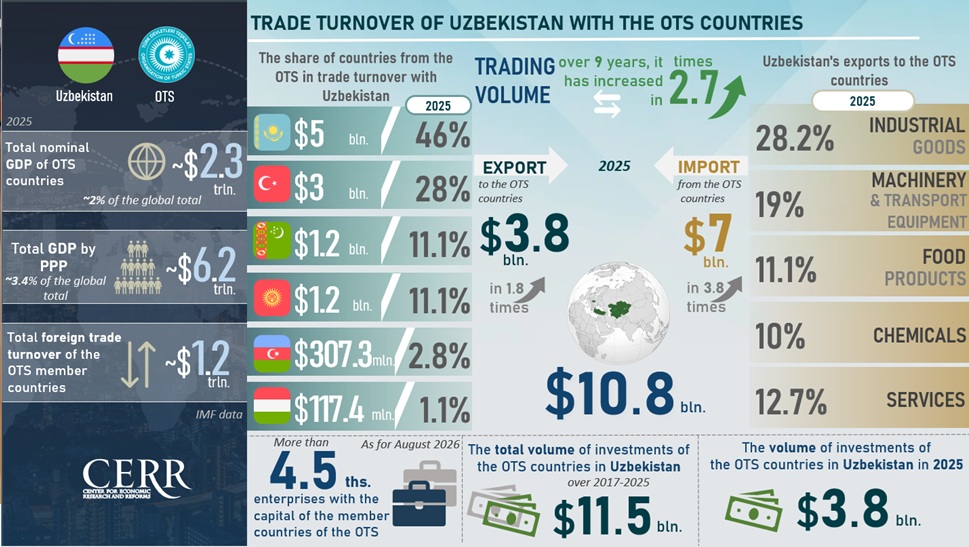
Uzbekistan has moved its economic cooperation with the Turkic states into a practical dimension
Ahead of the 13th Summit of the Organization of Turkic States, scheduled to be held in Ankara, economic cooperation within the OTS is acquiring new substance.
Water security in the turkic world: shared interests and common solutions
Water is a precious blessing that transcends national borders and has long connected peoples and civilizations.

Strengthening Transport Connectivity in Asia through the Development of the Trans-Caspian International Transport Corridor
Shifting international supply chains and expanding trade in Asia are driving demand for sustainable transport routes. For businesses, predictable delivery times, competitive rates, and reliable access to foreign markets are becoming increasingly important.