
Uzbekistan at the C5+1 platform: strengthening the strategic dialogue with the United States and Central Asian countries
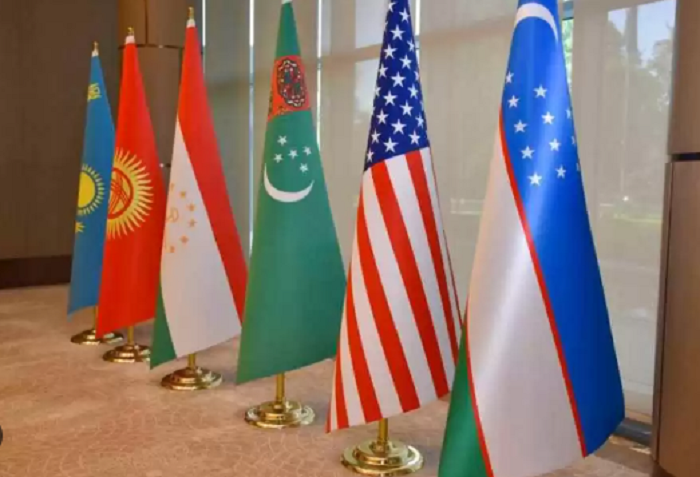
Modern Central Asia is becoming a space of sustainable growth and mutual trust. The countries of the region demonstrate a desire to build balanced relations with global partners, where practical initiatives in trade, energy, transport and innovation are a priority. One of the key platforms forming this architecture is the C5+1 format, which united the states of Central Asia and the United States.
Regional consolidation: dialogue based on equality and pragmatism
In recent years, the C5+1 format has become not just a diplomatic mechanism, but a real tool for coordinating efforts and launching joint projects. The last meeting of the ministers of the countries of Central Asia in Samarkand, in which the Minister of Investment, Industry and Trade of the Republic of Uzbekistan Laziz Kudratov participated, showed a high level of trust and a general mood for results.
The main topics of the Samarkand agenda are food security, climate sustainability, development of a green and digital economy, diversification of transport corridors and deepening industrial cooperation
Following the meeting, memorandums were adopted with USAID on decarbonization and digitalization of customs procedures - a step that opens the way to unifying trade rules, facilitating exports and attracting new investments to the region.
Central Asia: from fragmentation to a single economic space
The numbers speak for themselves: the total foreign trade turnover of the Central Asian countries reached $220 billion, almost doubling compared to 2017, and mutual investments increased 5.6 times. The region's total GDP over the past five years has increased by 40% and exceeded $406 billion.
These data reflect not only growth, but also a qualitative change in the interaction model itself - from local initiatives to a coordinated regional development strategy.
Uzbekistan - Kazakhstan: formation of an industrial and logistics core
The Uzbekistan - Kazakhstan link is an example of a new type of integration. In January–August 2025, mutual trade turnover reached $3.03 billion, an increase of 15%. Projects worth over $7 billion are being implemented, and cooperation is developing in the fields of mechanical engineering, agriculture, construction and energy. More than 1,100 enterprises with Kazakh capital operate in Uzbekistan, creating jobs and new export niches
Uzbekistan - Tajikistan: transport and energy bridge
Tajikistan and Uzbekistan are rapidly developing railway and energy ties. In 2024, cargo traffic between the countries reached 10 million tons, regular passenger flights and a joint investment company with a capital of $100 million were launched. These are not just numbers - this is an architecture of trust that allows you to build joint industrial and agricultural clusters.
Uzbekistan - Turkmenistan: development corridors
Cooperation with Turkmenistan is intensifying in energy, logistics and industry. In 2024, trade turnover exceeded $1.14 billion, and the Shavat-Dashoguz border zone is turning into a center of trade and joint production. A project for localizing the repair of Turkmen carriages in Andijan is being developed - an example of practical industrial integration.
Uzbekistan - Kyrgyzstan: “road map” of the future
The Interstate Program until 2030 and the format of the Council of Border Regions ensure sustainable dynamics. In January-August 2025, trade turnover reached almost $600 million, and exports of Uzbek goods increased by almost 80%. New logistics routes are being developed to reduce transport costs and increase business competitiveness.
The “C5+1” format as a catalyst for development
The participation of Central Asian countries in the “C5+1” format gives regional integration a new quality - connecting national interests with global trends in sustainable development.
The United States and partners in the region are forming long-term areas of cooperation: green energy, sustainable supply chains, infrastructure modernization, human resource development.
Particular attention is paid to creating common standards for digital trade, environmental management and logistics technologies, which makes Central Asia an important link in Eurasian value chains.
What does this give to the region and Uzbekistan
For the countries of Central Asia, the “C5+1” format is:
- Investments and technologies: the possibility of attracting foreign partners to renewable energy projects, raw materials processing, digital transformation;
- New markets: opening export niches through the unification of customs procedures and standards;
- Energy security: development of intersystem networks and energy storage infrastructure;
- Human capital: educational programs, internships and exchange of experience with leading companies.
For Uzbekistan, the benefits are obvious:
- Growth of export potential due to access to new transport routes;
- Localization of technologies and industrial partnership with neighbors;
- Institutional stability, strengthening the country’s position as a regional integrator;
- Inflow of direct investment thanks to uniform rules and a stable macroeconomic environment.
Instead of a conclusion: from geography to the economy of the future
Central Asia is increasingly transforming from a “geography of intersection” into a region of synergy. The “C5+1” format has become the framework that unites the efforts of the countries of the region and global partners into one development strategy - based on trust, mutual benefit and sustainable growth.
For Uzbekistan, participation in this platform is not just a foreign policy course, but a tool for implementing a long-term national strategy aimed at industrialization, exports and improving the well-being of citizens.
Related news
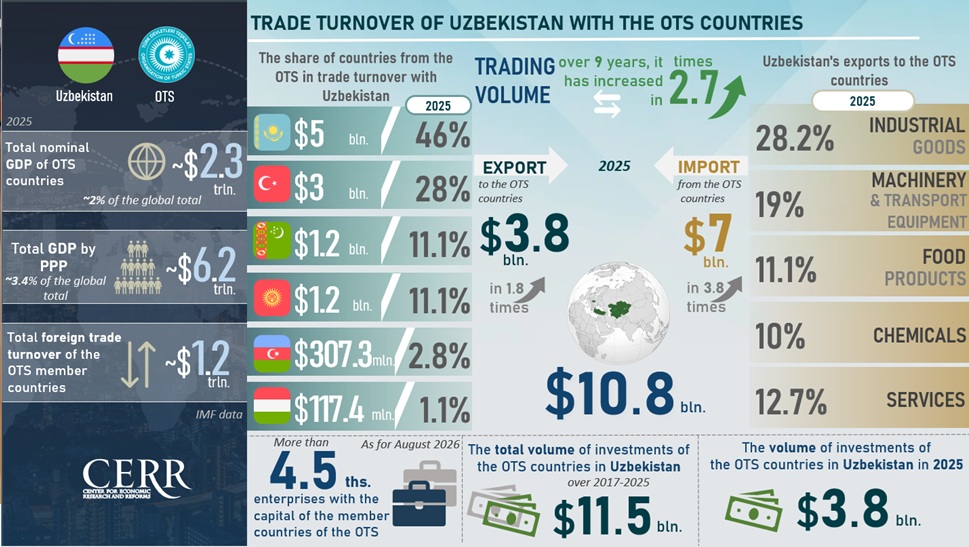
Uzbekistan has moved its economic cooperation with the Turkic states into a practical dimension
Ahead of the 13th Summit of the Organization of Turkic States, scheduled to be held in Ankara, economic cooperation within the OTS is acquiring new substance.
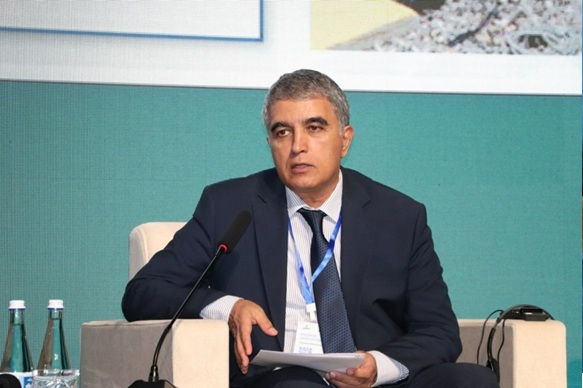
Water security in the turkic world: shared interests and common solutions
Water is a precious blessing that transcends national borders and has long connected peoples and civilizations.

Strengthening Transport Connectivity in Asia through the Development of the Trans-Caspian International Transport Corridor
Shifting international supply chains and expanding trade in Asia are driving demand for sustainable transport routes. For businesses, predictable delivery times, competitive rates, and reliable access to foreign markets are becoming increasingly important.