
Uzbekistan and Serbia: dynamics of mutual rapprochement and new horizons of partnership
Political background and diplomatic context
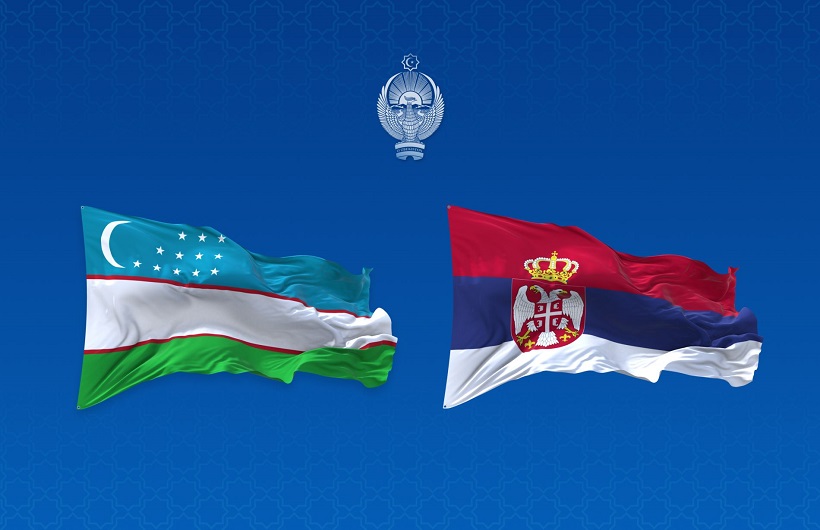
Diplomatic relations between the Republic of Uzbekistan and the Republic of Serbia were established on January 18, 1995, and recognition of the independence of Uzbekistan by Belgrade occurred at the end of 1991. This fact became the basis for the gradual development of political dialogue, which, despite the geographical remoteness of the countries, was built on mutual respect, support for sovereignty and the principles of non-interference in internal affairs.
Over the past decades, cooperation between Uzbekistan and Serbia has developed at a moderate but stable pace. The political dialogue gradually strengthened through working contacts and the expansion of the economic agenda. A symbol of the new stage of interaction was the visit in October of this year by the Minister for International Economic Cooperation of the Republic of Serbia Nenad Popović to Uzbekistan, who confirmed Serbia’s desire to deepen practical cooperation and implement large-scale joint projects.
Against this background, the coincidence of approaches of Tashkent and Belgrade to key issues on the international agenda - strengthening the role of the UN, maintaining a regional balance of interests and respect sovereignty - creates a favorable basis for expanding economic and investment cooperation.
This visit marked a new stage in the development of bilateral contacts and confirmed the parties’ desire for more active interaction.
Political dialogue between countries is traditionally based on common approaches to issues of international security, strengthening the role of the UN and maintaining a balance of interests in the region. Tashkent and Belgrade hold similar positions on many issues on the international agenda, which creates a favorable basis for expanding economic and investment cooperation.
Trade and economic cooperation: from stable exchange to sustainable growth
Trade dynamics
In recent years, foreign trade turnover between Uzbekistan and Serbia has fluctuated, but generally showed positive dynamics: in 2022 it increased by 134%, and at the end of 2024 increased by 63% compared to the previous year.
These data indicate the continued growth of business activity and the expansion of production and technological ties, while maintaining the predominance of Serbian exports.
Structure of trade turnover
Uzbekistan's exports to Serbia are represented primarily by cotton and textile raw materials, inorganic chemicals, including fertilizers, grain crops, ceramic products and building materials, as well as ornamental plants. This structure reflects Uzbekistan's specialization in the supply of raw materials and semi-finished products with a relatively low degree of processing, which at the same time creates the potential for growth in the supply of finished products with higher added value - for example, textiles, fertilizers, food and construction materials.
Imports from Serbia cover a wide range of industrial goods: equipment and machinery, boilers and units, hygiene and cosmetic products (soaps, waxes, shampoos), paper and paper products, metals and metal products, including aluminum, furniture and interior items. This import structure shows Uzbekistan’s interest in Serbian technologies and industrial goods, and also confirms that Serbian products are able to successfully compete in the markets of Central Asia in terms of price-quality ratio.
Investment cooperation and business activity
Today, 9 enterprises with Serbian capital are registered in Uzbekistan, of which 4 are joint ventures, and 5 are enterprises with 100% foreign participation. These companies operate primarily in the areas of construction materials, trade, services, mechanical engineering, as well as in the production of furniture and household products.
Although the number of such enterprises is still small, their activities are important: it is at the level of small and medium-sized industries that the base is formed, which over time can develop into large-scale investment projects.
A promising direction is the creation of joint ventures production facilities where Serbian technology and engineering school could be combined with Uzbek resources and an advantageous geographical location. Of particular interest is cooperation in mechanical engineering, agricultural technology, wood processing, energy and pharmaceuticals - industries where Serbia has competitive advantages and a high level of specialization.
Economic potential of Serbia: opportunities for partnership
Serbia is a dynamically developing economy of South-Eastern Europe with a gross domestic product that in 2024 amounted to about 73.3 billion dollars, and GDP per capita was about 11 thousand dollars. The country's economy is balanced across sectors: services form 52.9% of GDP, industry - 26.8%, agriculture - 6.4%. The inflation rate in 2024 was 5.3%, indicating relative macroeconomic stability.
The leading industries of Serbia are mechanical engineering, food, chemical and petrochemical industries, metallurgy, electronics, textiles and clothing production, building materials, pharmaceuticals, energy and agriculture.
For Uzbekistan, this means a wide range of opportunities for cooperation. In particular:
- In mechanical engineering, it is possible to create assembly plants and exchange technologies for the production of equipment for agriculture, processing and light industry.
- In food processing - joint ventures for the production of juices, dairy products, meat and grain semi-finished products, focused on export to the CIS countries and the Middle East.
- In pharmaceuticals and chemistry - localization of Serbian brands and technologies in industrial zones of Uzbekistan, especially in Navoi and Angren SEZ.
- In construction - participation of Serbian companies in projects for the production of ceramics, tiles, cement, furniture, as well as in large infrastructure facilities.
- In textiles - the use of Serbian experience in design and production management to promote Uzbek products to Europe.
New formats of interaction and prospects
The current stage of Uzbek-Serbian relations is characterized by the desire to move them beyond the framework of declarations to the level of practical cooperation. In the context of Uzbekistan’s active participation in regional and global economic initiatives - such as the WTO, SCO, UTC-oriented formats - interest in partners from Eastern and Southern Europe becomes especially relevant.
For Serbia, in turn, Uzbekistan is a promising market with a population of almost 40 million, growing domestic demand, a favorable logistics position and access to Eurasian transport corridors.
An important step could be the organization of a joint intergovernmental commission that would systematically coordinate economic projects, ensure the protection of investments, and eliminate bureaucratic barriers and encouraged private business participation. Also promising is the creation of the Uzbek-Serbian Business Council, regular holding of business forums and trade and investment exhibitions.
Cooperation in the field of education and innovation deserves special attention - joint university programs, student exchange, introduction of ICT technologies and training for industry.
Conclusion: a partnership that creates future
Today, trade and economic relations between Uzbekistan and Serbia are in their infancy, but demonstrate progressive growth and steady business interest on both sides. The dynamics, structure and potential of bilateral interaction indicate significant prospects.
A combination of factors - political mutual understanding, similar economic interests, sectoral complementarities and openness to cooperation - creates the preconditions for the formation of a long-term partnership.
If Tashkent and Belgrade continue to systematically build an economic dialogue, ensure the protection of investments and encourage business initiatives, then in the coming years it will be possible expect a transition from the quantitative growth of trade to the qualitative expansion of mutual investments and technological exchange.
Such a partnership will not only be a contribution to the development of national economies, but also an example of successful cooperation between countries separated by distance, but united by a common desire for sustainable development and prosperity.
Related news
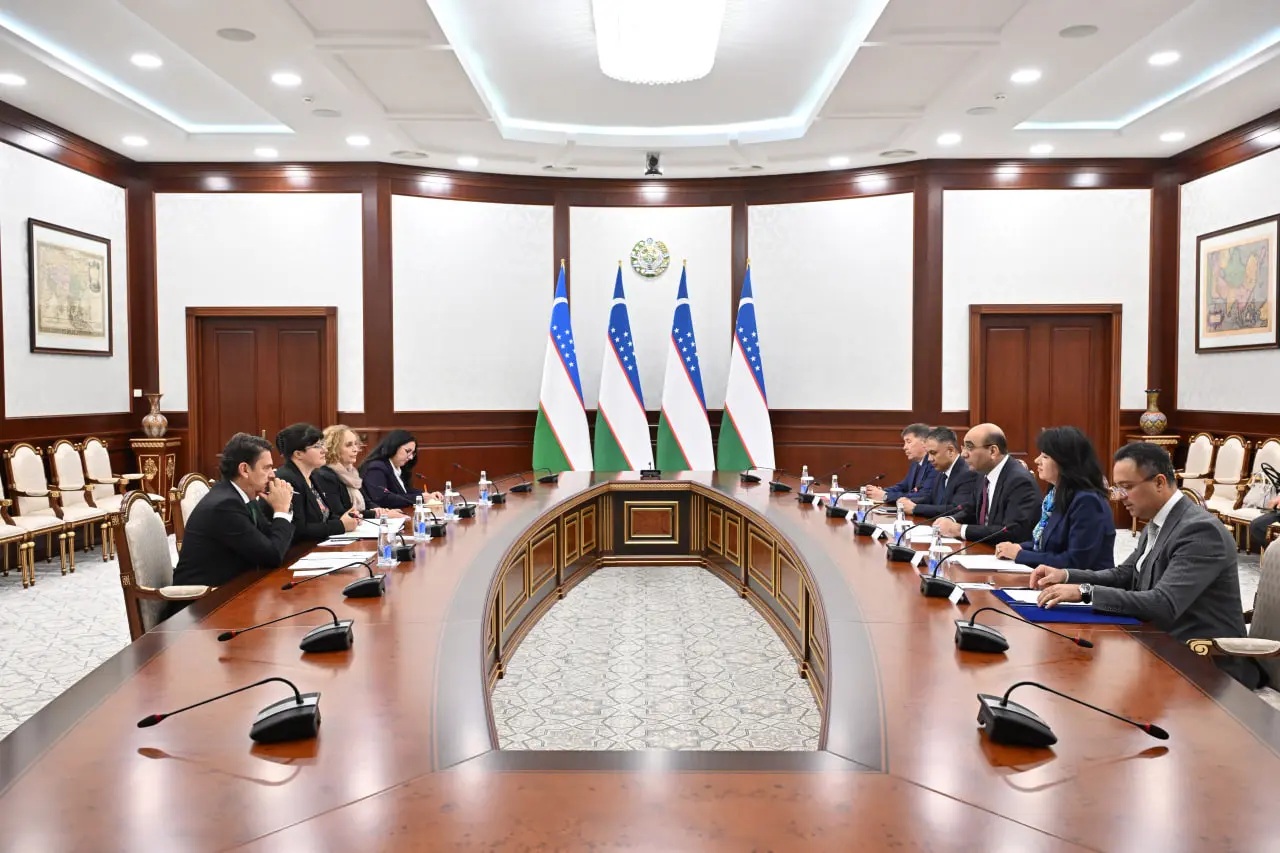
Foreign Ministries of Uzbekistan and Bulgaria Hold Another Round of Political Consultations
On October 22, 2026, Tashkent hosted the 4th round of political consultations between the Ministries of Foreign Affairs of Uzbekistan and Bulgaria.
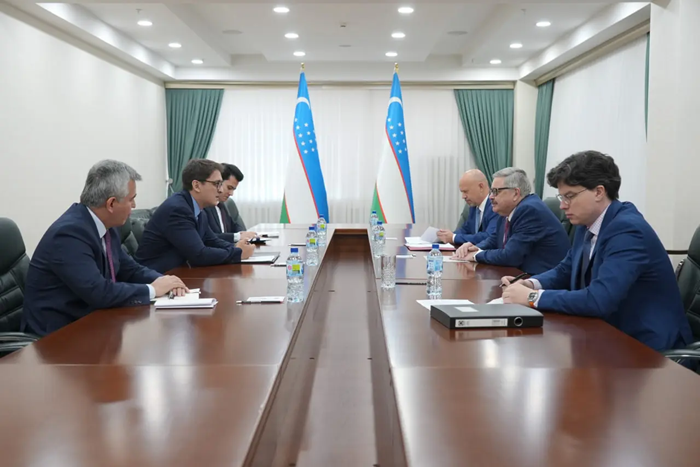
Meeting with the Ambassador of Russia
On October 21, 2026, Deputy Foreign Minister of the Republic of Uzbekistan Bobur Usmanov met with Aleksei Erkhov, Ambassador Extraordinary and Plenipotentiary of the Russian Federation to Uzbekistan.
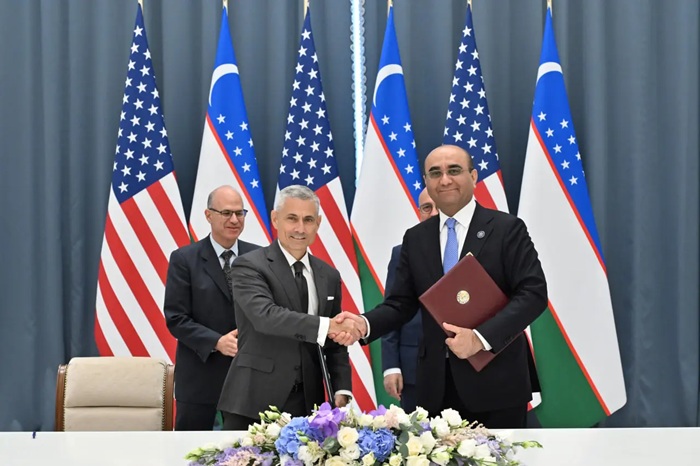
Agreement on the Employment of Family Members of Official Personnel Signed between Uzbekistan and the United States
On October 19, in Samarkand, on the sidelines of the “C5+1” Ministerial Meeting, Deputy Minister of Foreign Affairs of the Republic of Uzbekistan Muzaffarbek Madrakhimov and U.S. Assistant Secretary of State for South and Central Asian Affairs Samir Paul Kapur signed the Agreement between the Government of the Republic of Uzbekistan and the Government of the United States of America on the Employment of Family Members of Official Personnel.