
Strengthening cooperation between Uzbekistan and Serbia: current trends and prospects
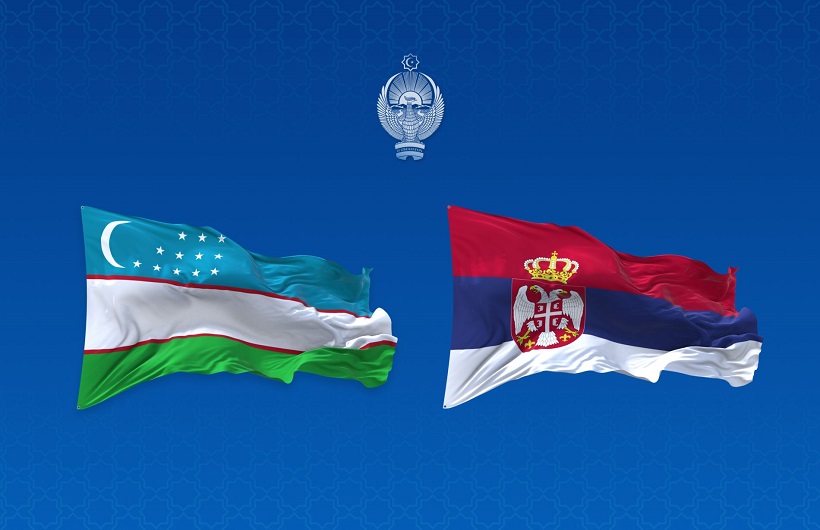
The European vector of Uzbekistan’s foreign policy is aimed at expanding the geography of partners and deepening interaction in all mutually beneficial areas. In this context, relations with Serbia are distinguished by consistency, mutual respect and a strong interest on both sides in strengthening cooperation.
The history of diplomatic relations between Uzbekistan and Serbia goes back three decades. During this period, states are progressively strengthening political dialogue, expanding economic contacts and intensifying cultural and humanitarian ties. While Belgrade views Uzbekistan as a key partner in Central Asia, Tashkent sees Serbia as an important link opening the way to European markets.
It is worth noting that political interaction between the countries is developing on the basis of the principles of equality, mutual trust and respect.
Thus, during the first visit of the political director of the Serbian Foreign Ministry Zoran Vuyich in Tashkent in 2017, negotiations were held at the Ministry of Foreign Affairs and the Ministry of Defense of Uzbekistan, as a result of which a mechanism of inter-MFA political consultations was launched and cooperation was agreed upon within the framework of international structures (UN, OSCE and the Non-Aligned Movement).
In 2021, the first inter-MFA consultations were held in Tashkent, and a year later, during the session of the General Assembly The UN and foreign ministers signed a protocol on the further development of interdepartmental cooperation. The document became an incentive to expand bilateral partnerships and intensify humanitarian exchanges.
Thanks to the political will of the parties, in April 2023, during the visit of the First Deputy Prime Minister - Minister of Foreign Affairs of Serbia, Ivica Dacic, an agreement was reached to strengthen the diplomatic presence, which was reflected in the appointment of ambassadors in both countries. This step clearly emphasized the desire of Tashkent and Belgrade to deepen multifaceted ties.
In 2025, the political dialogue received further development. In February, the parties discussed the prospects for cooperation in the migration field and the preparation of an intergovernmental agreement on mobility issues, as well as strengthening cultural and humanitarian ties. In July of this year, the Ambassador of Uzbekistan to Serbia Oybek Shakhavdinov held negotiations with the Secretary of State for Foreign Trade Nikola Stojanovic, during which issues of improving the regulatory framework, promoting B2B initiatives and strengthening human contacts were discussed.
It is noteworthy that Serbian political and business circles note a growing interest in Uzbekistan, caused by large-scale reforms under leadership of President Shavkat Mirziyoyev, aimed at liberalizing the economy and deepening the processes of modernization of public administration. Moreover, Tashkent’s proactive regional policy, based on strengthening trust and good neighborliness between the countries of Central Asia, is also highly appreciated.
In this context, it is worth emphasizing that Uzbekistan’s approach to building a constructive regional dialogue is fully consistent with the foreign policy principles of Serbia, enshrined in its strategic documents. As noted in the country's "four pillars" foreign policy strategy, "regional integration and multilateralism are the environment in which Serbia can become a prosperous country."
Both countries are pursuing a multi-vector foreign policy, seeking to strengthen ties with various regions and maintain a balance of interests in the international arena. It is important to note that Tashkent and Belgrade occupy similar positions on key issues of the global and regional agenda - from countering terrorism and transnational crime to sustainable development and climate security.
Of course, economic interaction is one of the main drivers of Uzbek-Serbian relations. Currently, work is underway to expand the legal framework, including the preparation of an Agreement on Trade and Economic Cooperation. Both countries, implementing large-scale reforms and focused on modernization, view partnership as a tool for diversifying their economies and increasing their competitiveness.
The favorable investment climate in Uzbekistan has become a key factor in strengthening mutual trade. Thus, trade turnover between the countries increased almost tenfold - from $1.9 million in 2017 to $18.6 million in 2024. At the same time, Uzbek exports tripled over the same period, which clearly demonstrates the growing interest of business in both countries in long-term cooperation.
At the same time, pharmaceuticals, agriculture, energy, medicine, high technology and digital transformation remain promising areas. In August of this year, the parties discussed the possibilities of increasing trade turnover through the launch of joint industrial and agricultural projects, which opens up new horizons for investment.
Along with economic contacts, parliamentary diplomacy plays an important role in strengthening ties. Active exchanges of visits by deputies contribute to the development of cooperation in the areas of sustainable development, democratization of society, promotion of gender equality and protection of human rights. Since 2021, friendship groups have been functioning in the parliaments of the two countries, which contribute to the deepening of inter-parliamentary dialogue and exchange of experience.
The current stage of Uzbek-Serbian interaction opens up new opportunities both in the economy and in the humanitarian sphere. Against this background, several key areas can be identified that will determine the bilateral agenda for the coming years.
Firstly,strengthening trade and economic relations. There is a general belief that the current level of trade between countries does not correspond to the existing potential for cooperation. Serbian experts highly appreciate the economic capabilities of Uzbekistan, its human capital, natural resources and GDP growth rates, which consistently exceed 5% per year.
In turn, Serbia is becoming one of the most dynamic markets in the Balkan region. The Serbian economy is showing strong signs of diversification, gradually moving from traditional industries - agriculture and heavy industry - to innovative sectors, including IT, automotive, agriculture, pharmaceuticals, etc.
In the future, the intensification of investment ties opens up new horizons for mutually beneficial cooperation - from joint investment projects and technology exchange to expanding presence in regional markets. The combination of economic advantages and strategic location of both countries allows us to consider their partnership as a factor of sustainable growth and regional integration.
Secondly,one of the most promising areas of cooperation is the agricultural sector. In the context of modernization of the agro-industrial complex of Uzbekistan, the priority is the introduction of advanced technologies, training of personnel and increasing productivity. In this regard, Serbia's experience is extremely valuable.
Agriculture remains an important part of the Serbian economy: about 40% of the country's territory is occupied by farmland, the agricultural sector forms up to 6% of GDP and has an export potential of 12 billion euros. At the same time, Belgrade consistently supports innovation in the industry: there are tax incentives for companies investing in research and development, and technology parks are actively developing.
Moreover, in recent years, successful agritech startups and fruit processing enterprises have appeared in Serbia. Thus, the potential for interaction in this area looks significant. This was confirmed by the agreement reached in July 2025 between the Ministers of Agriculture of Uzbekistan and Serbia - Ibrohim Abdurakhmonov and Milan Krkih - within the framework of the Second UN Session on Food Systems in Addis Ababa. The parties agreed to exchange agricultural technologies, jointly combat soil degradation and rational use of water resources. Work is already underway to organize direct supplies of frozen fruits from Uzbekistan to Serbia.
Thirdly,significant potential for cooperation is visible in the scientific, technical, cultural and humanitarian spheres. The Serbian education system is recognized as one of the most advanced in Europe, which opens up opportunities for the exchange of experience and the creation of joint university programs, especially in the field of IT and environmental sciences.
It is noteworthy that the Serbian IT sector is showing steady growth: today the IT industry accounts for about 10% of the national GDP. The export of digital services is growing rapidly, and local companies are confidently entering the international market. At the same time, according to analysts, the personnel shortage in the IT sector of Serbia is about 5 thousand people annually.
In Uzbekistan, in turn, the IT industry has become one of the key factors in economic development. Today, within the framework of the “Digital Uzbekistan - 2030” Strategy, the republic faces ambitious tasks for large-scale digital transformation. The main goal is to increase the volume of exports of relevant services to five billion dollars a year.
Thus, the development of interaction in the scientific and technical sphere becomes a logical continuation of the economic and investment partnership between Uzbekistan and Serbia. The synergy of potentials and strategic guidelines of the two countries opens up opportunities for the creation of joint research centers, educational programs and technology start-ups, creating all the prerequisites to become one of the drivers of sustainable development and strengthening of bilateral ties.
In general, Uzbek-Serbian cooperation demonstrates progressive development and forms a strategic character. Relying on mutual trust, political will and coincidence of foreign policy priorities, Tashkent and Belgrade are creating a solid foundation for long-term partnership.
Strengthening multifaceted ties will attract modern technologies and investments, increase the tourist flow from the EU and expand the export of Uzbek products to European markets.
Belgrade increasingly understands that a reforming and economically growing Uzbekistan can become a key partner for Serbia in implementing the strategy of diversifying the foreign economy and expanding into the Central Asian market.
Shakhnoza Kadyrova
Head of the Department of the Institute of Strategic
and Interregional Studies
under the President of the Republic of Uzbekistan
Related news
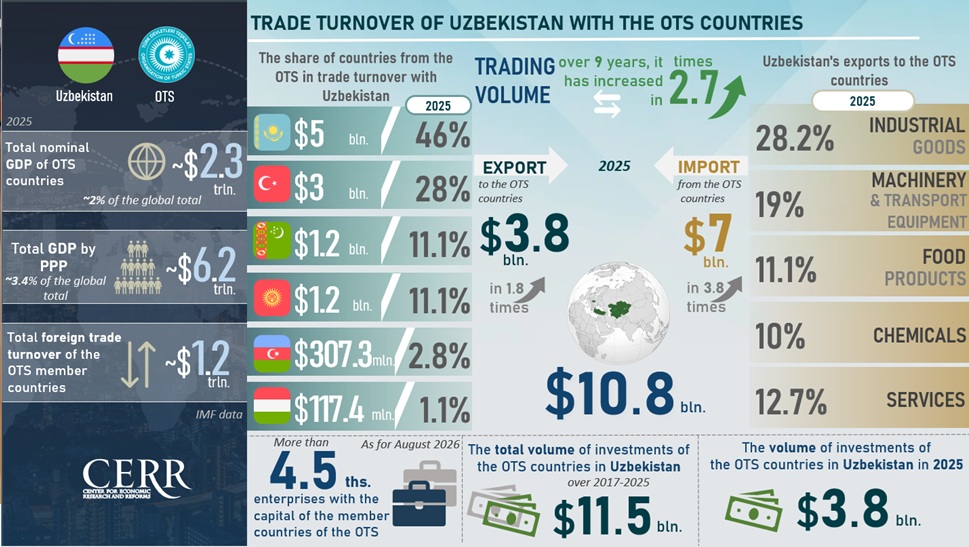
Uzbekistan has moved its economic cooperation with the Turkic states into a practical dimension
Ahead of the 13th Summit of the Organization of Turkic States, scheduled to be held in Ankara, economic cooperation within the OTS is acquiring new substance.
Water security in the turkic world: shared interests and common solutions
Water is a precious blessing that transcends national borders and has long connected peoples and civilizations.

Strengthening Transport Connectivity in Asia through the Development of the Trans-Caspian International Transport Corridor
Shifting international supply chains and expanding trade in Asia are driving demand for sustainable transport routes. For businesses, predictable delivery times, competitive rates, and reliable access to foreign markets are becoming increasingly important.