
A meeting between the leaders of Uzbekistan, Turkmenistan and Azerbaijan took place
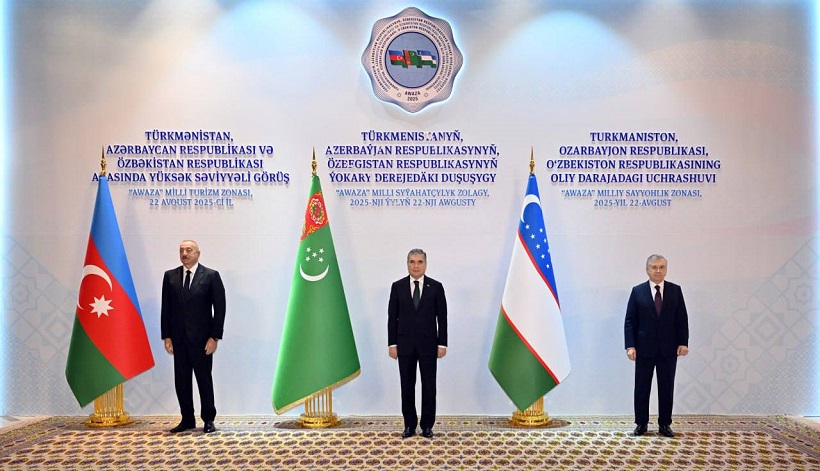
A trilateral meeting of the President of the Republic of Uzbekistan Shavkat Mirziyoyev, the National Leader of the Turkmen people, the Chairman of the Khalk Maslakhaty took place in the Avaza National Tourist Zone Gurbanguly Berdimuhamedov and the President of the Republic of Azerbaijan Ilham Aliyev.
The issues of developing multilateral cooperation in the trade-economic, transport-communication, energy and humanitarian spheres were considered.
At the beginning of his speech, the head of our state once again warmly congratulated Gurbanguly Berdimuhamedov on the successful holding the third UN Conference on Landlocked Developing Countries in early August.
The President of Uzbekistan also sincerely congratulated the leader of Azerbaijan Ilham Aliyev on the recent signing of a peace declaration with Armenia in Washington.
The head of our state made a number of specific proposals for expanding multilateral cooperation.
The importance of fully utilizing the large transit potential of the three states was noted.
Confidence was expressed that the connection of existing and future corridors will make it possible to form a sustainable and effective transcontinental route that will connect China with South Asia, the Middle East and Europe through the territories of our countries.
Currently Construction of the China-Uzbekistan railway has begun. In addition, a memorandum on the Trans-Afghan Corridor construction project was recently signed with Pakistan and Afghanistan.
It was emphasized that new cargo flows are designed to ensure efficient loading of the infrastructure primarily of Azerbaijan, Turkmenistan and Uzbekistan.
Plans for the development of the Middle Route, including the Zangezur corridor, were also supported.
It was proposed to begin a joint expert working on the most important issues.
We are talking about expanding capacity and creating modern logistics infrastructure, including in the ports of Turkmenbashi and Baku, implementing a coordinated tariff policy, digitalizing procedures and ensuring cargo control.
For its part, the Uzbek side expressed its readiness to mutually reduce tariffs for cargo transportation in order to ensure the shortest possible profitable access to the main markets for business.
In addition, it was noted that a consolidated approach will allow building pragmatic cooperation with states and international organizations - potential donors in the development of logistics infrastructure.
At the same time, Uzbekistan expressed interest in creating its own ferry capacities for transporting goods across the Caspian Sea.
In order to ensure energy security, the need to deepen cooperation and develop corridors for the export of energy resources to third countries was noted.
In this regard, the project of organizing the supply of “green” energy to Europe was named promising.
In terms of traditional hydrocarbons, it was proposed to study the prospects for cooperation in the field of geological exploration and development of deposits on the Caspian shelf.
Another priority area is a dramatic increase in trade turnover and the scale of industrial cooperation. It was noted that in recent years the volume of mutual trade between Uzbekistan and Turkmenistan and Azerbaijan has doubled. The share of industrial goods in the structure of trade turnover reached 40 percent.
It was proposed to jointly prepare a Comprehensive Action Plan, providing for the development of sustainable trade and logistics chains, the creation of wholesale distribution centers and access to large retail chains, the unification of phytosanitary and quarantine requirements, the introduction of digital product labeling, the launch of joint electronic platforms and the expansion of cooperation between commodity exchanges.
It is proposed to actively involve the regions of the three countries in these processes by holding exhibitions and fairs and business meetings under the auspices of the chambers of commerce and industry.
As part of the expansion of humanitarian contacts, it is proposed to adopt a trilateral program of tourist and cultural exchanges, which will increase the flow of tourists from our countries and third countries, showing the common rich cultural heritage, the closeness of traditions and customs of our peoples.
In conclusion, for the practical implementation of the initiatives put forward and agreements reached, the head of our state proposed to prepare a “road map”, as well as launch a mechanism for joint meetings of ministers in the main areas.
* * * * *
Following the results of the negotiations, the President of the Republic of Uzbekistan Shavkat Mirziyoyev, National Leader of the Turkmen people, Chairman of the Khalk Maslakhaty Gurbanguly Berdimuhamedov and President of the Republic of Azerbaijan Ilham Aliyev adopted a Joint Statement
In the presence of the leaders, memorandums of cooperation in the field of transport and logistics, shipbuilding and civil aviation, an Agreement on Cooperation between Commodity Exchanges and others were also signed.
Officialwebsite Presidentof the RepublicUzbekistan
Related news
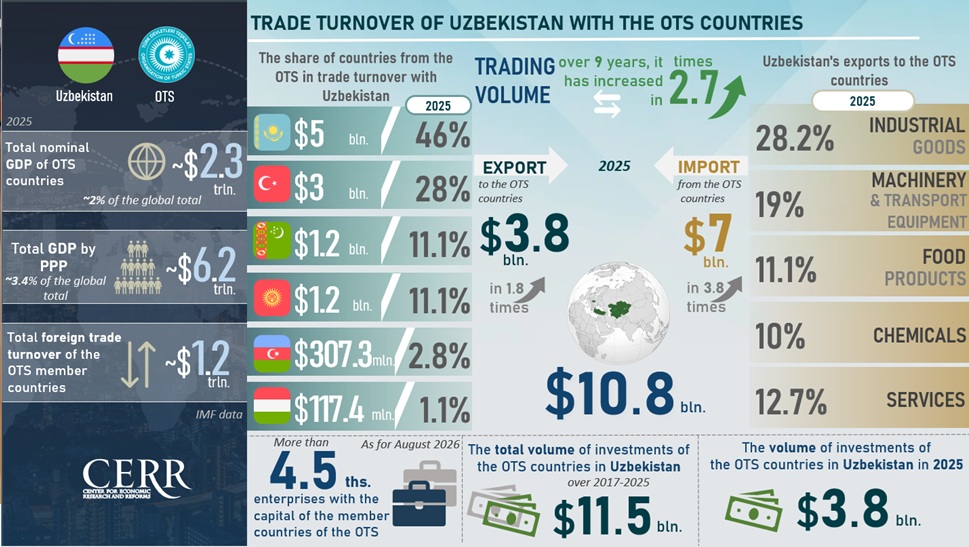
Uzbekistan has moved its economic cooperation with the Turkic states into a practical dimension
Ahead of the 13th Summit of the Organization of Turkic States, scheduled to be held in Ankara, economic cooperation within the OTS is acquiring new substance.
Water security in the turkic world: shared interests and common solutions
Water is a precious blessing that transcends national borders and has long connected peoples and civilizations.

Strengthening Transport Connectivity in Asia through the Development of the Trans-Caspian International Transport Corridor
Shifting international supply chains and expanding trade in Asia are driving demand for sustainable transport routes. For businesses, predictable delivery times, competitive rates, and reliable access to foreign markets are becoming increasingly important.