
Expanding cooperation between Central Asian countries within the framework of the Sustainable Development Goals
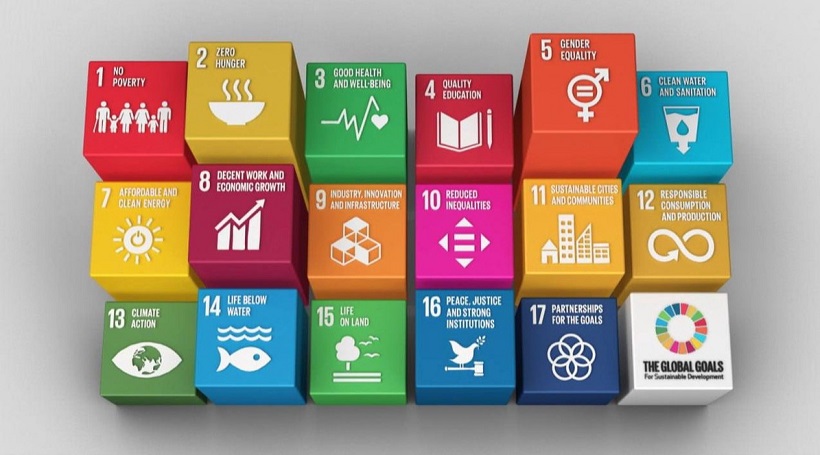
In the modern world, implementing the UN 2030 Agenda and achieving the 17 global sustainable development goals is no longer just a matter for one country. More and more experts agree: success depends on coordination, sustainable partnerships and regional cooperation.
For the countries of Central Asia - Kazakhstan, Uzbekistan, Kyrgyzstan, Tajikistan and Turkmenistan - this approach is especially important. They all have similar problems: land degradation, water shortages, climate risks, digital inequality, youth employment. It is impossible to solve them individually - only joint actions can produce a sustainable effect and create a synergy of efforts.
Regional platforms and exchange of practices are becoming the most important tool for joint promotion. The idea of creating and developing a Regional Center for Sustainable Development of the SDGs is increasingly being discussed - a platform where countries in the region do not compete with each other, but pool resources and experience. The recently established Regional SDG Center for Central Asia and Afghanistan in Almaty has become just such a center. This initiative by the UN and the Government of Kazakhstan provides an opportunity to pool knowledge, coordinate action and attract investment in sustainable development. The center is engaged in technical support to countries, data collection and analysis, exchange of experience and promotion of the region in the international arena. In fact, it becomes a bridge between countries, businesses and global institutions, as well as a symbol that Central Asia is ready to act together.
Today, each of the countries in the region is taking steps forward. According to the Sustainable Development Solutions Network's 2025 report, Uzbekistan ranked 62nd out of 167 countries with a sustainable development index of 73.1 points - one of the best indicators in the region. The country is actively implementing new approaches in digitalization, education, social protection and ecology. Kazakhstan is in 70th place (71.52 points) and continues to strengthen its position through the development of national strategies and modernization of the planning system. Kyrgyzstan ranks 47th (74.5 points) and shows good results in social areas. Tajikistan is in 88th place (68.3 points), where the main challenge remains in the environment and energy. Turkmenistan publishes less data, but also implements programs on efficient water use and green energy.
At the same time, the region faces serious environmental challenges. The UN ESCAP 2025 report notes that Central Asia is lagging behind on a number of natural resource goals: land degradation and clean water shortages remain systemic problems. According to ESCAP, the region is regressing on a number of environmental indicators, including land degradation, which requires accelerated action to achieve UN Agenda Goals 6 and 15, and according to UNESCO and the Atlantic Council, water stress affects over 80 million people in the region. Most of the flow is generated outside the consumer countries: it is estimated that about 86% is in the upper reaches (Kyrgyzstan and Tajikistan), and the Amu Darya and Syr Darya basins provide up to 90% of the region's river water. This creates interdependence: Kyrgyzstan and Tajikistan provide the rivers' headwaters, while Uzbekistan, Kazakhstan and Turkmenistan depend on the flow for irrigation and industry. Due to the deterioration of canals and drainage systems, water losses during irrigation transport amount to up to 30–40% (in some areas - up to 50%). Climate change and droughts in recent years are exacerbating the situation, increasing pressure on agriculture and food security.
However, the water issue may become an incentive for cooperation rather than a source of conflict. Mechanisms such as the Interstate Commission for the Coordination of Water Resources, regional SPECA projects and the ESCAP program for combining data on water, energy and climate are already in place. The creation of a common regional water platform and the introduction of digital analysis tools will help countries develop joint decisions and plan resource allocation. In this direction, the Regional SDG Center in Almaty can play a key role by ensuring data exchange, development of geographic information systems and innovation in water and land management.
In addition to the water theme, digitalization is important. Central Asia remains one of the youngest regions in the world: the median age is around 26–27 years, and the proportion of children under 15 is about a third of the population. In general, more than half of the region’s population are young people under 30 years of age. This human potential can be used to develop innovation, distance education, telemedicine and smart cities. Joint ICT initiatives and startup hubs in Tashkent, Astana, Bishkek or Dushanbe can strengthen the economy and increase resilience to external shocks. The transition to green technologies and renewable energy is increasingly being discussed. Central Asia is actively investing in solar and wind power plants, developing energy saving and circular economy projects. All this is directly related to the water and climate sustainability of the region.
Business is also gradually being included in the sustainable development agenda. In 2025, the UN Global Compact Central Asia network launched in Kazakhstan, uniting more than 140 companies. This demonstrates the growing private sector interest in responsible investing and ESG approaches. More and more joint initiatives between the state and business are being implemented in the field of ecology, digitalization and green energy. The social dimension—the participation of youth and women—is also becoming an important part of the transformation. Countries in the region have leadership schools, mentoring programs, grant competitions and regional forums where topics such as digital skills, entrepreneurship and climate solutions are discussed. These initiatives are creating a new generation of professionals who can promote sustainable development not in words, but in deeds.
Despite the positive developments, serious barriers remain. Differences in statistics and institutional approaches make it difficult to form a unified monitoring system. Funding remains limited and climate risks are increasing. Geopolitical contradictions also persist: countries in the region are often forced to balance between internal interests and the need for collective action. But the main challenge is not a lack of resources, but a lack of coordination and trust.
The outlook for 2030 remains optimistic. If Central Asian countries continue to strengthen connectivity, modernize infrastructure, and innovate, the region could become an example of sustainable development for other parts of the world. In the coming years, it is possible to create a common data platform on the SDGs, including water and climate modules. Water losses will be reduced by a third, and the number of joint projects in the field of green economy and digitalization will increase significantly. The participation of youth and women in governance will ensure social sustainability, and cooperation with business will ensure financial sustainability.
Central Asia has the chance to transform from a climate risk zone into a region of opportunity. Expanding cooperation within the framework of the SDGs not only meets the global agenda, but also reflects the strategic interests of the countries themselves: economic growth, social stability and environmental safety. The creation of the Regional SDG Center in Almaty was an important step on this path. If the region manages to join forces and realize the potential of cooperation, it can become an example of how in difficult climatic conditions it is possible to build a sustainable future - on its own, at the crossroads of Europe and Asia.
Related news
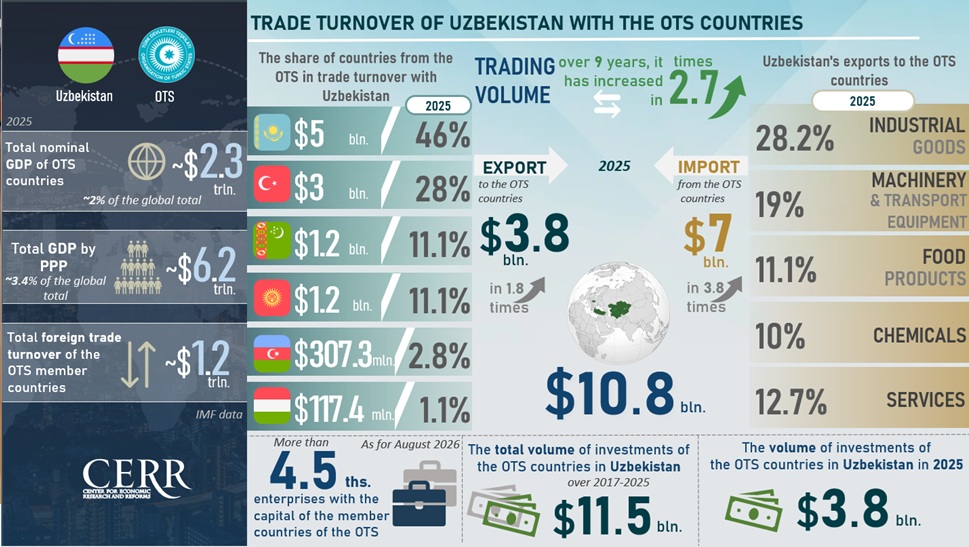
Uzbekistan has moved its economic cooperation with the Turkic states into a practical dimension
Ahead of the 13th Summit of the Organization of Turkic States, scheduled to be held in Ankara, economic cooperation within the OTS is acquiring new substance.
Water security in the turkic world: shared interests and common solutions
Water is a precious blessing that transcends national borders and has long connected peoples and civilizations.

Strengthening Transport Connectivity in Asia through the Development of the Trans-Caspian International Transport Corridor
Shifting international supply chains and expanding trade in Asia are driving demand for sustainable transport routes. For businesses, predictable delivery times, competitive rates, and reliable access to foreign markets are becoming increasingly important.