
The effectiveness of the reforms was analyzed and additional tasks were identified
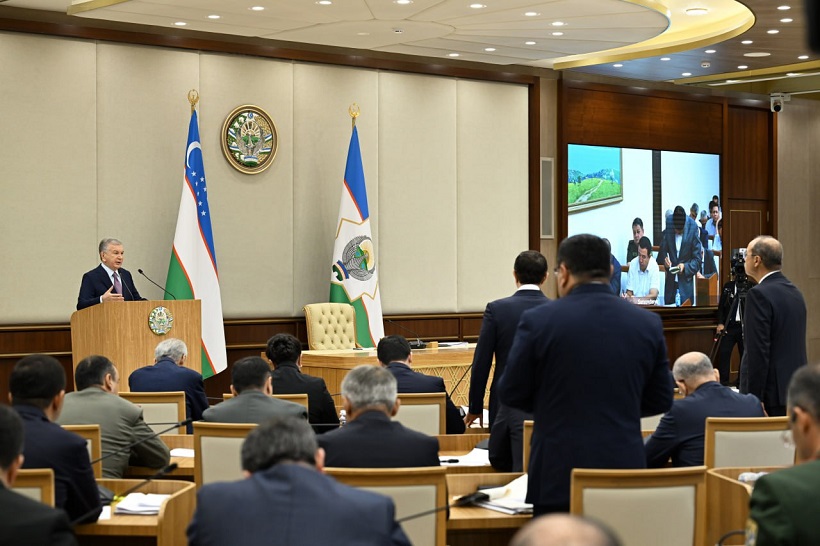
Under the chairmanship of President Shavkat Mirziyoyev, a video conference meeting was held on June 16, dedicated to analyzing the effectiveness of the ongoing reforms, the state of affairs on the ground and concerns of the population questions.
At the beginning of the meeting, socio-economic indicators for the first five months of this year were presented. It was noted that during this period, industry grew by 6.4 percent, exports increased by 18 percent, and the influx of foreign investment by 46 percent. More than 2.5 thousand new production facilities worth $3 billion were put into operation. 2 million 400 thousand people are provided with sources of income.
It is noted that conflicts are intensifying in the world, trade relations and logistics are becoming more complicated, the demand for peace, justice and respect for human dignity is becoming increasingly urgent.
In this regard, it is indicated that regional heads and ministers must correctly assess current opportunities, take initiative, intensify dialogue with the population and entrepreneurs, quickly resolve emerging issues.
At the meeting, problems were analyzed by region and industry, and systemic shortcomings were identified.
For example, in each region there are over 40 organizations with an average of 500 employees. However, to resolve even simple issues, it is necessary to request permission from regional and even republican authorities. At the same time, structures with powers and finances often consider themselves exclusively regulatory bodies and are not involved in making life easier for the population.
The delay in the implementation of reforms is also due to the fact that some ministers and senior government officials do not pay enough attention to discipline. The number of complaints regarding the failure to implement court decisions within the established time frame has increased.
As part of the program for the current year, it is planned to attract investments of another 26.5 billion dollars and launch 35 major projects worth 3.3 billion dollars before September 1.
At the recently held Tashkent International Investment Forum, trade and investment agreements worth over $30.5 billion. Their implementation requires a systematic approach.
In this regard, it was decided to introduce a new mechanism for increasing executive discipline and organizing work with citizens' appeals.
From now on, the Accounts Chamber, whose powers are expanding, will be responsible for maintaining execution discipline. It will analyze not only the intended use of funds, but also their effectiveness and the degree of satisfaction of the population. Based on this analysis, the chamber will make proposals to the President. The control inspection of the Presidential Administration will be abolished.
The “Khalk Nazorati” electronic portal, successfully tested in Tashkent, will be introduced throughout the republic. This portal will become a unified system for processing appeals, to which all ministries, departments and khokimiyats will connect.
Recently, People's Receptions are increasingly limiting themselves to redirecting appeals to other authorities, instead of resolving them on their merits. Problems that remain unresolved locally find outlets on social networks.
The President emphasized that the main responsibility of leaders is to hear the aspirations of people and create conditions for life:
– We must not forget that behind every appeal is the fate of a person, his pain and hope. Living by the aspirations of the people is our duty,” said Shavkat Mirziyoyev.
Therefore, it was instructed to staff the People’s Receptions with dedicated and competent specialists. Now they will be led personally by regional and district khokims. They will begin each working day by receiving citizens' requests. Not a single issue should be postponed “for later” - it should be resolved on the spot, without redirection. For this purpose, the powers of district khokims are being expanded.
Today, khokims do not have the authority to distribute the staff of district organizations, encourage effective leaders or dismiss ineffective ones. Khokims and their deputies spend too much time on holding meetings.
Staff structures at the local level often do not correspond to the goals of socio-economic development of the territories. Industry departments work according to outdated multi-year plans and do not show initiative, limiting themselves to the implementation of current instructions.
– If the work at the district level is ineffective, then no matter what instructions come from above, it is impossible to achieve the goals, the President noted.
The head of state has put forward important initiatives aimed at changing the management system in the districts.
Starting this year, a new management model will be introduced in the Surkhandarya region and in 16 more districts and cities with accelerated development - Bektemir, Kungrad, Chimbay, Asaka, Gijduvan, Gallyaaral, Yakkabag, Khatyrchi, Chartak, Bulungur, Syrdarya, Kuva, Shavat, Khazarasp, Margilan and Yangiyul.
In these districts and cities, branches of 9 government agencies in the areas of economics and finance, investment, agriculture, employment, construction, ecology, culture, family and women's affairs, and youth work will be included in the structure of the khokimiyat. The distribution of staffing positions, hiring and dismissal of employees will be under the jurisdiction of the khokim. The sources of districts' own funds will also increase.
Now the khokim will have 4 deputies, and he himself will determine in which areas deputies are needed, depending on the needs of the district. Each deputy will have clearly defined tasks and will be provided with funding for their implementation.
If the khokim and his team fully meet the performance indicators, the amount of funding for the district next year will increase by 10-15 percent. Otherwise, funding will not be increased, and the head will be dismissed.
A “Reform Headquarters” of specialists and leading entrepreneurs will be created in each district. Based on the analysis of mahallas, a three-year program will be developed, covering projects, infrastructure, sources of financing and staffing. The budget, infrastructure and investment programs, as well as employment programs for the next year will be approved on the basis of this program.
This experience will be distributed throughout the republic from next year, depending on the results achieved.
Another important news - from August 1, wages will be increased in all regional and district khokimiyats, bonuses will be introduced and bonuses based on performance to create a more attractive working atmosphere.
At the same time, measures will be taken against those who fail to cope with their assigned responsibilities. This will teach everyone to work disciplinedly and according to plan.
At the meeting, special attention was also paid to the issues of ensuring employment, reducing poverty, increasing investment and exports, improving the business environment in the regions.
The need to strengthen tax administration, supporting entrepreneurship and creating jobs was emphasized.
Possibilities for ensuring mahallas with water, growing fruits and vegetables, expanding exports through modern agricultural technologies. The need to develop livestock farming based on the effective use of forest and pasture lands, increasing the production of meat and milk and curbing food inflation was noted.
The importance of developing public transport in cities, organizing safe road traffic, reducing traffic jams and accidents was emphasized. The task was set to expand recreation areas, green areas and playgrounds to improve the quality of life of the population.
At the end of the meeting, the Prime Minister, members of the government and khokims reported on the measures being implemented on the issues discussed.
Official website of the President of the Republic Uzbekistan
Related news
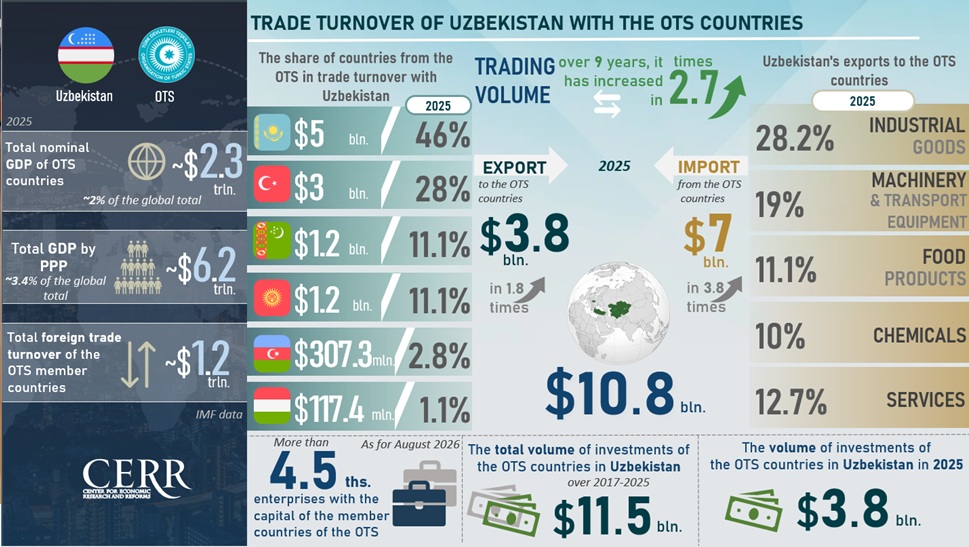
Uzbekistan has moved its economic cooperation with the Turkic states into a practical dimension
Ahead of the 13th Summit of the Organization of Turkic States, scheduled to be held in Ankara, economic cooperation within the OTS is acquiring new substance.
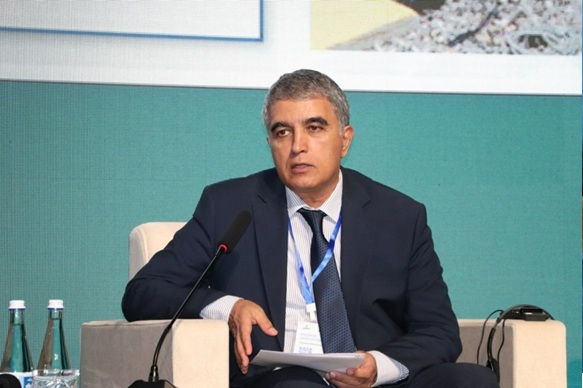
Water security in the turkic world: shared interests and common solutions
Water is a precious blessing that transcends national borders and has long connected peoples and civilizations.

Strengthening Transport Connectivity in Asia through the Development of the Trans-Caspian International Transport Corridor
Shifting international supply chains and expanding trade in Asia are driving demand for sustainable transport routes. For businesses, predictable delivery times, competitive rates, and reliable access to foreign markets are becoming increasingly important.