
Priority tasks for the development of Fergana region identified
On April 28, in the city of Fergana, President Shavkat Mirziyoyev chaired a meeting on the socio-economic development of Fergana region.
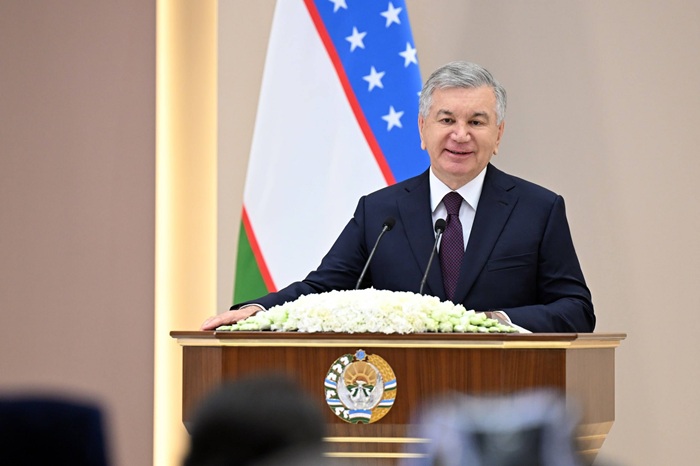
On April 28, in the city of Fergana, President Shavkat Mirziyoyev chaired a meeting on the socio-economic development of Fergana region.
The Head of State first focused on the changes in the region’s economy in recent years.
Through investments totaling $8.2 billion, 8,000 modern production facilities have been commissioned in the region. Resources totaling 100 trillion UZS have been allocated to entrepreneurship development, and the volume of commercial space has increased by 10 million square meters. A total of 13,500 small and medium-sized enterprises have been established, nearly doubling their overall number.
As a result, the gross regional product increased 1.7-fold, industrial production 1.5-fold, and the services sector 3-fold. Most importantly, over the past four years, the unemployment rate has decreased from 9.2 to 4.6 percent, and the poverty rate from 11.6 to 5.2 percent.
Extensive work is underway to improve housing conditions for the population. On the site of 241 outdated households in Ipakchi and Kirguli mahallas of Margilan, multi-apartment residential buildings with 2,500 apartments have been constructed. This year, another 6,500 families will move into the New Uzbekistan residential area under construction in Navruz mahalla. Similar work is also underway in Yazyavan and Quva districts, as well as in the cities of Kokand and Fergana.
Over the past ten years, the region has opened schools with 74,000 places, kindergartens with 145,000 places, and hospitals with 3,000 beds. A total of 167 private schools have been established, where more than 40,000 children are studying. As a result of improvements in the quality of education, Fergana region has risen to third place in the country for youth enrollment in higher education institutions.
In agriculture, 15,000 hectares of industrial orchards and vineyards have been established, and an additional 6,000 hectares of orchards have been restored. Exports of fruits and vegetables have tripled, reaching $400 million.
Tourism is rapidly developing in Fergana, Sokh, and Quva districts, as well as in the cities of Margilan and Kokand. Last year, the number of foreign tourists exceeded 500,000 for the first time, while domestic tourism surpassed 3 million. Exports of tourism services reached $185 million.
“The people of Fergana expect even greater results from us”, President Shavkat Mirziyoyev said.
In this regard, the region is expected to achieve 9.1 percent economic growth and 9.1 percent industrial growth this year, attract $4.5 billion in foreign investment, and double exports to reach $2 billion.
At the meeting, it was emphasized that Fergana region should serve as a model for the widespread adoption of modern technologies, digital solutions, and artificial intelligence across government bodies, industry, the service sector, and agriculture.
Fergana region accounts for the largest share of young men and women who have received certificates under the “Five Million AI Leaders” program. Regional and district leaders, with the active involvement of talented youth, were instructed to digitalize services and processes in government bodies and to improve convenience for the population and entrepreneurs. The importance of analyzing the comparative advantages of mahallas using artificial intelligence, and of developing projects aimed at job creation, increasing added value, and raising household incomes, was emphasized.
For example, an AI analysis of Yazyavan district’s capabilities revealed that the district’s economy should primarily focus on logistics. A 35-kilometer section of the A-373 highway passing through Yazyavan sees 30,000 vehicles daily. In this regard, the task has been set to increase economic turnover by an additional 1 trillion UZS through the expansion of logistics centers, large warehouse complexes, and roadside service infrastructure.
In recent years, the volume of IT services in Fergana region has increased fourfold, and exports have exceeded $23 million. Starting with the new academic year, drawing on the experience of Quva district, training in programming, robotics, graphic design, and foreign languages will be organized in 16 additional districts through technical colleges. In the city of Fergana, a branch of the IT Park University is planned, and in Margilan, a branch of Inha University is planned, with an annual enrollment of 1,000 students in artificial intelligence, cybersecurity, and software engineering.
Special attention was also given to the development of e-commerce. It was noted that Fergana region’s share of this sector remains low. In this regard, the need was indicated to create warehouse infrastructure in the region with a total area of at least 100,000 square meters, of which 30,000 square meters should be commissioned this year. The task was set to train entrepreneurs in 126 mahallas specializing in industry and handicrafts to use e-commerce platforms.
Issues related to the efficient use of available agricultural resources were also considered. The region has 370,000 hectares of irrigated land, of which orchards and vineyards occupy 55,000 hectares. At the same time, 5,500 hectares of orchards and vineyards are outdated, and 6,000 hectares of steppe and hilly lands are used inefficiently. It was noted that realizing this potential will ensure additional production of 300,000 tons of fruits and vegetables, as well as the creation of 2 trillion UZS in added value in the economy.
Special attention was also given to the development of e-commerce. It was noted that Fergana region’s share of this sector remains low. In this regard, the need was indicated to create warehouse infrastructure in the region with a total area of at least 100,000 square meters, of which 30,000 square meters should be commissioned this year. The task was set to train entrepreneurs in 126 mahallas specializing in industry and handicrafts to use e-commerce platforms.
Issues related to the efficient use of available agricultural resources were also considered. The region has 370,000 hectares of irrigated land, of which orchards and vineyards occupy 55,000 hectares. At the same time, 5,500 hectares of orchards and vineyards are outdated, and 6,000 hectares of steppe and hilly lands are used inefficiently. It was noted that realizing this potential will ensure additional production of 300,000 tons of fruits and vegetables, as well as the creation of 2 trillion UZS in added value in the economy.
The experience of the “Quva Agrostar” agro-complex was also highlighted. Here, through cooperation, small processing facilities for household and dehkan farms are being established, along with training courses for farmers, the supply of in vitro-grown seedlings, and assistance with exporting finished products. The need to introduce such approaches in all districts and to fully renew 5,500 hectares of outdated orchards was emphasized.
A large-scale program will be developed in the region to establish super-intensive orchards on 50,000 hectares of low-yield cotton and grain fields, as well as on inefficient orchards. The need was noted to produce 611,000 tons of fruit, 252,000 tons of grapes, 1.8 million tons of vegetables, and 119,000 tons of rice this year, and to increase fruit and vegetable exports by 25 percent, bringing them to $500 million.
The Head of State also addressed investment issues. The region has been tasked with ensuring the efficient use of 1,077 hectares of land allocated for industrial zones, with the key criterion being an annual production of at least 50 billion UZS per hectare. Instructions were given to begin implementing investment projects totaling $5 billion in these zones.
Proposals to establish a free trade zone in Andarkhan mahalla of Besharyk district and to construct a large trade complex worth $70 million on the site of the mechanical plant in the city of Kokand were supported.
It was noted that significant opportunities also exist within the tourism sector.
“In Fergana, which combines historical monuments and unique nature, the flow of foreign tourists can be increased by two to three times”, said Shavkat Mirziyoyev.
It was noted that, for this purpose, the cities of Kokand and Margilan should specialize in pilgrimage tourism, while the Sokh, Quva, Besharyk, and Fergana districts should focus on medical and eco-tourism. It was also noted that, to ensure visitor safety at the Karkidon reservoir in Quva district, an emergency response center has been established. A task has been set to gradually transform other reservoirs in the country into comfortable areas for residents and tourists.
It was emphasized that the opening of the Burhoniddin Marginoni Complex in the city of Margilan has become an important step in showcasing the country’s national values and historical heritage to the world. In Fergana district, projects such as the international resort zone “Shakhimardan – Yordon”, the raspberry agro-tourism cluster “Vodil”, the entertainment tourism complex “Avval”, and the health resort zone “Chimgan” are underway. By the end of next year, 50 tourism projects worth $300 million are planned to be launched.
In the city of Kokand, three pedestrian tourism routes have been developed, covering 64 cultural heritage sites. Instructions were issued for the gradual relocation of government institutions housed in cultural heritage buildings to other premises, as well as for the transformation of historical sites into tourist and cultural spaces.
It was noted that Sokh district has significant potential for developing eco-tourism, agro-tourism, and medical tourism. Tasks have been set to construct a large tourist complex on 130 hectares along the Sokh River, passing through the Sarikanda, Istiqlol, and Ravon mahallas, and to develop a master plan for the district’s development, involving foreign specialists. The adoption of a three-year program to comprehensively renew the district’s appearance was announced.
Issues related to studying and promoting the rich cultural heritage of Fergana region were also discussed at the meeting.
It was proposed to create an anthology and an electronic platform for the “Kokand Literary Environment”, and to establish a School of Literature and Creativity. To promote reading among young people, model libraries will be established in 100 mahallas across the region. Entrepreneurs opening book cafés will receive tax benefits and rental preferences. An initiative was proposed to hold the International Reading Festival every two years at the Burhoniddin Marginoni Complex, with participation by renowned writers and poets from around the world.
Special attention was also given to the preservation and development of the art of askiya, which is an integral part of the culture of Fergana region. Noting the establishment of the Republican Center for Askiya and Humor named after Yusufjon Qiziq Shakarjonov in the city of Margilan, a task was set to support young talent and to open askiya and humor programs in district cultural centers and music and art schools.
During the meeting, reports from regional and district leaders, as well as the views of entrepreneurs and public representatives, were heard.
Related news
President of Uzbekistan to participate in CICA summit
President of the Republic of Uzbekistan Shavkat Mirziyoyev will pay a working visit to Azerbaijan on October 14-15 at the invitation of President of the Republic of Azerbaijan Ilham Aliyev.
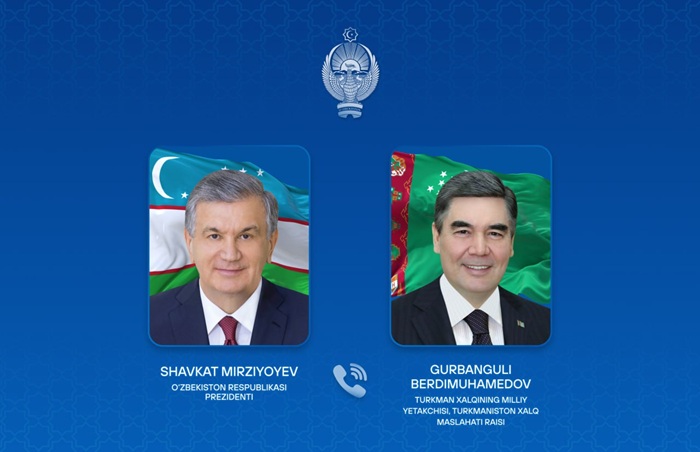
Leaders of Uzbekistan and Turkmenistan hold phone conversation
President Shavkat Mirziyoyev held a phone conversation with Gurbanguly Berdimuhamedov, the National Leader of the Turkmen people and Chairman of the Halk Maslahaty of Turkmenistan.
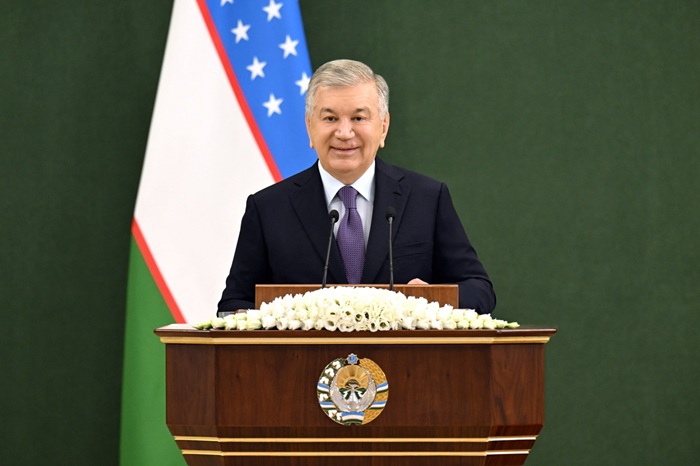
New Tashkent to create new opportunities for investors
President Shavkat Mirziyoyev held an open dialogue with investors and entrepreneurs on accelerating the construction of New Tashkent.