
The President of Uzbekistan has put forward a number of important initiatives to overcome common challenges and problems of landlocked countries
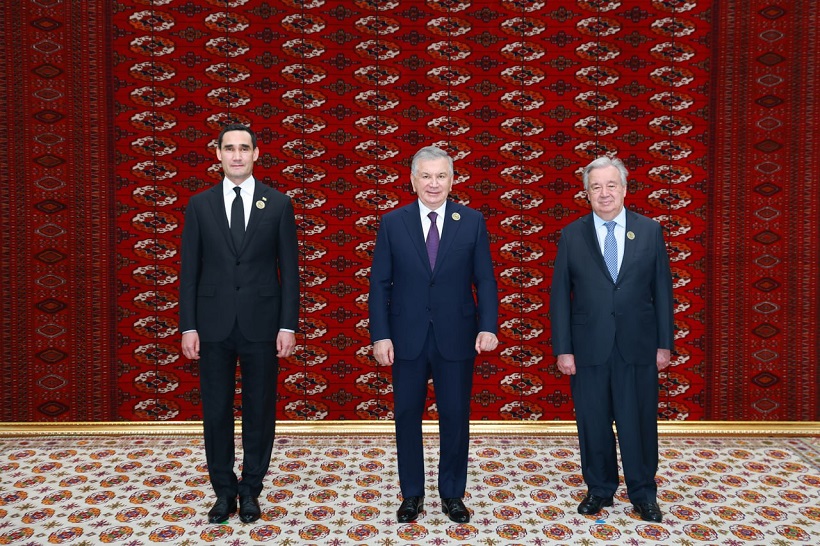
The President of the Republic of Uzbekistan Shavkat Mirziyoyev took part in the third UN Conference on Landlocked Developing Countries on August 5, held in the National Tourist Zone "Avaza" in the city of Turkmenbashi.
The event, chaired by the President of Turkmenistan Serdar Berdimuhamedov, was also attended by UN Secretary-General Antonio Guterres, President of the Republic of Kazakhstan Kassym-Jomart Tokayev, President of the Republic of Tajikistan Emomali Rahmon, as well as heads of a number of other states and governments, international and regional organizations.
In accordance with the agenda, current issues of strengthening transport connectivity and simplifying trade procedures, economic transformation, increasing resilience to climate change and environmental challenges, achieving progress in the implementation of the Sustainable Development Goals were considered.
At the beginning of his speech, the President of Uzbekistan highly appreciated the efforts of Turkmenistan aimed at achieving the Sustainable Development Goals, ensuring global and regional stability and prosperity.
He emphasized that the issues discussed at the conference are of vital importance, since the geographical distance from seaports and the need to cross the territories of several countries creates a number of objective challenges.
Among them are high tariffs, limited capacity of transport corridors and infrastructure, as well as dependence on the customs and transit policies of other countries.
According to the World Bank, due to high transport costs and instability of transit, the Central Asian region loses up to 2 percent of GDP annually.
Logistics costs amount to up to 60 percent of the cost of goods, which is several times higher than the global average.
In this regard, the development of new reliable transit corridors and logistics infrastructure becomes an essential condition for sustainable progress in Central Asia.
– The agenda that unites us today addresses a fundamental issue – the issue of justice. This is providing landlocked states with the opportunity to participate in the world economy on equal terms, the leader of Uzbekistan noted.
At the same time, the solution to this urgent task requires the fulfillment of three fundamental conditions.
This is the modernization of infrastructure as the basis for sustainable development, strengthening interconnectedness in order to prevent transit problems and the realization of the right to development as a key element of global equality.
In recent years, Uzbekistan has taken systematic steps to form a modern transport and logistics network with the active involvement of the private sector. Significant work has been carried out on the digitalization of trade and transport processes.
The ongoing structural economic reforms, liberalization of the trade system and a radical improvement in the investment climate are producing tangible results: competitiveness has increased, innovative development has accelerated.
– Achieving a qualitatively new level of trust and partnership in Central Asia has given a powerful impetus to dynamic transformations,” noted the head of our state.
Today, a unified transport and logistics space is being formed in the region. Programs and projects are being implemented aimed at transforming Central Asia into a full-fledged transit hub between East and West, North and South.
In recent years, trade volumes have increased 4.5 times. Investments have doubled, the number of joint ventures has increased fivefold.
This year, together with partners, the construction of the China-Kyrgyzstan-Uzbekistan railway began, and freight traffic along the transport corridor Uzbekistan-Turkmenistan-Iran-Turkey has increased significantly.
In order to overcome common challenges and problems of countries that do not have access to sea, the President of Uzbekistan put forward a number of specific proposals and initiatives.
First of all, the need for coordinated actions for the accelerated development of international transport corridors and infrastructure was noted.
In this context, the importance of accelerating the implementation of the Uzbekistan-Afghanistan-Pakistan railway construction project and its connection with the China-Kyrgyzstan railway under construction was noted – Uzbekistan.
– This will open up the opportunity for the formation of a new trade and economic space and sustainable transport infrastructure in our vast region, the leader of Uzbekistan emphasized.
The head of state also called for the full potential of the Middle Corridor, first of all, by pursuing a coordinated transit policy, unifying rules and introducing optimal tariffs for container transportation
The President of Uzbekistan also proposed developing, under the auspices of the UN, a Global Agreement on Transit Guarantees for Landlocked Countries.
The document is designed to ensure conditions for fair access to ports and communications, reduce the risks of cargo transportation and inequality in global logistics.
Taking into account growth demand for flexible investment instruments for financing large infrastructure projects, the leader of our country advocated the creation, under the auspices of the UN, of a Fund for Promotion of Logistics Integration of Landlocked Countries. The need of Central Asian countries for investments in transport infrastructure is estimated at almost 40 billion dollars per year.
The head of Uzbekistan also advocated the development of a Global Vulnerability Index of Landlocked Countries
to objectively determine the limitations of transit opportunities, expand international financial and technical programs and effectively allocate resources taking into account real conditions.
Attention was drawn to the importance of implementing the proposal to create an Innovation Hub in Uzbekistan for the development of the agricultural sector, which will serve the introduction of adaptive agricultural technologies, promotion of innovative water saving projects and ensuring food security, exchange of knowledge and experience.
The leader of Uzbekistan noted the importance of actively involving leading experts and think tanks in developing proposals to overcome common challenges, including carrying out international forums and round tables.
– The agenda of such events could include issues of ensuring deep integration into global production chains, accelerated development of artificial intelligence and digital technologies, expanding cross-border investment and support for start-ups, the President noted.
He also announced Uzbekistan’s intention to join the activities of the International Analytical Center for Landlocked Countries.
In conclusion, the head of our state confirmed our country’s readiness for a constructive and long-term partnership to form a more equitable architecture for global development.
As a result of the Conference, the Avaza Political Declaration was adopted.
Official website of the President of the Republic Uzbekistan
Related news
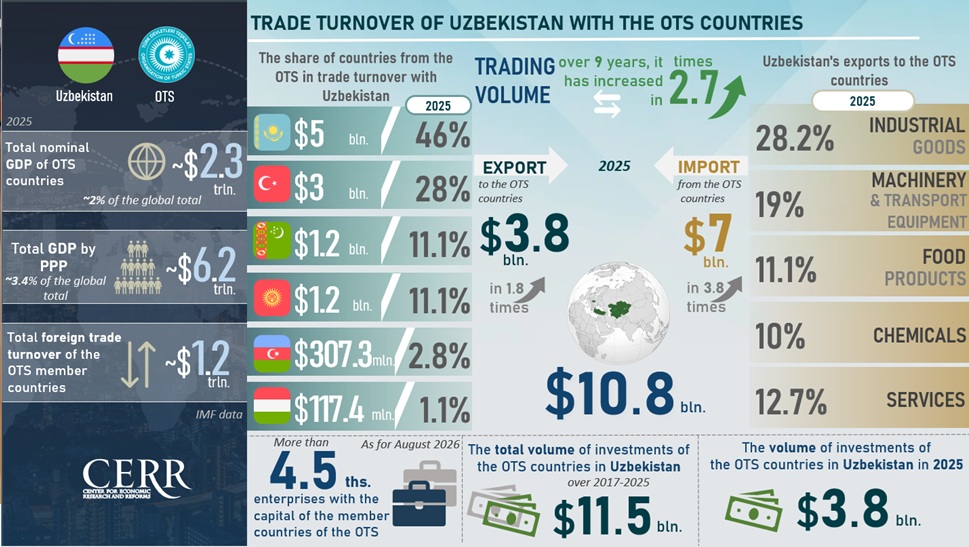
Uzbekistan has moved its economic cooperation with the Turkic states into a practical dimension
Ahead of the 13th Summit of the Organization of Turkic States, scheduled to be held in Ankara, economic cooperation within the OTS is acquiring new substance.
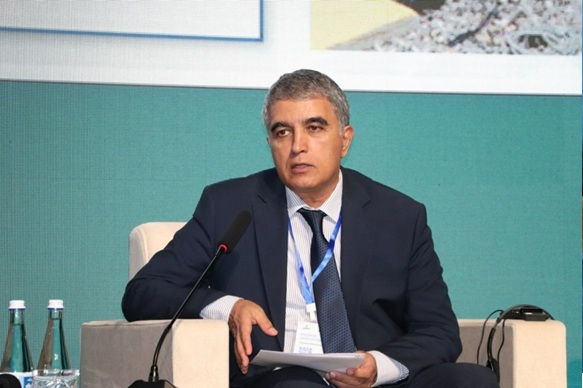
Water security in the turkic world: shared interests and common solutions
Water is a precious blessing that transcends national borders and has long connected peoples and civilizations.

Strengthening Transport Connectivity in Asia through the Development of the Trans-Caspian International Transport Corridor
Shifting international supply chains and expanding trade in Asia are driving demand for sustainable transport routes. For businesses, predictable delivery times, competitive rates, and reliable access to foreign markets are becoming increasingly important.