
The President of Uzbekistan signed the charter of the Peace Council
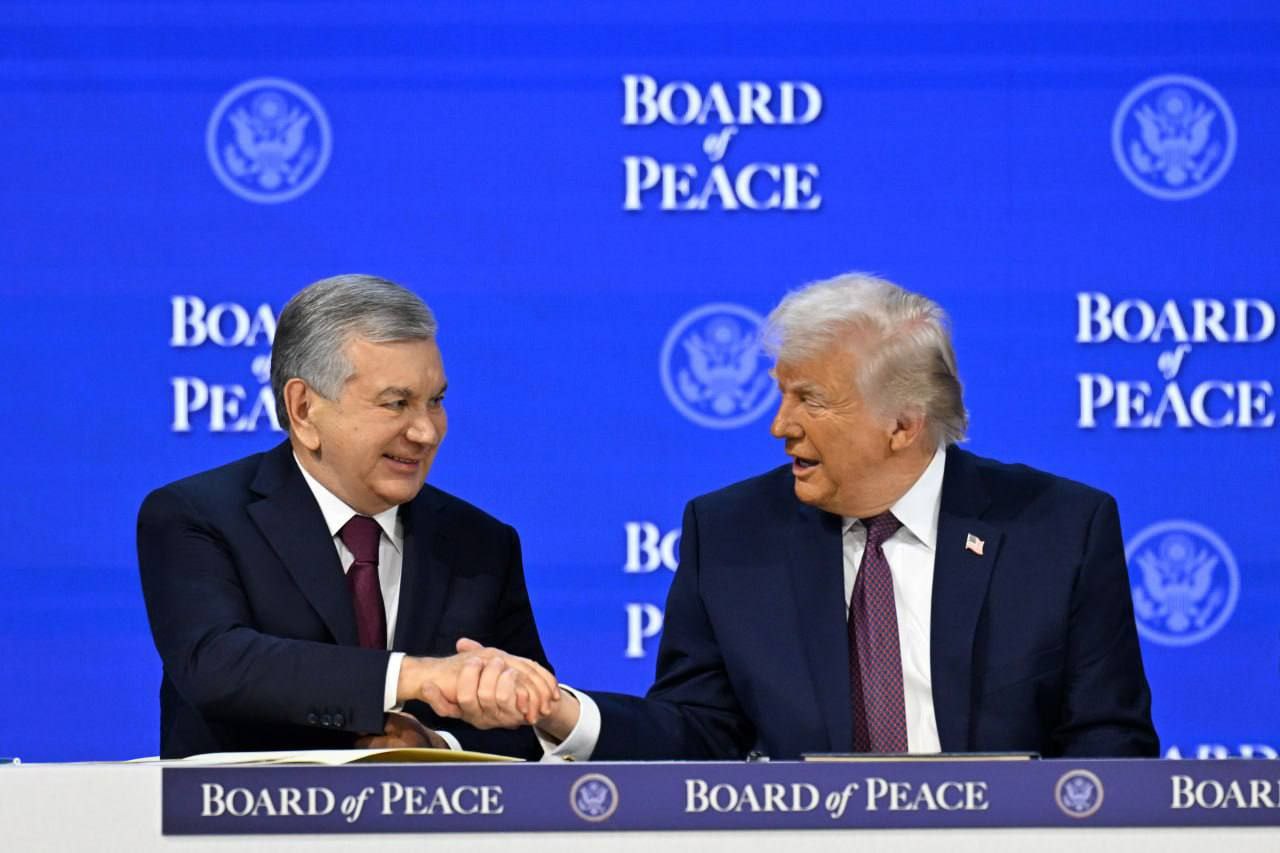
The President of the Republic of Uzbekistan Shavkat Mirziyoyev took part in the signing ceremony of the Charter of the Peace Council on January 22 in the Swiss city of Davos.
The event, chaired by US President Donald Trump, also included heads of state, prime ministers and foreign ministers of Azerbaijan, Armenia, Argentina, Bahrain, Bulgaria, Hungary, Indonesia, Jordan, Kazakhstan, Qatar, Morocco, Mongolia, Paraguay, Pakistan, Saudi Arabia, Turkey and other countries.
The creation of the Peace Council corresponds foreign policy priorities of Uzbekistan, aimed at supporting peace initiatives and multilateral cooperation. The new structure is being formed as part of the implementation of the Comprehensive Plan to End the Conflict in the Gaza Strip, which was supported by a UN Security Council resolution.
The Peace Council is designed to reduce the risks of escalation and create a favorable environment for the economic and social restoration of the Gaza Strip. There is an opportunity to build a New Gaza with a prosperous economy, peaceful life and the prospect of creating a Palestinian state.
The council included authoritative and influential leaders from around the world.
By signing the charter document of the council, Uzbekistan became one of its founding states. This means our country’s readiness to consistently participate in the work of the council and make a practical contribution to the implementation of its mandate in close cooperation with all founding states and international partners.
Related news

Uzbekistan has moved its economic cooperation with the Turkic states into a practical dimension
Ahead of the 13th Summit of the Organization of Turkic States, scheduled to be held in Ankara, economic cooperation within the OTS is acquiring new substance.

Water security in the turkic world: shared interests and common solutions
Water is a precious blessing that transcends national borders and has long connected peoples and civilizations.

Strengthening Transport Connectivity in Asia through the Development of the Trans-Caspian International Transport Corridor
Shifting international supply chains and expanding trade in Asia are driving demand for sustainable transport routes. For businesses, predictable delivery times, competitive rates, and reliable access to foreign markets are becoming increasingly important.