
The President of Uzbekistan discussed issues of trade and economic cooperation with Afghanistan
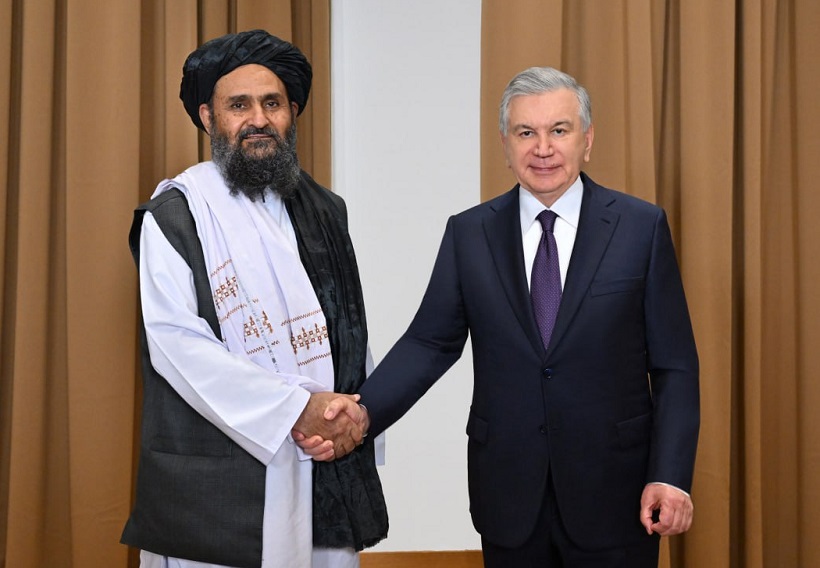
On the sidelines of the Economic Cooperation Organization summit in Khankendi, the President of the Republic of Uzbekistan Shavkat Mirziyoyev received the acting Deputy Prime Minister of Afghanistan for Economic Affairs Mullah Abdul Ghani Baradara.
Current aspects of further expansion of mutually beneficial cooperation in the trade, economic, transport, logistics, and energy sectors were discussed.
The steady growth in trade turnover and the number of joint ventures was noted with particular satisfaction.
Business contacts have intensified. In May of this year, trading houses of Uzbekistan were opened in Kabul and Mazar-i-Sharif. In June, an Agreement on Preferential Trade was signed.
The leader of Uzbekistan emphasized the importance of further development of cross-border trade and related infrastructure, promotion of cooperation projects in the mining, textile and pharmaceutical industries, production of construction materials, processing of agricultural products and other areas.
The importance of accelerating the implementation of a strategically important regional project - the construction of the Trans-Afghan Railway - was noted roads.
Official website of the President of the Republic of Uzbekistan
Related news

Uzbekistan has moved its economic cooperation with the Turkic states into a practical dimension
Ahead of the 13th Summit of the Organization of Turkic States, scheduled to be held in Ankara, economic cooperation within the OTS is acquiring new substance.

Water security in the turkic world: shared interests and common solutions
Water is a precious blessing that transcends national borders and has long connected peoples and civilizations.

Strengthening Transport Connectivity in Asia through the Development of the Trans-Caspian International Transport Corridor
Shifting international supply chains and expanding trade in Asia are driving demand for sustainable transport routes. For businesses, predictable delivery times, competitive rates, and reliable access to foreign markets are becoming increasingly important.