
The President of Uzbekistan and the Prime Minister of Pakistan highly appreciated the results of fruitful negotiations
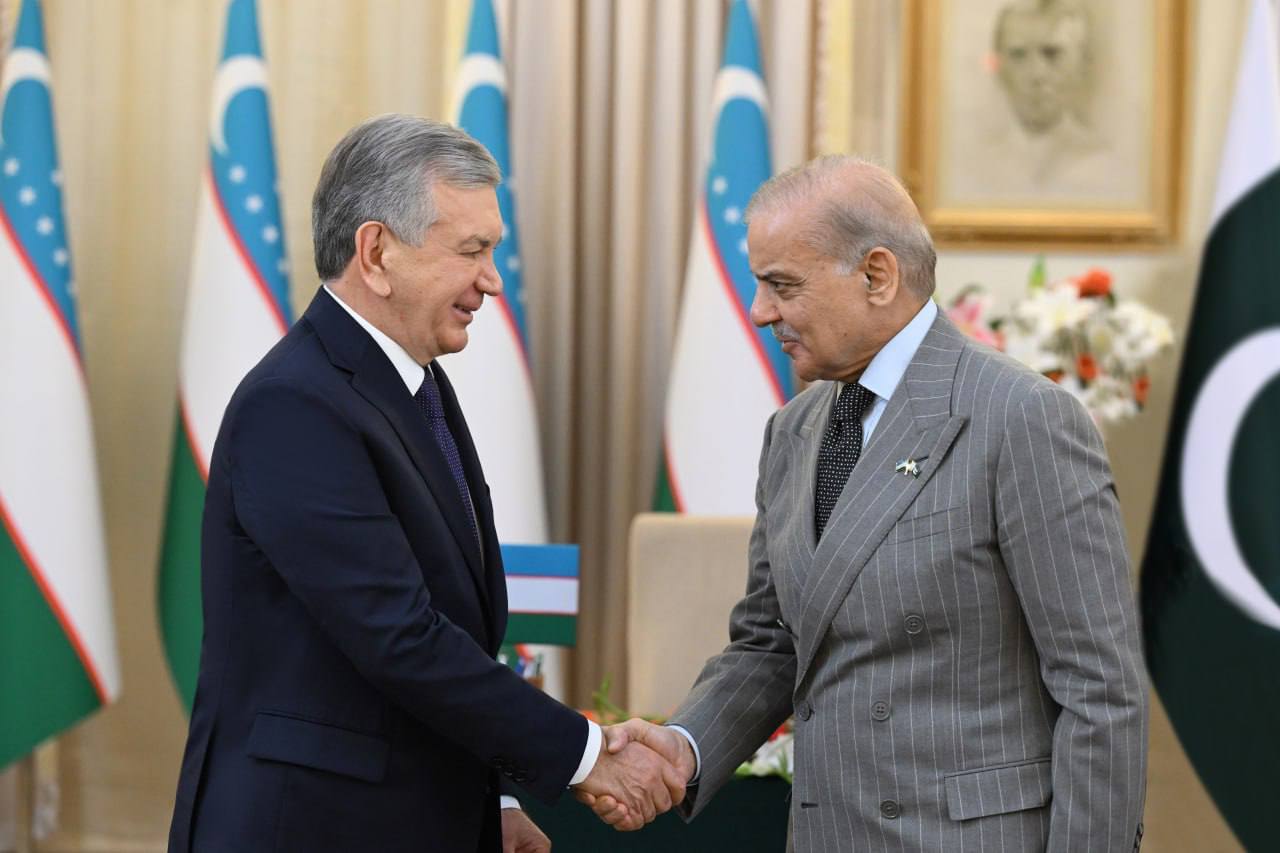
Following the results of the first meeting of the Strategic Cooperation Council held in Islamabad, the President of the Republic of Uzbekistan Shavkat Mirziyoyev and the Prime Minister of Pakistan Shahbaz Sharif made statements for media representatives information.
At the beginning of his speech, the leader of our country expressed gratitude to the head of the Pakistani government for the invitation to visit the country on a state visit and the productive negotiations that took place.
It was especially emphasized that dynamically developing Pakistan is a reliable strategic partner of Uzbekistan. Our country sincerely rejoices at the large-scale reforms being carried out under the leadership of the Prime Minister to improve the well-being of the population and ensure accelerated economic growth, strengthening the international authority of the country.
It is noted with satisfaction that the current visit is taking place in the year of the fifth anniversary of the establishment of Uzbek-Pakistan strategic partnership relations.
Over the past 5 years, the volume of mutual trade has increased 2.5 times, and the number joint ventures and projects – almost 3 times. The goal has been set to increase trade turnover to $2 billion in the near future. A portfolio of promising trade and investment agreements worth $3.5 billion has been formed.
As a result of the negotiations, a Joint Declaration and about 30 important documents in priority areas of cooperation were signed.
Tomorrow there will be a meeting with representatives of leading companies in Pakistan.
The mutual desire to strengthen the interconnectedness of Central and South Asia was confirmed, consistently developing regional cooperation. The readiness to continue mutual support within the framework of international and regional organizations was noted.
The President of Uzbekistan expressed gratitude for Pakistan’s active support for the process of our country’s accession to the World Trade Organization. Pakistan's efforts as a non-permanent member of the UN Security Council in 2025–2026 to ensure peace and international stability were highly appreciated.
An agreement was reached to expand cooperation in the pharmaceutical, light, electrical, mining and food industries, as well as in agriculture. Particular attention is paid to the development of transport and logistics connections and the creation of favorable conditions for the business community.
To deepen interregional cooperation, it was decided to hold the first forum of regions this year in Uzbekistan.
In addition, it is planned to organize weeks of culture and film festivals, as well as joint work to study and popularize scientific and educational heritage of great thinkers.
Gratitude was again expressed for naming one of the streets of Islamabad the name “Tashkent.”
In turn, the President announced the decision to create a park in the capital of Pakistan named after the great statesman and poet Zahiriddin Muhammad Babur, which will be a gift to the Pakistani people on the eve of the celebration of the country's independence.
The leader of our country specially thanked the Pakistani side for awarding him the titles of honorary doctor and professor at the National University of Science and Technology of Pakistan.
At the end of his speech, Shavkat Mirziyoyev congratulated him on the upcoming Pakistan Day and the upcoming holy month of Ramadan.
Related news

Uzbekistan has moved its economic cooperation with the Turkic states into a practical dimension
Ahead of the 13th Summit of the Organization of Turkic States, scheduled to be held in Ankara, economic cooperation within the OTS is acquiring new substance.

Water security in the turkic world: shared interests and common solutions
Water is a precious blessing that transcends national borders and has long connected peoples and civilizations.

Strengthening Transport Connectivity in Asia through the Development of the Trans-Caspian International Transport Corridor
Shifting international supply chains and expanding trade in Asia are driving demand for sustainable transport routes. For businesses, predictable delivery times, competitive rates, and reliable access to foreign markets are becoming increasingly important.