
The President inspected the progress of work at the Center for Islamic Civilization
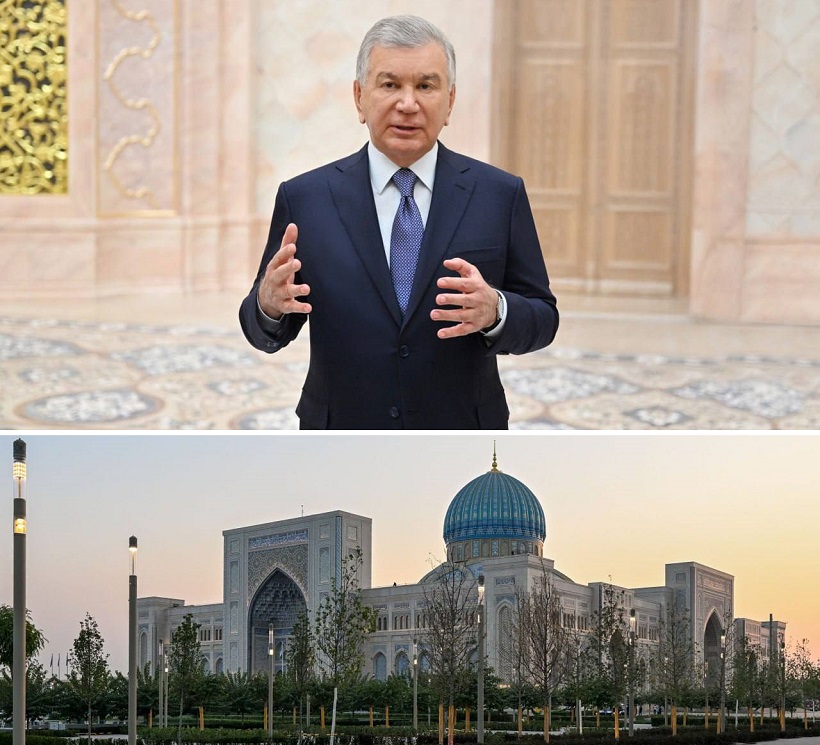
President Shavkat Mirziyoyev visited the Center for Islamic Civilization on October 20 and got acquainted with the ongoing work to broadly represent the rich historical and spiritual heritage of our people through the projects being created here exposition.
This large-scale and unique project was launched on the basis of a decree of the head of state dated June 23, 2017. Soon after this, on the day of Ramadan Hayit 2018, its first stone was laid. Over the past years, a large amount of construction and landscaping work has been carried out on this site.
The center was built in harmony with ancient architectural traditions and national decorative elements. On four sides of the building there are portals 34 meters high, and in the center there is a national style dome 65 meters high.
In the central part of the complex there is a hall of the Holy Quran, where the unique spiritual treasure of the Islamic world - the ancient Koran of Osman - will be exhibited. In addition, handwritten copies of the sacred books of the eras of the Samanids, Karakhanids, Khorezmshahs, Temurids and other dynasties, their translations into the old Uzbek language, as well as samples of the rarest handwritten Korans from all over the world will be presented here.
In addition, on the initiative of the President, valuable sources and artifacts related to our history were returned to Uzbekistan and the legacy of great scientists, which were previously kept abroad.
The complex includes a conference hall with 460 seats, equipped with everything necessary for holding international meetings and scientific forums.
The museum has created sections: “Civilizations before Islam”, “First Renaissance”, “Second Renaissance”, “Uzbekistan in the 20th century” and “New Uzbekistan - new Renaissance”. Here are presented materials about the life and work of great scientists, such as Imam Bukhari, Imam Termezi, Abu Mansur Maturidi, Bahauddin Naqshbandi and other outstanding theologians.
A separate exhibition is dedicated to enlighteners and philanthropists who left a bright mark in history - Bibikhanum, Nodirabegim, Uwaisi and Anbar Atyn.
The head of state always emphasizes the importance of filling the center’s activities with deep scientific and educational content. During the visit, information was presented on the work to expand cooperation of the center with the International Islamic Academy of Uzbekistan, scientific centers named after Imam Bukhari, Imam Termezi and Imam Maturidi.
During the visit, the President got acquainted with the process of finishing and interior work, the content of exhibition sections and the interactive technologies used.
The Head of State emphasized the importance of exhibits being presented to visitors - both local and international - in an engaging and accessible way. In this regard, attention was drawn to the need to increase the number of specialists and guides trained to work in the center under special programs.
Recommendations were given to further enrich the content of the exhibitions, to more fully disclose the spiritual and scientific heritage of our people.
Official website of the President of the Republic Uzbekistan
Related news
Uzbekistan and Azerbaijan Build a New Architecture of Cooperation
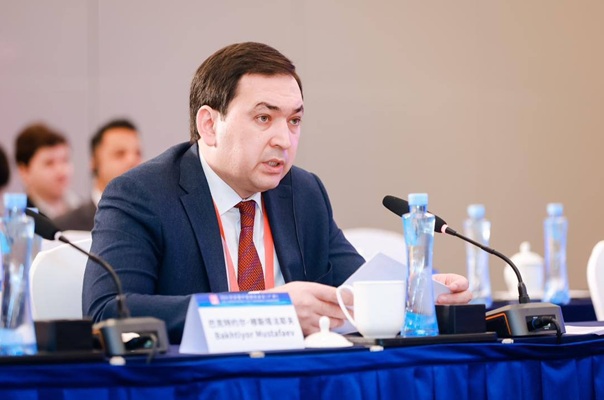
Deputy Director of the Institute for Strategic and Regional Studies under the President of Uzbekistan (ISRS) Bakhtiyor Mustafaev commented to a Dunyo IA correspondent on the outcomes of the Uzbekistan-Azerbaijan high-level summit held on August 23–24.
Uzbekistan’s Role in the SCO: Economy, Security and Regional Cooperation
This year, the Shanghai Cooperation Organization (SCO) is celebrating its 25th anniversary.
Economic Cooperation of Uzbekistan within the SCO at a New Stage of Development
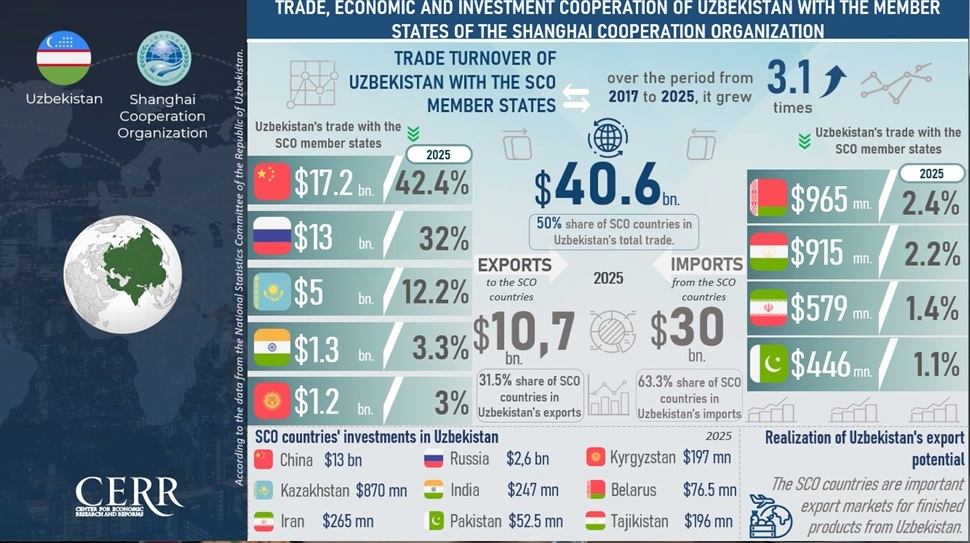
The global economy is developing amid the restructuring of global supply chains.