
Proposals for the development of new lands and the development of science in agriculture are presented
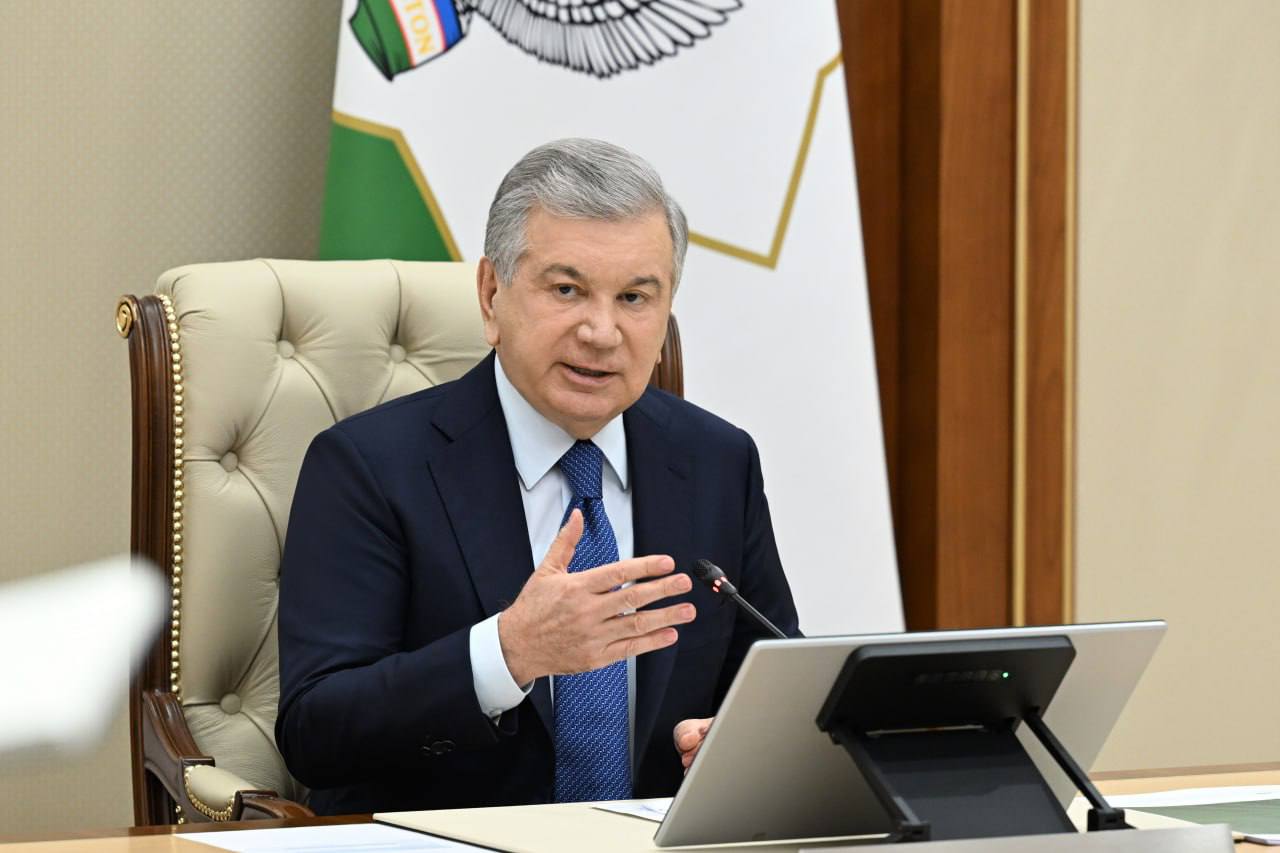
President Shavkat Mirziyoyev on February 9 got acquainted with the presentation of proposals for the development of new lands for agriculture and bringing scientific activity in the field to a new level.
As a result of irrigation and reclamation work over the past five years, 826.5 thousand hectares of land have been brought into agricultural use. Of these, 409 thousand hectares were irrigated lands, another 418 thousand hectares were developed through the use of groundwater in rain-fed and pasture areas, as well as the cultivation of crops with low levels of water consumption.
The presentation presented plans for the development and improvement of the condition of another 938 thousand hectares of pastures until 2030.
For example, in 2026-2027 it is planned to restore 620 thousand hectares of pastures. In particular, pasture crops will be planted on 300 thousand hectares, and water intake wells will be installed on 130 thousand hectares. As a result, the opportunity will be created for grazing 960 thousand heads of small ruminants, as well as increasing the volume of meat and wool production.
It is emphasized that the time has come to change the current institutional infrastructure of agricultural science and bring it to a new level. For this purpose, it is planned to unite 22 scientific centers, 260 laboratories and more than 2.5 thousand scientists and researchers into a single structure - the Academy of Agricultural Sciences.
At the presentation, it was proposed to designate such areas as biotechnology and molecular biology, genetic engineering and hybrid seed production, “smart” agriculture, space and drone technology as priorities in the activities of the Academy drone technology, land degradation and soil health, organic agriculture and food security, animal health, and digital agriculture.
Measures have been identified for the effective organization of the academy's activities.
Particular attention is paid to training personnel for agriculture. It is indicated that 13.6 thousand students are currently studying at the Tashkent State Agrarian University, however, due to the weak connection between the educational process and practice, only 55 percent of graduates work in their specialty.
In this regard, tasks have been identified to create a system that will organically connect education, scientific research and production, as well as to train qualified specialists who meet the requirements of the labor market.
In particular, in the future, 6.8 thousand university students will undergo internships in production organizations, enterprises and agricultural clusters, and more than 2.6 thousand - in 22 research institutes in the system of the Ministry of Agriculture.
In addition, it is proposed to enroll in the university the children of farmers and their workers who did not score the number of points required for admission during the entrance tests, under a reduced contract, as well as to reduce the period of study in seven educational areas from 4 years to 3 years. Students will also be trained to become tractor driver drivers and operate agricultural drones.
The activities of the Agency for Agro-Industrial Development were reviewed.
Last year, intensive and industrialized gardens and vineyards were organized on 44 thousand hectares of ineffective land, which created 37 thousand jobs.
Orchards and vineyards created on these lands will begin to produce crops in 2027, which will allow the export of fruits and vegetables worth $660 million per year. For example, apples, raspberries and apricots are planted on 500 hectares in Sokh, apricots and peaches are planted on 164 hectares in the Termez region, Avatar grapes are grown in the Akhangaran region on 309 hectares, in Bulungur - on 550 hectares and in Kuva - on 60 hectares. In the Papal region, peach and plum plantations are organized on 504 hectares.
It was noted that in continuation of this work in 2026 it is necessary to create 25.5 thousand hectares of orchards and 5 thousand hectares of vineyards, organize 48 thousand permanent and seasonal jobs.
Saplings worth 60 million dollars are imported into our country every year. It was noted that there are all conditions for their local production according to European standards.
For this, the agency has created a collection of more than 200 virus-free, high-yielding mother varieties of fruits. In order to propagate seedlings of these varieties and ensure supplies to all regions, complexes consisting of in vitro laboratories and mother nurseries are being created on 50 hectares in the Bektemir region and 75 hectares in the Yukorichirchik region. It was instructed to put these complexes into operation by the end of the year and ensure the production of 27 million seedlings per year.
Following the discussion, the President of our country gave relevant instructions to the responsible persons.
Related news
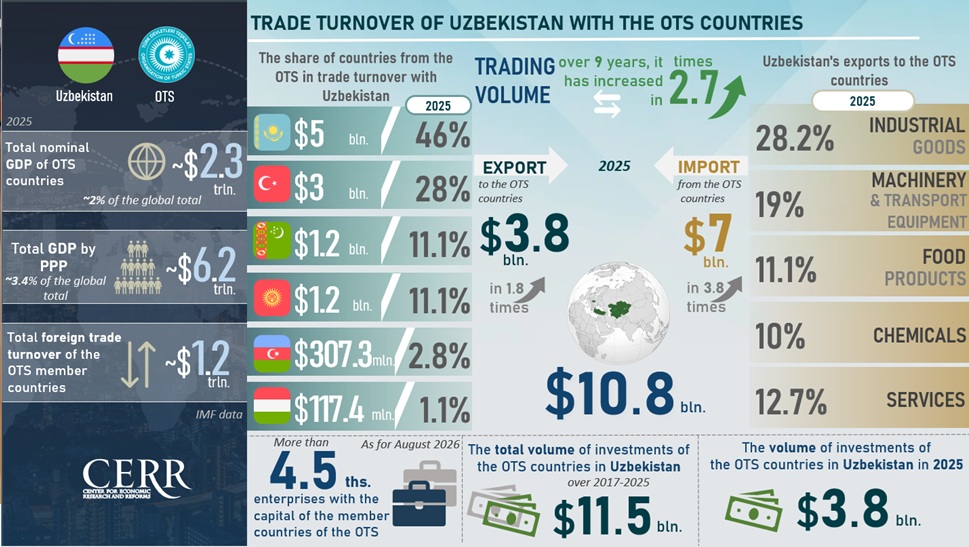
Uzbekistan has moved its economic cooperation with the Turkic states into a practical dimension
Ahead of the 13th Summit of the Organization of Turkic States, scheduled to be held in Ankara, economic cooperation within the OTS is acquiring new substance.
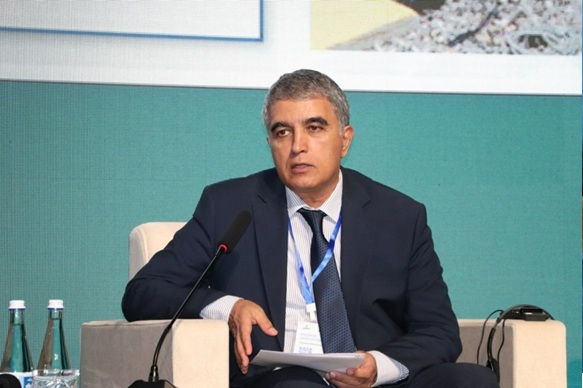
Water security in the turkic world: shared interests and common solutions
Water is a precious blessing that transcends national borders and has long connected peoples and civilizations.

Strengthening Transport Connectivity in Asia through the Development of the Trans-Caspian International Transport Corridor
Shifting international supply chains and expanding trade in Asia are driving demand for sustainable transport routes. For businesses, predictable delivery times, competitive rates, and reliable access to foreign markets are becoming increasingly important.