
Prospects for cooperation between Uzbekistan and Finland in the field of ecology and sustainable development

Uzbekistan and Finland have significant potential for deepening partnership in the field of ecology, rational use of natural resources and the fight against climate change. Representatives of environmental structures of the two countries actively interact within the framework of international conferences, forums and projects organized with the support of international organizations and development banks.
One of the striking examples of practical interaction is the joint project of the Hydrometeorological Service Agency of Uzbekistan, the Ministry of Foreign Affairs of Finland and the Finnish Meteorological Institute. The $2 million project is aimed at increasing the capacity of the Uzbek hydrometeorological service, training specialists in modern methods of forecasting weather conditions and natural disasters, as well as developing a system of climate services and measures to adapt to climate change.
To expand bilateral cooperation, the Ministry of Ecology, Environmental Protection and Climate Change of Uzbekistan has identified a number of promising areas that could form the basis of a future Memorandum of Cooperation with Finland.
One of the priority areas could be cooperation in the field of sustainable forest management. More than 70% of Finland's territory is covered by forests, and its timber reserves account for 0.5% of the world's total. Studying the Finnish experience of public-private partnerships in forestry and effective mechanisms for preserving forest ecosystems will help Uzbekistan improve approaches to developing its own green areas and protecting natural areas.
No less relevant is the exchange of experience in the field of the circular economy. Finland is one of the first countries to develop a national road map for the transition to closed cycles of production and consumption. For Uzbekistan, where a modern waste management and recycling system is being formed, studying Finnish sustainable production practices can be an important step towards green growth.
Collaboration in the field of air protection is also of great interest. Finland is rightfully considered one of the countries with the cleanest air in the world, thanks to an effective monitoring system and strict environmental controls. The use of Finnish technologies to track pollutants and reduce emissions can help improve air quality in Uzbek cities.
Exchange of experience in combating climate change is particularly important. Finland intends to achieve carbon neutrality by 2035, and its approach to reducing emissions and adapting to climate challenges can be useful for Uzbekistan in implementing its own climate initiatives within the framework of the Paris Agreement.
Special attention is proposed to be paid to the development of scientific and educational cooperation. The Ministry of Environment of Uzbekistan is interested in establishing contacts between Finnish universities and the Central Asian University for Environmental Studies and Climate Change (“Green University”). The implementation of academic exchange programs, joint research and the development of green educational technologies will contribute to the training of a new generation of ecologists and climatologists in the region.
Collaboration in the field of biodiversity conservation and development of specially protected natural areas can also become an important area. Finland allocates 13.3% of its territory for these purposes and intends to increase the figure to 30% by 2030. This experience is of great value for Uzbekistan, where a program to expand the network of nature reserves and national parks is being actively implemented.
The conclusion of a Memorandum of Cooperation between the Ministry of Ecology, Environmental Protection and Climate Change of the Republic of Uzbekistan and the Ministry of Environment and Climate of Finland will be a logical step towards strengthening the partnership. Joint initiatives of the two countries will allow us to combine innovations and scientific potential for the sake of one goal - preserving nature, increasing resilience to climate change and building an environmentally safe future.
Anvar Tursunaliev,
Chief Specialist of the Department of International Cooperation
and ratings of the Ministry of Ecology
Environmental Protection and Climate Change
Related news
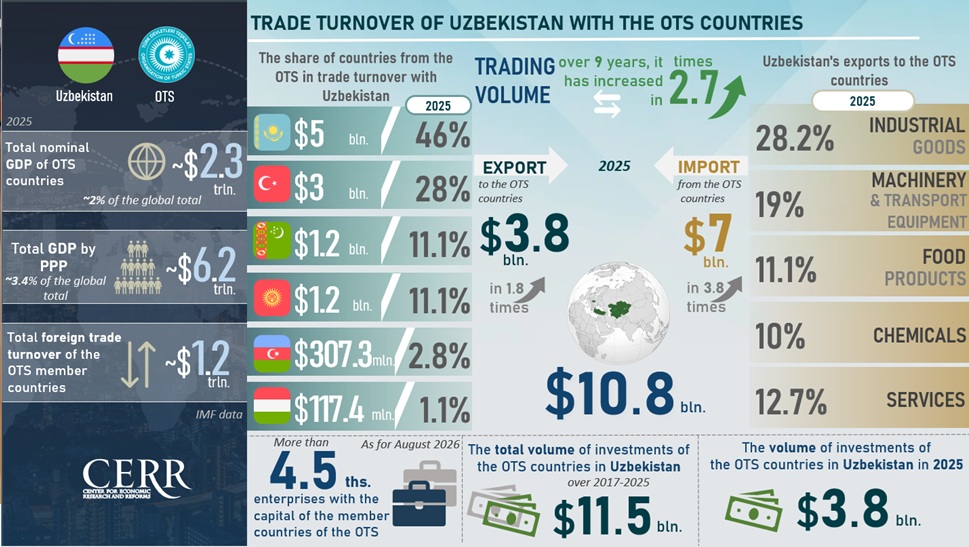
Uzbekistan has moved its economic cooperation with the Turkic states into a practical dimension
Ahead of the 13th Summit of the Organization of Turkic States, scheduled to be held in Ankara, economic cooperation within the OTS is acquiring new substance.
Water security in the turkic world: shared interests and common solutions
Water is a precious blessing that transcends national borders and has long connected peoples and civilizations.

Strengthening Transport Connectivity in Asia through the Development of the Trans-Caspian International Transport Corridor
Shifting international supply chains and expanding trade in Asia are driving demand for sustainable transport routes. For businesses, predictable delivery times, competitive rates, and reliable access to foreign markets are becoming increasingly important.