
The main forces and attention will be focused on areas and mahallas with difficult conditions
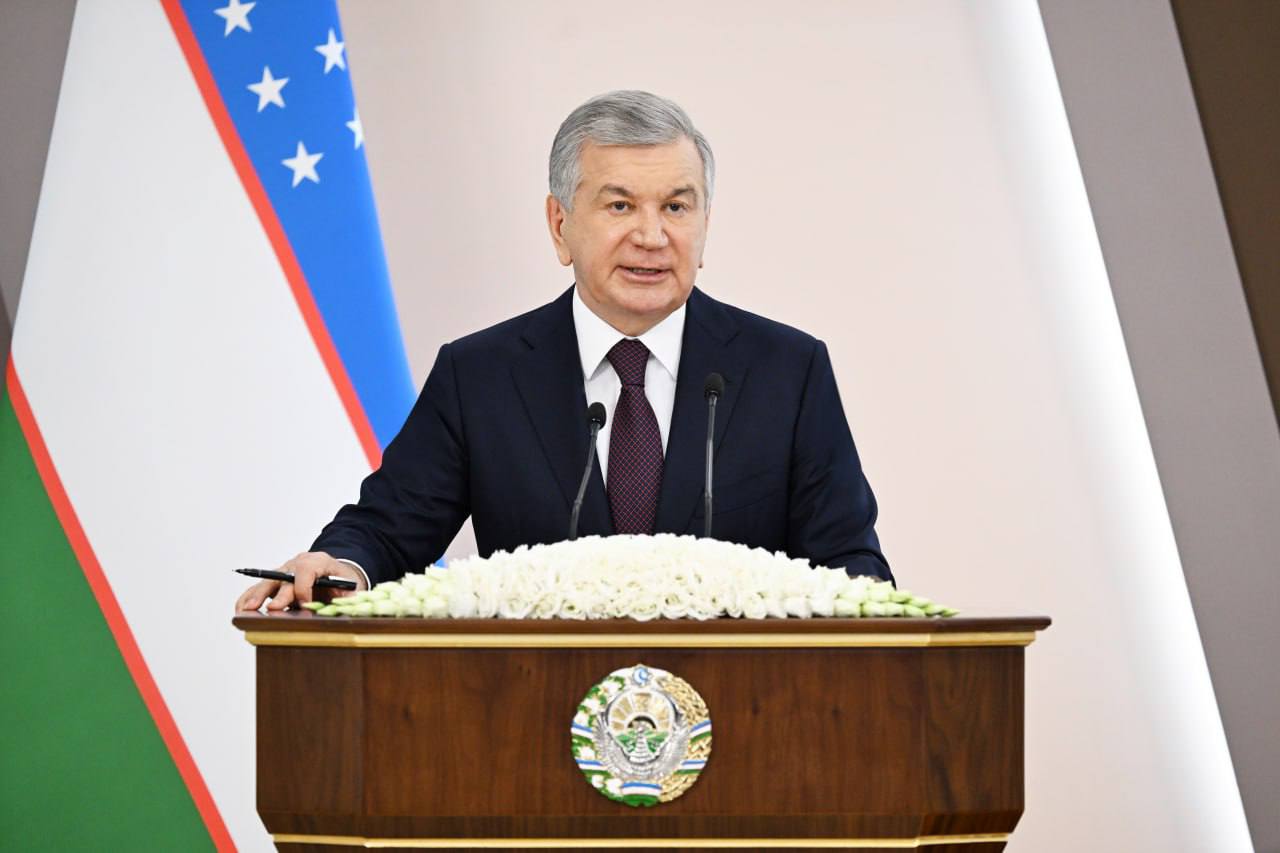
Under the chairmanship of President Shavkat Mirziyoyev, a video conference meeting was held on key tasks in the field of poverty reduction and ensuring employment for the population for 2026.
At the beginning of the meeting, the head of our state stopped briefly at the end of 2025.
It is noted that last year the growth of the domestic economy reached much higher rates compared to preliminary forecasts, amounting to 7.7 percent, and the gross domestic product exceeded $147 billion. Growth rates in all sectors of the economy were higher compared to 2024. Foreign investment attracted reached $43 billion, and exports amounted to $33.8 billion.
Despite strong economic activity and growing consumer demand, inflation fell from 9.8 percent in 2024 to 7.3 percent.
– As economic growth strengthens, there is an opportunity to increase the amount of funds allocated to infrastructure development. This, in turn, serves to ensure employment, increase incomes and improve the level of well-being of the population, - the President noted.
The Head of State noted that over the past year alone, 366 thousand families came out of poverty, and as a result of measures taken to ensure employment of the population and increase their incomes, the poverty level decreased from 8.9 percent to 5.8 percent, and the unemployment rate - from 5.5 percent to 4.8 percent.
- All this is the result of reforms and indicates that trust between the state and is being consistently strengthened by the people. However, there is still a lot of work to be done,” the President said.
As noted, the mahalla is a key link that provides a clear answer to questions about where reforms work and where they fail. If there are still unemployed or low-income families in the makhalla, it means that the reforms have not reached this place. If the “makhalla seven” fail to solve the problems of the population, then the system does not work.
– There are opportunities and means, there are solutions and programs. The only thing that is missing is responsibility, including personal responsibility, the head of state said.
The President criticized the fact that in order to use the available opportunities, khokims and the “makhalla seven” lack methodological knowledge and practical experience, and the responsible ministries and departments do not provide them with support.
Responsible persons were instructed to develop a methodological manual within a month based on studying the capabilities of mahallas with high levels of unemployment and poverty, as well as best practices. Khokims, in turn, will be personally responsible for its implementation locally, ensuring employment for the population, increasing incomes and finding specific solutions to the problems people face.
At the meeting, tasks were identified to provide permanent jobs for 1 million people this year, as well as lift 181 thousand families out of poverty, increase the number of mahallas free of poverty by 2.5 times - to 3.5 thousand, and reduce the level of unemployment and poverty to 4.5 percent.
The issues of ensuring employment and increasing incomes in “difficult” areas and mahallas were substantively considered.
It was noted that, first of all, it is necessary to ensure a stable power supply to such settlements.
For these purposes, small solar power plants with a capacity of 300 kilowatts will be built and transferred to them as a free asset in each of the 903 mahallas. Due to these stations, an economic asset will be formed in each mahalla, generating additional income in the amount of 400-500 million soums.
The resulting “green” income will be used to implement “green” measures, in particular, energy-efficient renovation of houses of needy families, reducing energy costs and improving the quality of life. Members of low-income families living in these mahallas will be involved in the operation of solar stations.
These measures will also be implemented in another 1 thousand mahallas with a high level of specialization. Small solar stations will be transferred to mahallas in finished form for a 7-year period under interest-free leasing.
The President emphasized that deepening the specialization of mahallas is key to reducing unemployment and poverty.
It was noted that currently in 903 “heavy” mahallas there are 100 thousand hectares of household and rental land. If the khokims, together with the “seven,” improve their water supply, provide them with seeds and seedlings, and establish specialization, the income of the population and living conditions can significantly improve.
In order to stimulate the specialization of mahallas, additional financial mechanisms will be introduced. In particular, 50 percent of the costs of purchasing certified seedlings for owners of personal plots and farms will be reimbursed from the budget. Subsidies in the amount of 20 to 70 thousand soums will be allocated for the trellises. Owners of plots who have introduced drip irrigation will be paid compensation in the amount of 160 thousand soums for each hundred square meters.
Experienced farmers will be paid a reward - 2 million soums for every 10 houses that have established the production of export products, an additional 75 million soums if at least 30 percent of all houses with private plots achieve this.
In addition, this year 4 thousand low-income families will be provided with 50 acres free of charge for 10 years, for a total of 2 thousand hectares forest land for the creation of mulberry gardens. To organize sericulture cooperation, needy families will be allocated 4 million soums of subsidies, and those wishing to engage in sericulture at home will receive up to 20 million soums of interest-free loans for the arrangement of premises and the purchase of equipment.
At the meeting it was noted that this year 140 trillion soums of loans will be allocated for the development of small and medium-sized businesses.
– It should be said openly that banks are now offering loans to all regions and cities for the same conditions. But the capabilities and conditions of Almazar and Bozatov are different. Therefore, in 37 “difficult” districts, within the framework of the “Family Entrepreneurship” program, loans will be provided at 12 percent, the President noted.
In all districts, the maximum amount of a preferential loan under the family entrepreneurship support program will be increased by 1.5 times and will reach 50 million soums. For the purchase of imported and certified breeding animals, you can get an unsecured loan of up to 100 million soums, and for equipping a guest house, installing small refrigeration equipment, mini-technologies for storing and processing products - up to 150 million soums.
In 563 mahallas located in border areas and enclaves, the loan amount for entrepreneurial projects will be increased to 1 billion soums. For this purpose, within the framework of the “Family Entrepreneurship” program, in addition to the planned 3.6 trillion soums, another 2 trillion soums of resources will be allocated.
To deepen the specialization of mahallas, this year banks will allocate a total of 17 trillion soums in loans. At the same time, for production projects, 4 percent of the loan is compensated, and for processing projects - 6 percent.
It was noted that the work of assistant khokims needs to be organized on the basis of a project approach.
A portfolio of projects implemented on the basis of a project approach will be formed by district. In “heavy” mahallas, sales of vacant land plots and government facilities will be introduced at a 2-3 times reduced initial cost.
100 “heavy” mahallas that have shown the best results in creating jobs and increasing incomes of the population will be allocated additional funding in the amount of 1 billion soums. Assistant khokims working in these mahallas will be sent to monthly advanced training courses in countries such as China, Turkey, Korea and Malaysia.
As an example, a project was given that will be implemented along the Kaykovus canal in the Almazar region. A two-kilometer section of this canal passes through 8 mahallas in the Old City. Now, assistant khokims of these mahallas will unite into a single project group and, based on a holistic concept, will develop trade, service and recreational infrastructure along the bank of the canal.
Similar project groups consisting of assistant khokims will be organized to implement projects in the fields of tourism, education, medical care, renovation, development of embankment areas and busy streets.
Practice established in the capital to improve the efficiency of the “makhalla” sevens” will now be extended to all districts and cities. From now on, the khokim's assistant, women's activist and youth leader will be appointed and dismissed by the district khokim based on the proposal of the chairman of the mahalla.
The head of our state drew attention to another important aspect. It was noted that a large-scale population and agricultural census campaign has been launched in the country.
Currently, a census of 4 million 776 thousand households out of 7 million 613 thousand has been carried out. However, this process is going slowly in Tashkent, as well as in Fergana, Surkhandarya, Bukhara and Tashkent regions.
– Such an important event is being held in our country for the first time in the last 37 years. The population census allows us to determine the real situation of each mahalla and each family and, on this basis, make plans for the future, and most importantly, introduce effective mechanisms aimed at improving the well-being of the population, the President said and called on all compatriots to actively participate in the census.
At the meeting, reports and proposals of district khokims, mahalla chairmen and assistant khokims were heard.
Related news
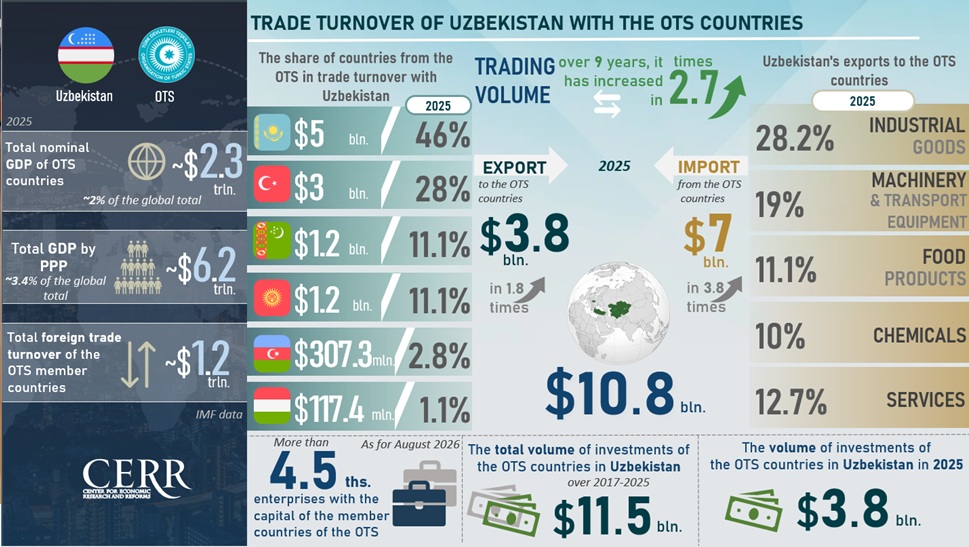
Uzbekistan has moved its economic cooperation with the Turkic states into a practical dimension
Ahead of the 13th Summit of the Organization of Turkic States, scheduled to be held in Ankara, economic cooperation within the OTS is acquiring new substance.
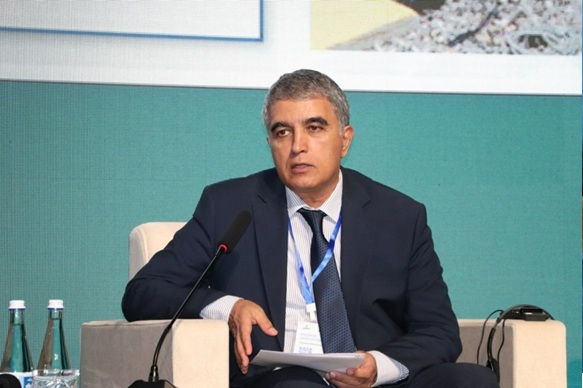
Water security in the turkic world: shared interests and common solutions
Water is a precious blessing that transcends national borders and has long connected peoples and civilizations.

Strengthening Transport Connectivity in Asia through the Development of the Trans-Caspian International Transport Corridor
Shifting international supply chains and expanding trade in Asia are driving demand for sustainable transport routes. For businesses, predictable delivery times, competitive rates, and reliable access to foreign markets are becoming increasingly important.